
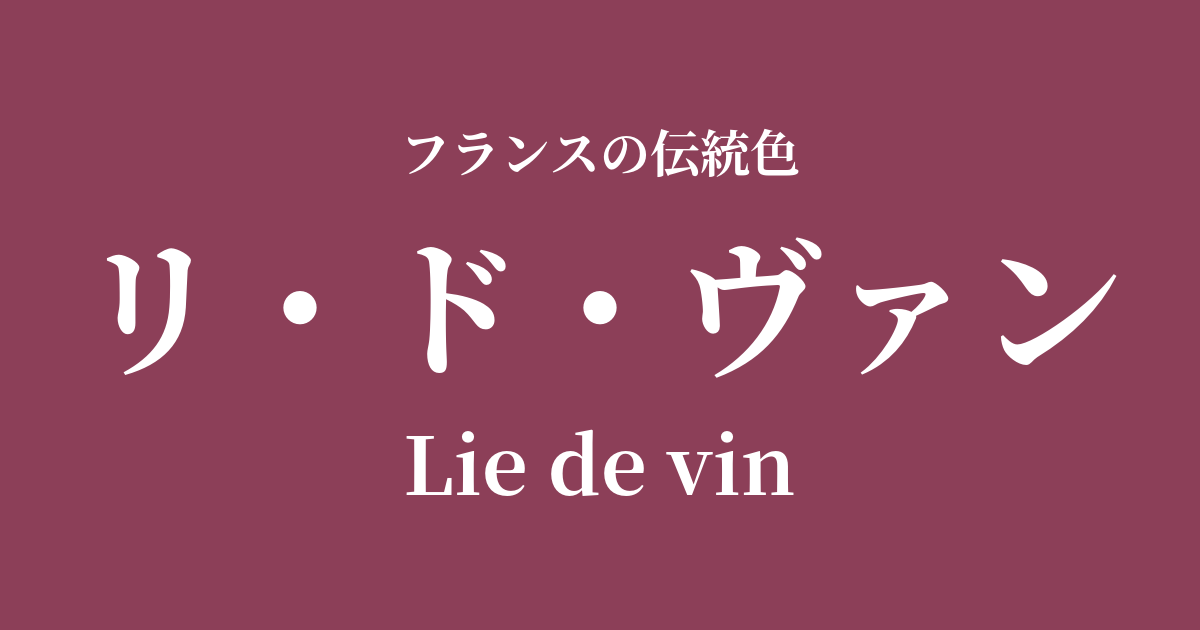
| French | Lie de vin |
|---|---|
| Katakana | Lid de Vent |
| HEX | #8C3F58 |
| RGB | 140, 63, 88 |
What is "L'ie de Vent"? Origin and etymology
"Lie de vin" is a French term meaning "wine sediment (lie)." As the name suggests, it derives from the color of the fine solid matter that settles at the bottom during the winemaking and barrel aging process.
This sediment, a mixture of spent yeast, grape skins, and seed fragments, is an important element that gives wine its complex flavor and depth. In particular, the sediment in red wine changes to a deep, calm, purplish-red color as it ages. Lid de vin is more than just a color name; it symbolizes the history of winemaking deeply rooted in French life and culture, and the richness and maturity that develops over a long period of time.
Historical background of Lid de Vent
The history of winemaking in France dates back to the Gallic era before Christ. In the Middle Ages, Christian monasteries played a central role in developing viticulture and winemaking techniques, and wine became not only a sacred drink indispensable to religious ceremonies, but also a source of joy in people's daily lives.
The color name "L'Ide Vin" is said to have become commonly used around the 19th century, when dyeing techniques advanced significantly. During this period, wines from famous regions such as Burgundy and Bordeaux solidified their quality and reputation, and wine culture entered its golden age. Unlike the vibrant colors worn by royalty and nobility, L'Ide Vin has been cherished as a more earthy and profound color born from the rich land of France and the lives of the people who work there. It can be said to be a color that reflects the spirit of French culture, encompassing the joy of harvest and the value that comes from the passage of time through maturation.
Li de Vent in the world of art and fashion
The sensual and deep hues of Lid de Vent have captivated many artists and designers. This color was particularly favored in Art Nouveau, the artistic movement that swept across Europe from the late 19th to the early 20th century. Lid de Vent imbued Art Nouveau designs, characterized by organic motifs such as plants and insects and graceful curves, with a sense of the mystery of life and the richness of ripe fruit.
In the world of fashion, red de vin is an elegant color that has been loved across generations. Its appeal is especially maximized when combined with lustrous and substantial materials such as velvet, silk, and cashmere. In autumn and winter collections, this color is used in coats, dresses, and accessories such as bags and shoes, bringing a classic elegance and dramatic depth to the outfit.
Color scheme preview
This is to check the readability of the text when this color is used as the background.
Li de Vent's color scheme proposal
Gris de Lignant (#DCD4CC)
The muted, flaxen-like gray gently softens the heavy impression of the Lid de Vent. The colors complement each other, creating a sophisticated yet warm and calming color scheme for adults.
Jaune de Naples (#F7DC8D)
The deep reddish-purple is combined with a bright, soft yellow reminiscent of Neapolitan yellow, creating a vibrant and classic impression. It's a rich and lively combination that celebrates the bountiful autumn harvest.
Vert Veronnaise (#5C8277)
The combination of reddish-purple and green, which are close to complementary colors, makes each color appear more vibrant, creating a dramatic and intellectual impression. The calm blue-green elegantly balances the passionate atmosphere of Lid de Vent.
Practical Scenes
In interior design, red de vin is a highly effective accent color that adds depth and a sense of luxury to a space. Using it on just one wall in a living room or study, or incorporating it in velvet sofas, cushions, or heavy curtains, instantly creates a calm and luxurious atmosphere. It also pairs exceptionally well with gold and brass metals, and dark woods like walnut.
In fashion, it particularly adds elegance to autumn and winter outfits. Boldly incorporating it into key items like coats, knitwear, and dresses creates a chic and striking style. Additionally, using it as an accent color in accessories such as bags, shoes, and scarves adds depth and sophistication to the overall look.
In web and graphic design, it's effective when you want to convey an image of reliability, tradition, and high quality. In particular, using it as a key color for brands dealing with wine, fine food products, or jewelry can effectively express their brand identity.