
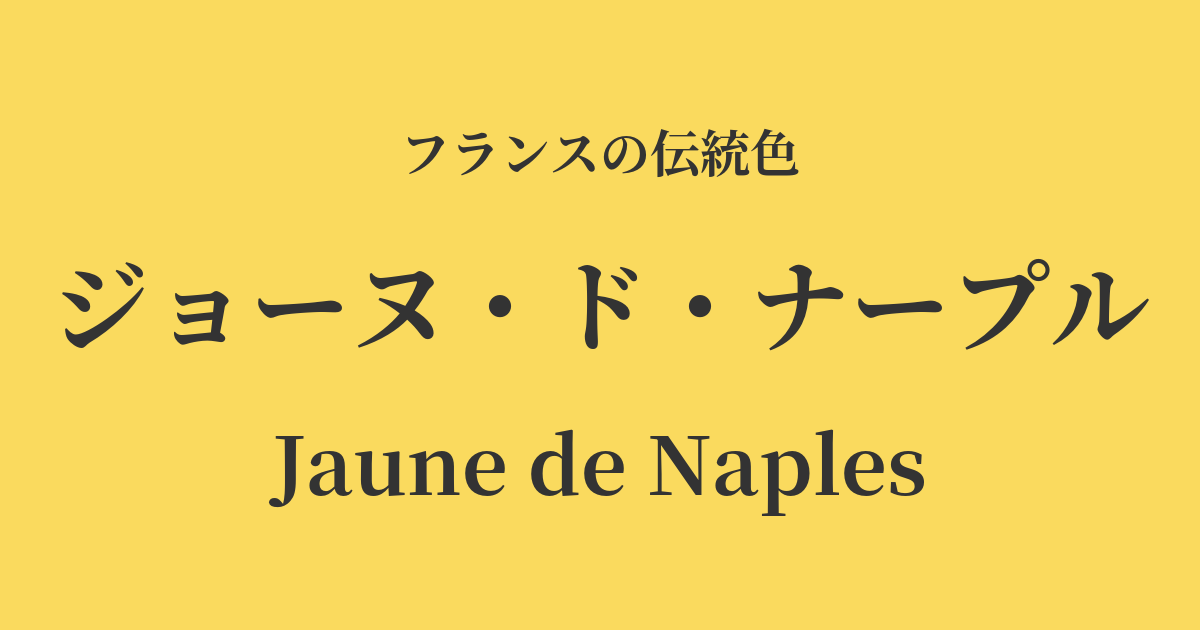
| French | Jaune de Naples |
|---|---|
| Katakana | Jaune de Naples |
| HEX | #FADA5E |
| RGB | 250, 218, 94 |
What is Jaune de Naples? Origin and etymology
Jaune de Naples, meaning "Yellow of Naples" in French, is a warm and soft shade of yellow. Its origins are very ancient, dating back to the time of ancient Egyptian and Mesopotamian civilizations.
The true identity of this color is lead antimonate, an artificially created pigment. It was widely used in ancient Rome, and many beautiful frescoes painted with this pigment have been discovered in the ruins of Pompeii, which were buried by the eruption of Mount Vesuvius.
During the Renaissance, Italy, particularly Naples, became one of the main production centers of this pigment, supplying it to painters throughout Europe. This is said to be how the name "Neapolitan yellow" became established. For a long time, its manufacturing method was kept secret.
Historical background of the Jaune de Naples
Jaune de Naples (yellow) gained widespread acceptance among French artists during the 17th and 18th centuries. In particular, during the Rococo period, when flamboyant and elegant expressions were favored, masters such as Antoine Watteau and Jean-Honoré Fragonard greatly loved this color.
They skillfully used this yellow to depict the lustrous skin of figures, the sheen of silk dresses, and the shimmering sunlight in landscape paintings. Its property of not easily becoming muddy when mixed with other colors and maintaining a beautiful hue made it ideal for expressing the delicate nuances of light and shadow.
Furthermore, it played an important role as a color that adorned court culture, as it was also used to color porcelain produced at the Royal Sèvres Porcelain Manufactory.
Jaune de Naples in the world of art and fashion
Jaune de Naples has been a favorite color of many painters for centuries, without being limited to any particular school or era. Renowned masters such as Rembrandt and Vermeer of the Baroque period, Turner of the Romantic period, and Corot of the Barbizon School are known to have included this color in their palettes.
This color was especially indispensable for Impressionist painters who sought to depict light itself. Its gentle and bright tone was highly valued for expressing the warmth of natural light and the soft glow of the twilight sky.
In the world of fashion, it was particularly popular during the Rococo period of the 18th century, as a color that adorned the dresses and ribbons of noblewomen, including Marie Antoinette. Its elegant splendor continues to inspire modern haute couture and textile designs.
Color scheme preview
This is to check the readability of the text when this color is used as the background.
Jaune de Naples color scheme proposal
Blue Nuit (#0F2540)
When paired with a deep, night-sky-like blue nuit, the brightness of the Jaune de Naples stands out, creating a dramatic and sophisticated impression reminiscent of a starry night. It also creates a classic yet modern atmosphere.
Violet de Palme (#8B639E)
Paired with Violette de Palme, reminiscent of violet flowers, the colors complement each other, creating an elegant and feminine impression reminiscent of Rococo style. Recommended for those who want to create a refined and artistic atmosphere.
Vert Veronese (#5A8B49)
By combining it with the deep green seen in Veronese's paintings, it creates a natural and vibrant impression reminiscent of the landscapes of Southern France. It's a color scheme that evokes warmth and tranquility.
Practical Scenes
In the field of interior design, Jaune de Naples brings warmth and brightness to a space. Simply incorporating it as an accent on one wall, curtains, or cushions will envelop the entire room in a comfortable, sunlit atmosphere. It is especially well-suited to spaces with a white base color and natural wooden furniture.
In fashion, this color is said to have the effect of making a person's skin look more beautiful. Incorporating it around your face with blouses, scarves, or accessories will instantly brighten your expression. Pairing it with calm colors like navy or charcoal gray will create an elegant and sophisticated look.
In web and graphic design, it's effective when you want to convey friendliness and trustworthiness. Even if it's a little too assertive when used as the main color, using it as an accent color for buttons, headings, etc., can give users a positive and warm impression.