
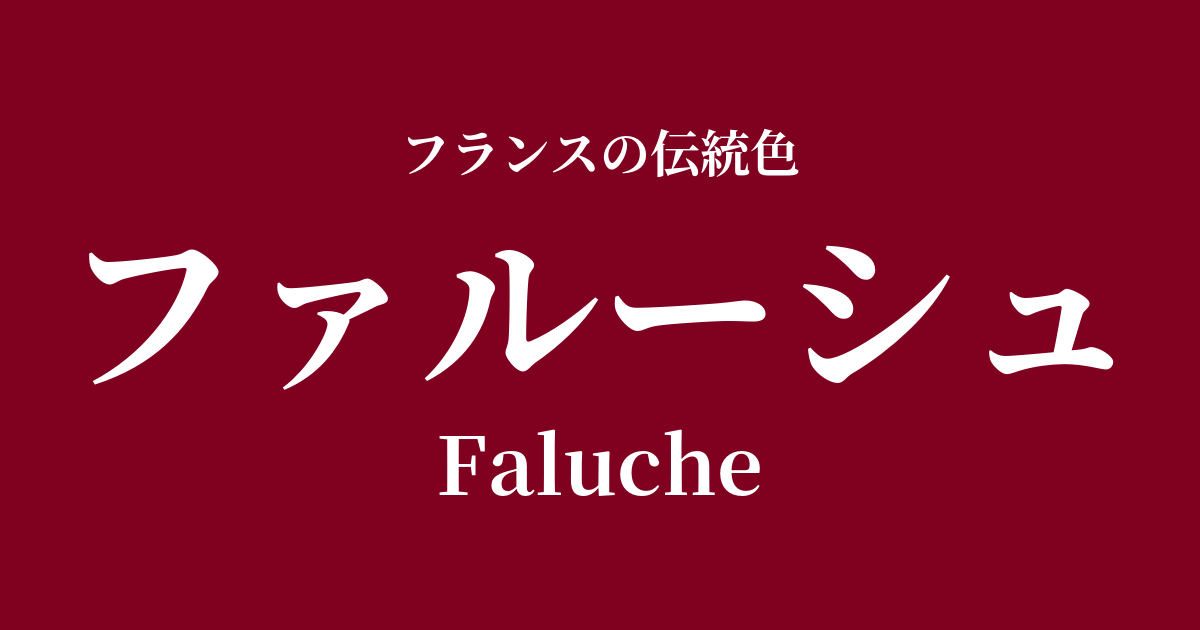
| French | Faluche |
|---|---|
| Katakana | Farush |
| HEX | #800020 |
| RGB | 128, 0, 32 |
What is Farush? Origin and Etymology
Faluche is a color derived from the name of a traditional velvet beret worn by students at some universities in France. The color refers to the deep wine red or burgundy-like red of the beret's fabric.
More than just a color name, it embodies France's academic tradition, its student community, and their pride. This color, evoking intellect, passion, and history, can be considered one of the colors that symbolizes the depth of French culture.
The historical background of Farouch
The history of the Farouche hat dates back to the late 19th century. In 1888, French students invited to the 800th anniversary celebrations of the University of Bologna in Italy were impressed by the uniform hats and uniforms worn by students from other countries. Upon returning home, they are said to have devised the "Farouche" as a uniquely French student cap.
This hat is made of black velvet and adorned with colorful ribbons and badges that indicate the wearer's faculty, year, hometown, and even personal preferences. The color of the Farouche represents the shade of the velvet fabric of this traditional hat, especially the dignified red that deepens with time. It is not merely an ornament, but a living symbol of tradition that embodies the identity and camaraderie (esprit de corps) of the students.
Farouche in the world of art and fashion
While Fallouch's use of color isn't directly linked to any particular art movement, its deep red has long held special significance in the history of Western art. In Renaissance and Baroque religious paintings and portraits, crimson was used in the robes of clergy and the lavish attire of royalty and nobility, symbolizing authority, wealth, and sanctity. Fallouch's dignified atmosphere resonates with this historical memory of color.
In the world of fashion, this color is widely loved as "burgundy" or "wine red." It is a staple color, especially in autumn/winter collections, and when combined with high-quality materials such as velvet, cashmere, and silk, it creates an elegant and sophisticated impression. French haute couture houses have also presented many dresses and coats that make the most of its dramatic beauty.
Color scheme preview
This is to check the readability of the text when this color is used as the background.
Farush's color scheme proposal
Gris de Lignan (#DCD3C3)
The combination of Farouche's deep red and the gentle Gris de Lignan, reminiscent of flaxen, creates an intellectual and calm impression. It is ideal for classic studies and academic designs that evoke a sense of tradition.
Jaune d'Or (#FFD700)
The rich, substantial feel of Farouche, combined with the radiant Jaune d'Or (gold), creates a festive and opulent atmosphere. It's recommended for special occasions or for packaging designs where you want to emphasize luxury.
Blue Nuit (#0F056B)
This dramatic combination of deep red and deep night blue creates a striking contrast, with each color enhancing the others and resulting in a modern and sophisticated impression. It allows for bold yet chic expression in fashion and graphic design.
Practical Scenes
In interior design, palech is a highly effective accent color that adds depth and a sense of luxury to a space. For example, using this color on just one wall in the living room, or incorporating it into velvet sofas, cushions, or heavy curtains, instantly creates a sophisticated atmosphere. It also pairs exceptionally well with brass and gold lighting fixtures and accessories.
In fashion, using this color in key items like autumn/winter coats, jackets, and dresses creates a very elegant and impressive style. Even simply adding it as an accent color in accessories like bags, shoes, or scarves can tighten up the overall look and create a sophisticated, mature style.
In website and graphic design, it's suitable for brands that want to convey reliability, tradition, and expertise. However, using it extensively as a background color can make it appear too heavy, so it's best used as an accent for headings, buttons, and key visuals.