
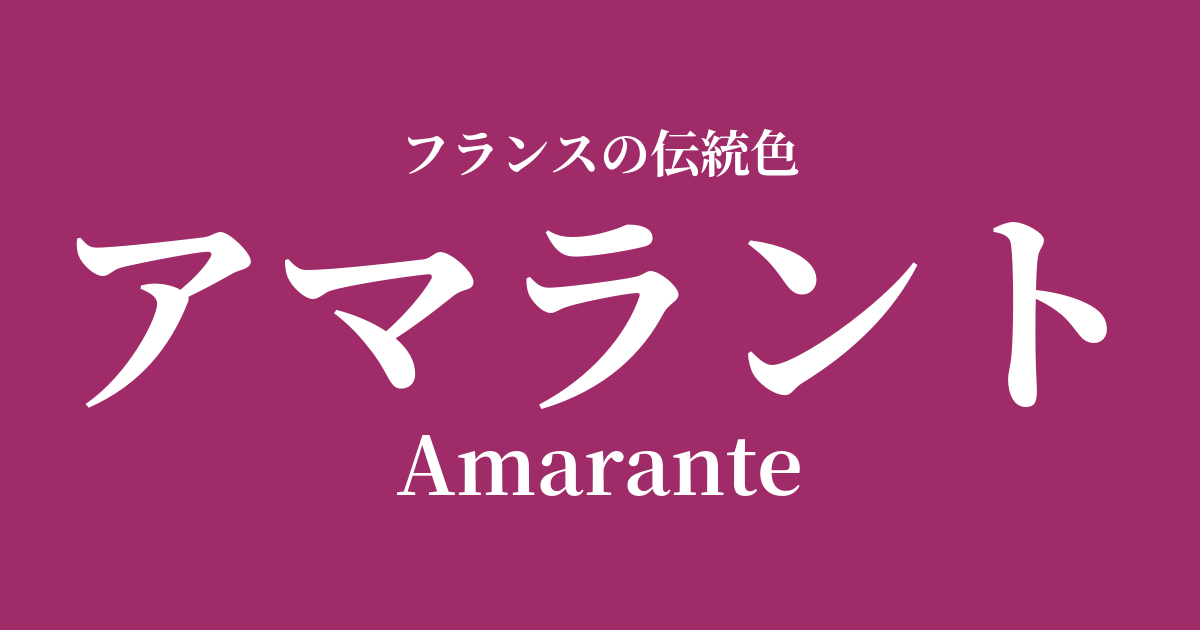
| French | Amarante |
|---|---|
| Katakana | Amarant |
| HEX | #9F2B68 |
| RGB | 159, 43, 104 |
What is Amaranto? Origin and Etymology
Amarante is a color derived from the name of a legendary flower, whose name originates from the Greek word "amarantos" (meaning "unwilting, never dying"). This mythical flower has long been considered a symbol of immortality and eternity.
The actual plant amaranth (a member of the Amaranthaceae family) shares the same etymology, and it is said that its vibrant, deep reddish-purple flower spikes are the origin of this color name. It is characterized by a deep and vibrant color that seems to blend passionate red with mystical purple.
Historical background of Amarant
Amaranth was extremely popular in France, especially during the 17th and 18th centuries. In the opulent culture of the Palace of Versailles under Louis XIV, this color was widely used in the clothing and interior decorations of the courtiers as a symbol of nobility and refinement.
In particular, it is known as a color favored by Madame de Pompadour, the mistress of Louis XV. Her fashion sense led the trends at court, and deep, dramatic colors like amarant became symbolic of the aesthetic sensibilities of the aristocracy at the time.
After the French Revolution, subdued colors were favored for a time, but in the 19th-century Romantic era, these colors once again came into the spotlight as a way to express passion and individuality. Reflecting the values of each era, these colors have become deeply rooted in French color culture.
Amarant in the world of art and fashion
During the Rococo period, paintings by François Boucher and Jean-Honoré Fragonard frequently featured amarant-like colors in the dresses of elegant ladies. In the interplay of light and shadow on the lustrous silk gowns, this color exuded a sensual and sweet atmosphere, beautifully expressing the refined aesthetic sensibilities of the time.
In the world of fashion, this color was frequently used in haute couture dresses during the Belle Époque era from the late 19th to the early 20th century. Especially when combined with lustrous fabrics such as velvet and silk satin, the depth and luxury of amaranthide were further enhanced, creating dramatic looks.
Even today, amaranth continues to be a beloved color in many fashion brands' collections and in cosmetics such as lipstick, symbolizing mature charm and luxury.
Color scheme preview
This is to check the readability of the text when this color is used as the background.
Amaranth color scheme proposal
Gris de Lignan (#DCD5C8)
The passionate impression of Amarante is gently softened by the calm and natural gray of Gris de Lignan. This elegant and modern color scheme balances sophisticated adult composure with an inner radiance.
Jaune de Naples (#F7D98E)
Combining deep amarant with bright, warm Jaune de Naples creates a vibrant and festive impression. The colors complement each other, resulting in a gorgeous and artistic atmosphere.
Vert Veronnaise (#5A8681)
The combination of reddish-purple and blue-green, which are close to complementary colors, vividly enhances each other's hue. The intellectual green of Vert Veronnaise adds depth and dimension to the sensual beauty of Amarante, creating a unique and impressive space.
Practical Scenes
In interior design, incorporating velvet into accent walls in living rooms and bedrooms, or into fabrics such as sofas, cushions, and curtains, brings a dramatic and luxurious atmosphere to a space. It pairs particularly well with metallic materials such as gold and brass, making it ideal for creating a classic and elegant space.
In fashion, using this color in key items such as evening dresses and coats fully enhances the mature charm of an adult. Furthermore, even incorporating it as an accent color in accessories like bags, scarves, or lipstick can instantly tighten up an entire outfit and give it a sophisticated impression.
In website and graphic design, it is extremely effective when you want to convey a brand's sense of luxury, expertise, and passion. Using it boldly as a main color, or as an accent color for buttons and headings, will attract the user's attention and create a memorable design.