
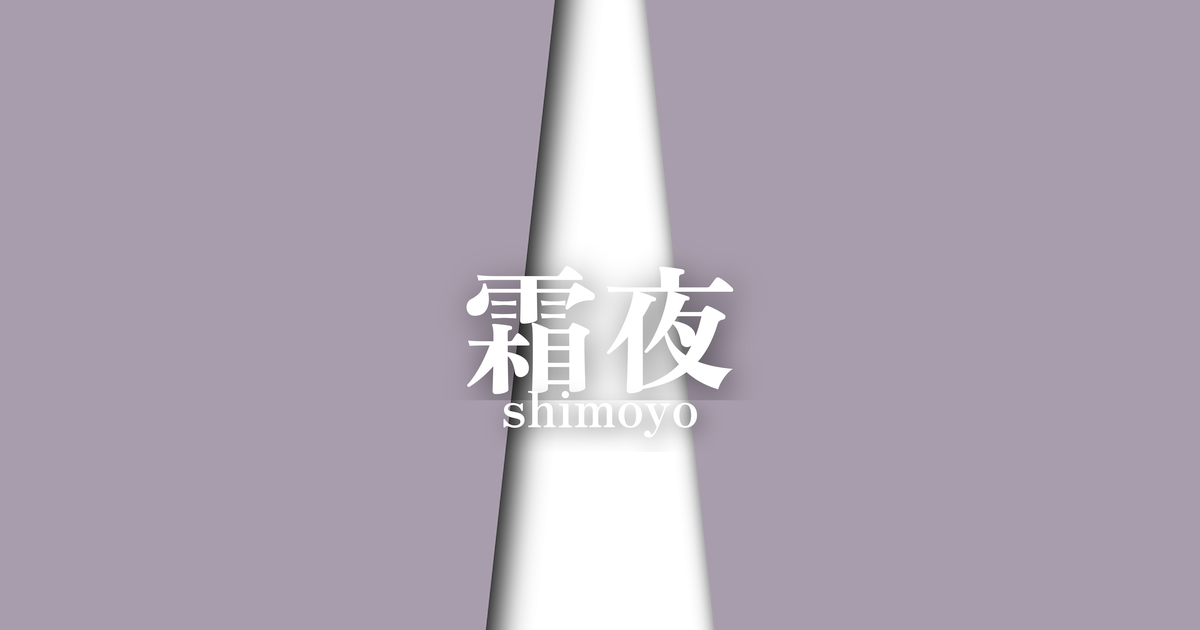
| Japanese color name | Frosty night |
|---|---|
| reading | Shimoyo |
| season | 冬 |
| Color of the table | Light purple (usumurasaki) |
| Back color | White (shiro) |
What is Shimoyo? Origin and etymology
"Shimoyo" (Frosty Night), as its name suggests, is a color combination that depicts the scene of frost on a winter night. The light purple on the outside evokes the still winter night sky and the cold air illuminated by moonlight. On the other hand, the white on the inside symbolizes the pure white frost itself that has settled on the ground and plants. This combination of two colors skillfully expresses the dignified silence and clear beauty found amidst the harshness of winter.
This color scheme reveals the keen aesthetic sense of the Heian aristocracy, who captured the subtle changes in nature and elevated them into the colors of their clothing.
Historical background of frosty nights
The layered color scheme developed as a crystallization of the aesthetic sensibilities of the aristocracy during the maturation of Heian period Japanese culture. Sensitively perceiving the changing seasons and expressing them through the color combinations of clothing was an important aspect of education and a refined pastime for people of that time. Among the many winter color schemes, "Shimoyo" (frosty night) is thought to have been particularly favored by women of the imperial court for its poetic imagery.
It is said that this garment was highly valued as attire that demonstrated the wearer's deep understanding of the season, especially in quiet and intellectual settings such as poetry gatherings and orchestral performances held on winter nights.
Related literature, waka poetry, and seasonal words
The term "frosty night" itself has been used as a seasonal word for winter in many waka and haiku poems. For example, in "The Pillow Book," it says, "In winter, early morning is the best. The falling snow is beyond description, but the frost is so white, and even without it, it is so cold," where the white beauty of frost is seen as a deeply evocative winter scene. Although the phrase "wearing a frosty night's garment" is not easily found in classical literature, it is easy to imagine that this culture of appreciating the beauty of winter nights and frost was the background for the creation of this color.
The profound depth of Heian culture was shaped by the interplay between the scenes depicted in literature and the colors of the costumes worn.
The moonlight in the frosty garden is chilling, and the sound of the fulling block being used to beat clothes can be heard.
The season and scenery of frosty nights
"Shimoyo" (frosty night) is a color scheme worn from late autumn to mid-winter, signaling the arrival of winter, typically from the 10th to the 12th month of the lunar calendar. It evokes the scene of a quiet, clear night when frost has fallen. The light purple on the outside symbolizes the stillness of the night's darkness, while the white on the inside symbolizes the shimmering frost in the moonlight, conveying the solemn beauty of winter to the viewer.
This color scheme is intended to evoke the stillness and dignified atmosphere of a winter night, and is considered suitable for occasions where introspective and calm sensibilities are valued more than ostentation.
Color scheme proposal for frosty night
Silver-gray (#AFB1B4)
This color scheme further enhances the cold and quiet impression of a frosty night. Silver-gray evokes the cloudy winter sky and frozen water surface, giving the overall impression of sophistication and unity. It's a combination that's easy to apply to modern designs as well.
Withered color (#8D6449)
By adding warm, withered colors reminiscent of bare trees and fallen leaves to the cool tones of a frosty night, a more realistic winter landscape can be depicted. A touch of warmth is added to the coldness, deepening the depth and narrative quality of the color scheme.
Dark indigo (#001134)
By combining the pale purple of a frosty night with a contrasting deep indigo, it's possible to express a deeper, clearer winter night sky. The strong contrast creates an impression of calmness and dignity, making it suitable for formal occasions.
Practical Scenes
In the Heian period, this color combination is thought to have been used in the five-layered robes (itsutsuginu) of court ladies' attire. It was worn at court ceremonies and private banquets as an important way to express the feeling of winter. In modern Japanese clothing, incorporating the "frosty night" color into the color scheme of visiting kimonos or casual kimonos, or into accessories such as obi sashes and obiage sashes, can create an elegant and sophisticated winter look.
In interior design, it creates a calming atmosphere when used in quiet spaces such as bedrooms and studies. In web design and graphic design, it is an effective color scheme for expressing the feeling of winter or conveying a serene and sophisticated image.