
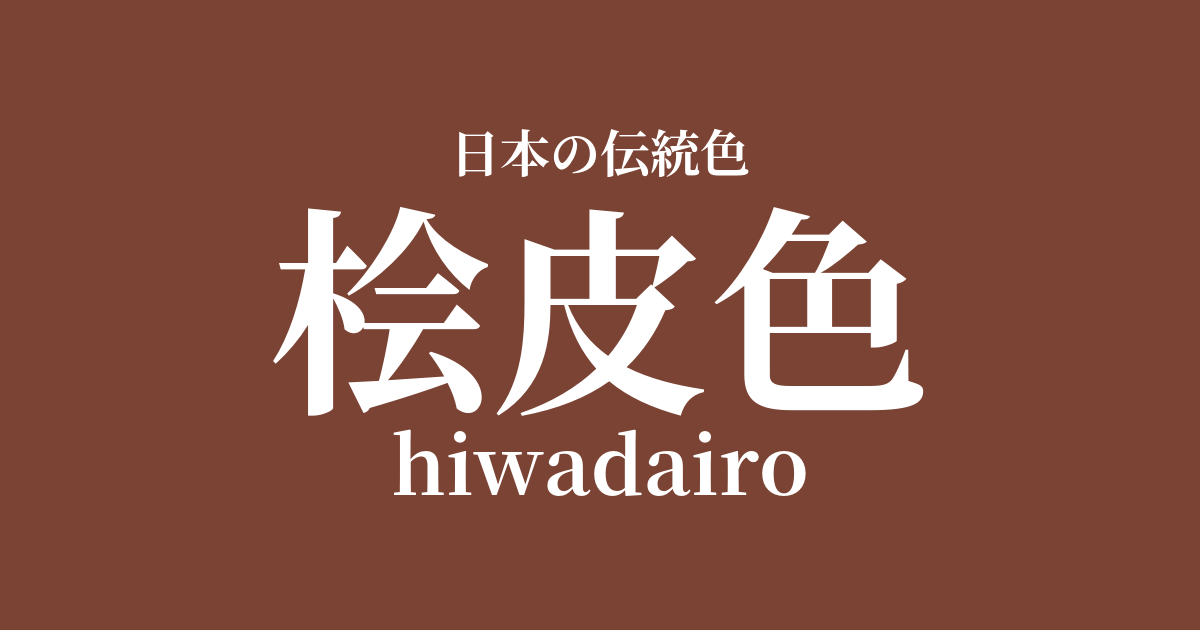
| Japanese color name | cypress bark color |
|---|---|
| reading | hiwadairo |
| HEX | #7B4334 |
| RGB | 123, 67, 52 |
What is cypress bark color? Origin and etymology
As the name suggests, hinoki bark color is a deep reddish-brown derived from the color of the bark of the hinoki cypress, a coniferous tree. In ancient times, the roofs of Japanese shrines and temples were thatched using a traditional method called "hiwadabuki" (hinoki bark roofing), and the color of the bark removed during this process became the direct origin of the color's name. Hinoki bark was also used as a dye, and by boiling it, this subdued and calming color was dyed onto fabric. It is a warm color deeply connected to Japanese architectural culture and the view of nature.
Historical background of cypress bark color
The history of cypress bark roofing is long, dating back to the Asuka period, and the technique can be seen in buildings such as Horyu-ji Temple. Therefore, it is thought that the color of cypress bark has been a familiar color in the lives of Japanese people since ancient times. The Engishiki, a collection of laws from the Heian period, contains descriptions of various plant dyes, and it is believed that cypress bark was included among them, suggesting that it may have been used as a dye since that time.
During the Edo period, brown and gray were so popular that it was said there were "forty-eight shades of brown and one hundred shades of gray," and cypress bark color was one of them, said to have been a favorite color for the clothing of samurai and townspeople.
Related literature, waka poetry, and seasonal words
The cypress bark color, with its subdued hue, is sometimes used in literary works to depict the aesthetics of wabi-sabi, ancient shrines and temples, and winter mountain villages. While there are few famous waka poems that directly use the term "cypress bark color," the cypress wood and cypress bark roofs, from which the color originates, have been featured in many poems and haiku. For example, Masaoka Shiki left behind the haiku, "The slope of the cypress bark roof in the spring rain," describing the moist and serene atmosphere of a cypress bark roof wet with rain.
In this way, even if not the color names themselves, the culture and landscapes behind them have been expressed in the world of literature.
The slope of the cypress bark roof, the spring rain
Color scheme preview
This is to check the readability of the text when this color is used as the background.
A color scheme proposal in cypress bark color.
Moss color (#69821B)
A very natural color combination reminiscent of a cypress tree trunk and the moss growing on it. Both are earth tones, evoking a sense of calm, tranquility, and the passage of time. Suitable for Japanese-style designs and natural-themed interiors.
Blue gold (#FABE22)
By combining it with turmeric yellow, a vibrant yellow dyed with turmeric, the subdued cypress bark color gains a touch of elegance. The two colors complement each other, creating a dignified yet warm impression. This is a traditional color combination often seen in the layering of kimono fabrics.
Blue Rat (#6C7C7D)
The reddish-brown cypress bark color and the bluish-gray indigo gray create a sense of unity in calm tones, while simultaneously offering a contrast between warm and cool colors. This gives a modern and sophisticated impression, and is a color scheme that, while traditionally Japanese, is easily applicable to contemporary designs.
Practical Scenes
In the world of traditional Japanese clothing, cypress bark color is widely used for kimonos, obi sashes, and haori jackets. It is particularly well-suited to expressing the seasonal feel of autumn and winter, and its subdued hue is favored by people of all ages. Depending on how it is combined with other colors, it can look either chic or rustic, making it a versatile color for various outfits.
In interior design, using this color for wallpaper, fixtures, and furniture brings warmth and a sense of depth to a space. It pairs particularly well with natural materials such as wood, earthen walls, and Japanese paper, making it effective for creating a Japanese modern space or a relaxing study.
In web design and graphic design, using it as a background or accent color can convey themes such as trustworthiness, tradition, and nature. It is suitable for creating a calm and sophisticated atmosphere on websites of historical companies or brands that handle organic products.