
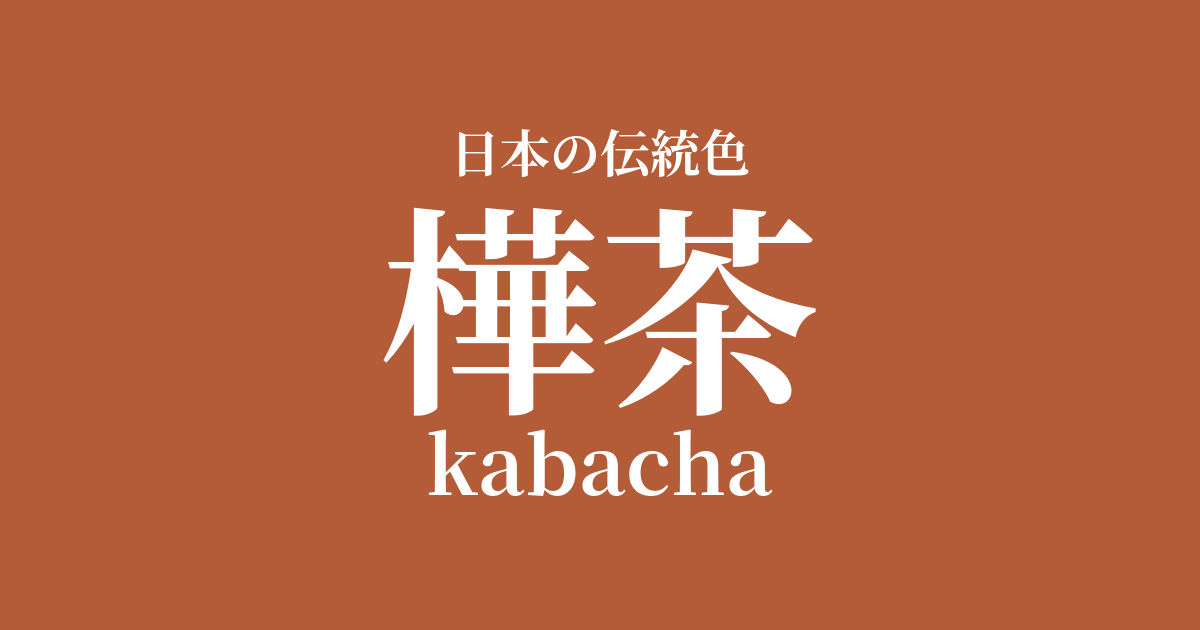
| Japanese color name | Birch tea |
|---|---|
| reading | kabacha |
| HEX | #B35C37 |
| RGB | 179, 92, 55 |
What is Kabacha? Origin and Etymology
Birch tea is a reddish-brown color derived from the bark of the birch cherry tree (kabazakura). While the character "kaba" generally refers to trees such as white birch, in the context of a color name it is said to refer to the color of the bark of the birch cherry tree, a type of mountain cherry tree. It is said that the origin of birch tea lies in the attempt to reproduce this reddish-brown bark color using the dyeing techniques of the time.
From the mid-Edo period onward, due to the shogunate's sumptuary laws, subdued colors such as brown and gray became popular among commoners. A wide variety of colors emerged, so much so that it was called "forty-eight shades of brown and one hundred shades of gray," and people enjoyed the subtle differences in these hues. Birch brown was one of the colors that emerged during this trend, and its warm tone made it widely popular.
Historical background of birch tea
The color "kabacha" (birch tea) became established as a color name and gained popularity during the mid-Edo period. At a time when flashy colors were prohibited, people found a delicate beauty in shades of brown. Kabacha was one of the colors that symbolized the "chic" aesthetic born from the townspeople's culture of Edo.
In particular, it is often discussed in connection with the popularity of "Danjuro tea," a color said to have been favored by the Kabuki actor Ichikawa Danjuro I. Danjuro tea is a general term for persimmon-dyed or reddish-brown colors, and birch tea is said to have been popular as a color in that range. Ukiyo-e prints also depict townspeople wearing birch tea-colored kimonos.
Related literature, waka poetry, and seasonal words
Since "kabacha" (birch tea) is a relatively new color name that originated in the Edo period, it does not directly appear in classical literature or waka poetry from the Heian or Kamakura periods. However, in popular fiction from the late Edo period, such as sharebon, kokkeibon, and ninjobon, it is sometimes mentioned as the color of the characters' clothing when describing the customs of the time.
These literary works suggest that birch tea was a color deeply rooted in the lives of ordinary people at the time. Although it is not designated as a seasonal word, its color evokes images of autumn foliage and withered leaves, and it is sometimes used to describe scenes of late autumn.
Color scheme preview
This is to check the readability of the text when this color is used as the background.
Color scheme proposal for birch tea
Uguischa (#715C1F)
The reddish hue of birch tea and the muted green of olive green complement each other, creating a natural color scheme. It can express the calm and profound traditional Japanese aesthetic, reminiscent of autumn trees and moss-covered gardens. Suitable for Japanese-style designs and interiors.
Blue gold (#FABE22)
The calming tones of the birch tea, combined with the vibrant turmeric, create a lively and warm impression. This combination evokes autumn harvest festivals and the scenery of colorful foliage, making it highly visible and likely to attract people's attention.
Indigo (#274A78)
The reddish-brown birch tea and the deep blue indigo are close to complementary colors, and they enhance each other's appearance. This creates a modern and sophisticated impression, conveying a sense of trust and stability. It's a color scheme that is both traditional and contemporary.
Practical Scenes
In the world of traditional Japanese clothing, birch brown is used for kimonos, obi sashes, and haori jackets, and is particularly favored for autumn attire. While it has a subdued color, its reddish tint prevents it from being too plain, giving it a sophisticated impression. Combining it with other shades of brown or green creates a refined and stylish look.
In interior design, incorporating it into fabrics such as wallpaper, curtains, and cushions brings warmth and a sense of depth to a space. It pairs very well with wooden furniture and houseplants, making it suitable for creating Japanese modern, natural, or retro-style spaces.
In web and graphic design, it can be used as both a main color and an accent color. Using off-white or white as the background and birch brown for headings and buttons creates a calm and elegant impression while maintaining readability. It is a suitable color for brands that value tradition and reliability.