
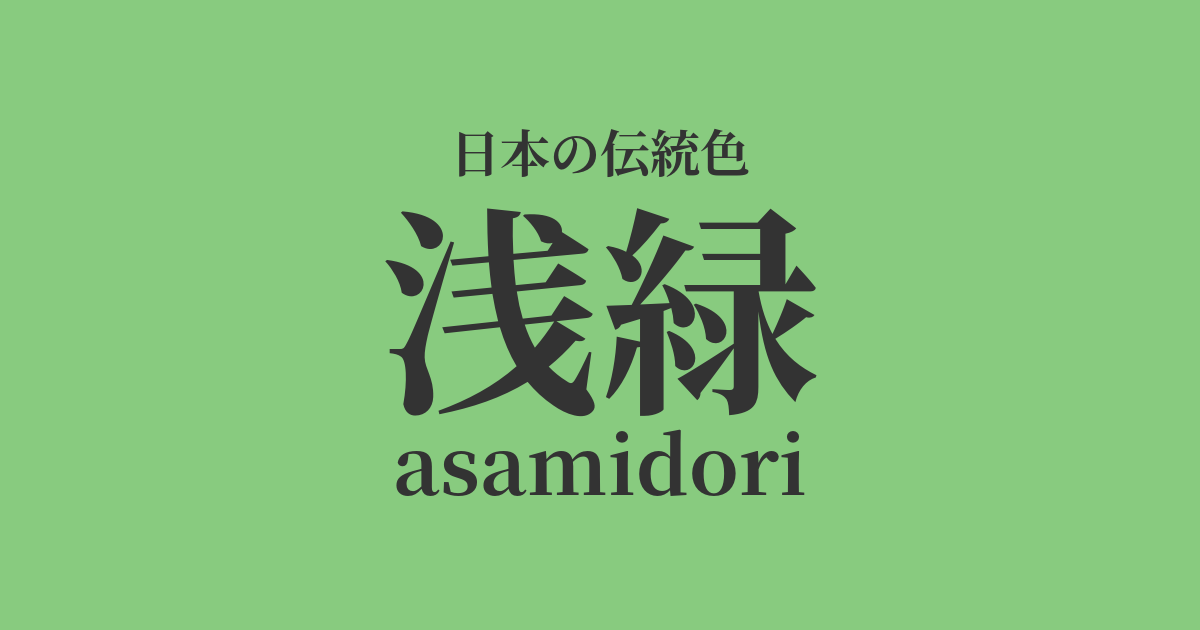
| Japanese color name | light green |
|---|---|
| reading | asamidori |
| HEX | #88CB7F |
| RGB | 136, 203, 127 |
What is light green? Origin and etymology
As the name suggests, Asamidori refers to a light, bright green color. It's a very straightforward name, combining "asa" (light), which indicates the shade of color, with "midori" (green), a basic hue. It is characterized by the soft, whitish hue of young leaves just sprouting in spring, or even lighter than Asagi (light blue onion). This color, which evokes the fresh vitality of nature, has long resonated with the sensibilities of the Japanese people.
In traditional dyeing, this delicate hue is said to have been achieved by combining indigo with yellow plant dyes such as Japanese knotweed and Phellodendron amurense.
Light Green Historical Background
The color name "asa-green" (light green) already existed in the Heian period and was widely popular in aristocratic society. Figures wearing asa-green clothing frequently appear in literary works and picture scrolls of the time. In particular, it was often used as a symbol of youth, immaturity, and loveliness, and was a favored color for the attire of young women and boys before their coming-of-age ceremony. It was also used in layered color combinations, such as "willow" and "young greens," to represent spring scenes, playing an important role in expressing a sense of the season.
During the Edo period, it became more widespread among ordinary people and was established as a color that added color to daily life, such as in kimonos and accessories.
Related literature, waka poetry, and seasonal words
Light green also appears in "The Tale of Genji," a representative work of Heian period literature. For example, in the "Wakana" chapter, it is depicted as the color of the attire of Onna San no Miya, the principal wife of Hikaru Genji, symbolizing her youth and elegance. Furthermore, Sei Shonagon's "The Pillow Book" also contains descriptions such as "light green paper," suggesting that this color was a familiar part of the lives of the aristocracy at the time.
Through these literary works, we can see that light green was not merely a color, but was associated with specific images such as youthfulness and a sense of the season.
Light green threads intertwine, and white dew falls like jewels—is this a spring willow?
Color scheme preview
This is to check the readability of the text when this color is used as the background.
Light green color scheme proposal
Cherry blossom pink (#FEEAFA)
This color scheme, reminiscent of young spring leaves and cherry blossoms, symbolizes Japanese spring. The refreshing light green and delicate cherry blossom pink complement each other, creating a gentle, calm, and vibrant impression that evokes the beginning of life. It is well-suited for expressing Japanese-style designs and the feeling of spring.
White training (#FFFFFF)
This combination most effectively brings out the freshness and cleanliness of light green. By pairing it with pure white, the pale shade of light green stands out, creating a refreshing and sophisticated impression. It is ideal for minimalist and clean designs.
Golden (#E6B422)
This bright and vibrant color scheme evokes the spring sunlight shining down on young leaves. The gentle light green, combined with the shimmering golden hue, creates a sense of elegance, vitality, and sophistication. It is well-suited for expressing a festive atmosphere or a positive and hopeful image.
Practical Scenes
In the world of traditional Japanese clothing, light green is used to express the feeling of spring, and is incorporated into formal kimonos such as visiting kimonos, casual kimonos, and accessories like obiage (sash ties). When used in furisode (long-sleeved kimonos) worn by young women in particular, it enhances their youthfulness and loveliness. Its refreshing hue gives the viewer a clean and refreshing impression, making it suitable for occasions such as tea ceremonies.
In interior design, incorporating light green into fabrics such as wallpaper, curtains, and cushions brings a bright and calming atmosphere to the entire room. It also pairs perfectly with houseplants, creating a natural and relaxing space. When combined with white, beige, or light wood-grain furniture, it contributes to creating a comfortable, Scandinavian-style space.
In the fields of web and graphic design, light green is suitable for websites and brand images that deal with themes such as nature, health, and ecology. It can be expected to give users a sense of security and trust, and is easy to use as both a main color and an accent color. When combined with white or gray tones, it can give a clean and sophisticated impression.