
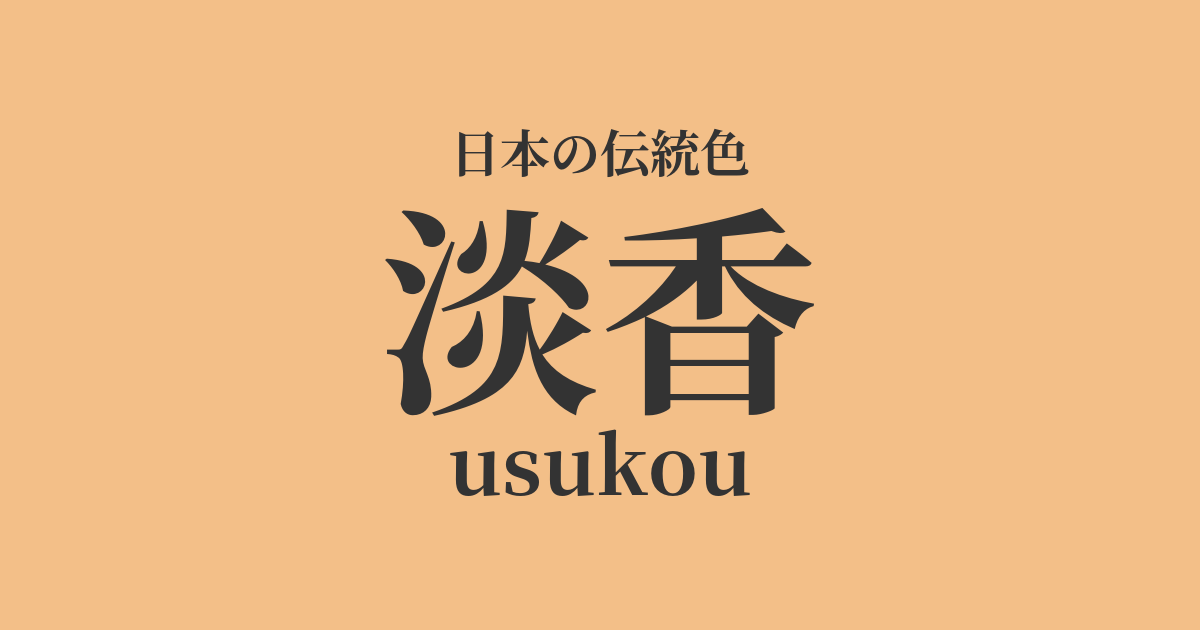
| Japanese color name | Light scent |
|---|---|
| reading | usukou |
| HEX | #F3BF88 |
| RGB | 243, 191, 136 |
What is Tanka? Origin and etymology
Usukou is a lighter shade of "kouiro," a color dyed using fragrant woods such as cloves, sappanwood, and alum. As the character "kou" (fragrance) suggests, it is a color name derived from fragrant woods, and clove dye in particular was highly valued for its unique scent and insect-repellent properties. In the aristocratic society of the Heian period, it was customary to infuse clothing with incense, and this color, which itself had a fragrance, was treated as something extremely elegant.
The color is a reddish-brown, giving it an elegant and calm impression.
The historical background of Tanko
The history of the color "Awako" (light incense) is said to date back to the Heian period. During this time, the nobility placed great importance on "kasane" (layered clothing), using various colors according to the season and occasion. Records of Awako being used as an autumn layered color along with "Kasane" can be found in texts such as the "Masasuke Shozoku Sho." Furthermore, "Kasane" is depicted as the color of the characters' clothing in literary works such as The Tale of Genji, suggesting that it was deeply rooted in the aesthetic sensibilities of the people of that time.
During the Edo period, brown tones became popular among common people, and it is said that light brown became widely popular as one of those colors.
Related literature, waka poetry, and seasonal words
Pale fragrance and the colors of the fragrances that give rise to it frequently appear in the world of Heian period literature. For example, in "The Tale of Genji," it is depicted as the color of the clothing of Hikaru Genji and other characters, and is an important element in expressing the dignity of the characters and the atmosphere of the scene. It is especially often used in connection with autumn scenes, and is said to symbolize the feeling of mono no aware (a sense of pathos or melancholy) as a color reminiscent of the colors of withered plants and the light of twilight.
While the word "pale fragrance" doesn't directly exist as a seasonal word, it's associated with related terms like "fragrant dye" (kozome) and the autumn seasonal word "withered leaf color" (kuchiba-iro), due to its similar hue.
Color scheme preview
This is to check the readability of the text when this color is used as the background.
Light fragrance color scheme proposal
Grape color (#640125)
The yellowish brightness of the light incense and the deep, calm reddish-purple of the grape color complement each other. This color scheme evokes a classic and elegant atmosphere, reminiscent of the "layered color combinations" of the Heian period, and gives a dignified impression.
鶸Menghuang (#82AE46)
The calming hues of light incense, combined with the youthful and vibrant yellow-green of yellow-green, create a vibrant color scheme full of life. It evokes images of the fields and mountains at the beginning of autumn, or the young leaves just beginning to sprout, giving a gentle and approachable impression.
White training (#FFFFFF)
The soft, delicate tones of the light incense, when combined with the pure, clean white, create an extremely elegant and sophisticated impression. Because the colors don't clash with each other and achieve both cleanliness and warmth, it's also suitable for minimalist and modern designs.
Practical Scenes
In the world of kimono, light incense is used for formal kimono such as visiting kimono, casual kimono, and obi sashes, giving an elegant and understated impression. It is especially favored in autumn and is suitable for expressing a sense of the season when combined with other colors. Its subdued color makes it easy to wear regardless of age.
In interior design, using light brown in wallpaper, curtains, and furniture upholstery brings warmth and tranquility to a space. It pairs exceptionally well with wooden furniture and natural materials, making it ideal for creating Japanese modern or natural-style spaces. It's also easy to use as an accent color, and has the effect of enhancing other colors.
In web and graphic design, using it as a background color can create a warm and friendly atmosphere while maintaining the readability of the content. It can be used as both a main color and an accent color, and is particularly well-suited to websites with themes of tradition or nature.