
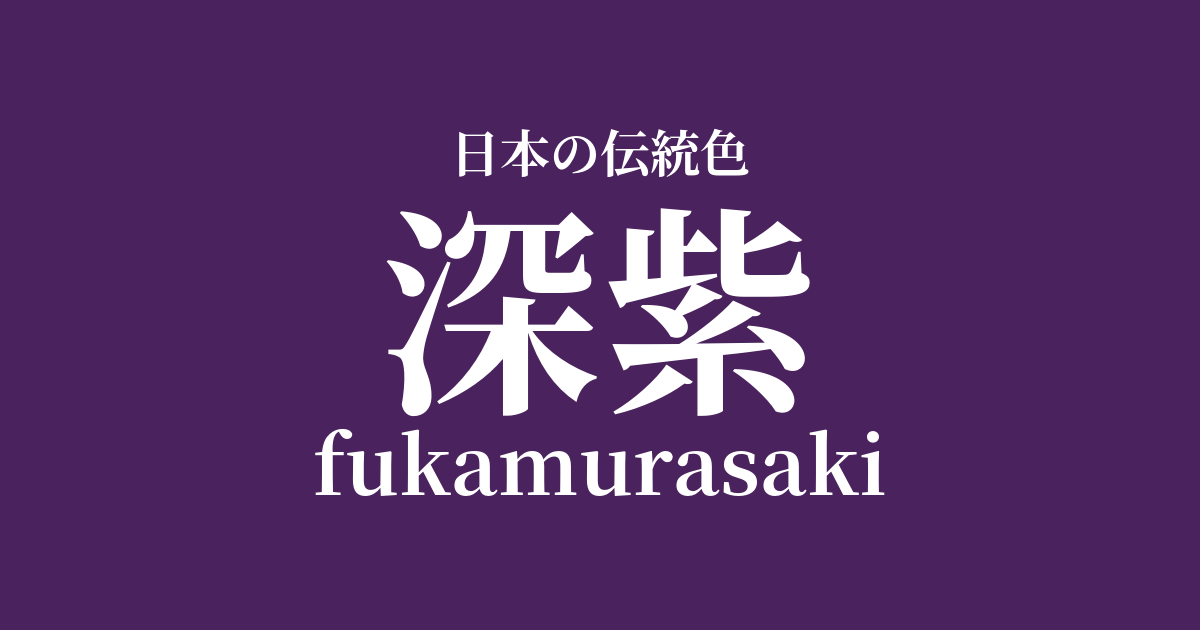
| Japanese color name | deep purple |
|---|---|
| reading | fukamurasaki |
| HEX | #4A225D |
| RGB | 74, 34, 93 |
What is deep purple? Origin and etymology
Deep purple derives its name from the deep purple color obtained by repeatedly dyeing with shikon, the root of the gromwell plant (Murasaki). "Deep" means deep, and the name is used in contrast to "light purple" (Asamurasaki), which is a lighter color dyed with the same dye. Dyeing with gromwell is extremely labor-intensive, and the amount that can be dyed is limited, so it has been considered a very precious color since ancient times. Due to its rarity, it was a special color that only people of high social standing were allowed to wear.
Because purple pigments dye well in alkaline conditions, lye made by dissolving the ash of camellias and other plants was used as a mordant. The process of dipping the cloth in the dye solution, exposing it to the air, and dipping it again was repeated many times to create a deep, vibrant purple color. It is said that this complex process further enhanced the value of deep purple.
The historical background of deep purple
The history of deep purple is ancient. In the Twelve Levels of Court Rank (603 AD), established by Prince Shōtoku, purple was the color of the highest ranks, Great Virtue and Lesser Virtue. Deep purple, in particular, was clearly distinguished as a higher rank than light purple. Through this system, purple became established in society as a color symbolizing authority and status.
The Taihō Code (701) and the Yōrō Code (718), enacted during the Nara period, stipulated that deep purple was a "forbidden color" that could only be worn by the emperor, members of the imperial family, and a select few high-ranking officials. As a result, it was strictly forbidden for ordinary people to wear deep purple, solidifying its image as a noble color.
Even into the Heian period, the value of purple remained unchanged, and it was cherished in aristocratic society as a symbol of nobility and elegance. It frequently appears in literary works such as "The Tale of Genji" as a color representing noble figures and mystical beauty, suggesting that it was deeply rooted in the aesthetic sensibilities of the time.
Related literature, waka poetry, and seasonal words
In "The Tale of Genji," a representative work of Heian period literature, the color purple plays an important role throughout the story, as symbolized by the name of "Lady Murasaki," whom the protagonist, Hikaru Genji, raised as his ideal woman. Deep purple is effectively used to express the elegance, grace, or profound affection of the characters.
In Sei Shōnagon's "The Pillow Book," the beauty of the color purple is also praised. In the section on "things to be admired," it is written, "The wisteria flower, with its deep color and large blossoms," listing the deep purple wisteria flower as something elegant. This shows just how captivated the Heian aristocracy was by the deep color purple.
While deep purple itself is rarely used as a seasonal word in poetry, the dye plant "murasaki" (purple gromwell) and the flowers that bloom with beautiful purple blossoms, such as wisteria, iris, and bellflower, have been frequently used in waka and haiku to represent the seasons.
Dig deep into the purple roots, for as I dig, I will meet the one I long for.
Color scheme preview
This is to check the readability of the text when this color is used as the background.
A deep purple color scheme proposal
Golden (#E6B422)
Deep purple and gold have long been a combination symbolizing nobility and luxury. They can be seen in Buddhist art and aristocratic attire, giving a dignified and opulent impression. The richness and brilliance of each color complement each other, resulting in a highly formal and elegant color scheme.
White training (#FFFFFF)
When combined with pure white, the nobility and depth of color of deep purple are further enhanced. It creates a refined impression that balances cleanliness and elegance, with a beautiful contrast. This color scheme is also used to express sanctity and purity.
Light green (#A9D159)
The combination of a deep, subdued purple and the bright, fresh green of young leaves creates a color scheme that evokes vitality and elegance. While classic, it gives a fresh impression and brings to mind the beauty of nature. This combination is also seen in the layered color schemes of the Heian period.
Practical Scenes
In the world of kimono, deep purple is a dignified color used for formal occasions such as visiting kimonos, formal kimonos, and obi sashes. It pairs particularly well with classical patterns, giving the wearer a sense of calm and elegance. It is a favored color for formal occasions such as coming-of-age ceremonies and weddings, as well as tea ceremonies.
In interior design, incorporating accent colors into accent walls, cushions, curtains, and other fabrics brings a sense of depth and luxury to a space. Careful lighting can further enhance the depth of the colors, creating a sophisticated and relaxing atmosphere. It's suitable for spaces where tranquility is desired, such as bedrooms and studies.
In web and graphic design, it is effective in conveying a brand's trustworthiness, tradition, and sense of luxury. When used as a main color, it creates a calm impression, while when used as an accent color, it attracts attention and tightens the overall design.