
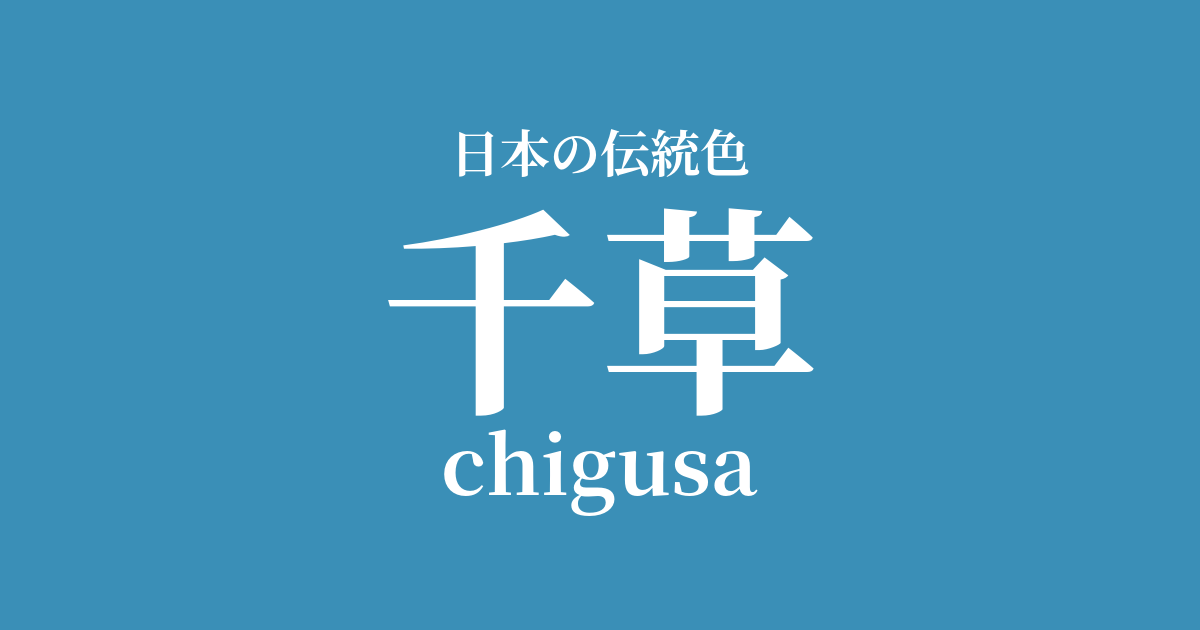
| Japanese color name | Chigusa |
|---|---|
| reading | chigusa |
| HEX | #3A8FB7 |
| RGB | 58, 143, 183 |
What is Chigusa? Origin and etymology
The color Chigusa-iro (千草色) originates from the color obtained by crushing the petals of the Commelinaceae family's annual plant, Commelina communis, and dyeing with its juice. Commelina communis was formerly called "tsukikusa" (着草), and it is believed that this name came from the fact that it was used to dye clothes by rubbing the color onto them. The prevailing theory is that this "tsukikusa" gradually changed to the characters "千草" (Chigusa) over time.
Another theory suggests that the name "Chigusa" (meaning "thousand grasses") comes from the fact that it blooms among a multitude of other grasses. The pigment in the dayflower is easily soluble in water, and the color washes out when laundered, so it was also called "Utsuroigusa" (meaning "fading grass"). This ephemeral nature, however, stimulated the aesthetic sensibilities of people in ancient times, and it became the subject of many literary works.
Chigusa's historical background
The history of Chigusa-iro (a type of green dye) is long, appearing as "Tsukikusa" (moon grass) in the Manyoshu, a collection of poems compiled during the Nara period. At that time, dyes had poor fixation properties, so it is presumed that it was mainly used as a pigment for drawing underpaintings or for temporary dyeing. It was unsuitable for dyeing expensive clothing.
During the Heian period, its delicate and ephemeral hues became popular among the aristocracy and were frequently featured in waka poetry. In particular, its fleeting nature was used to symbolize the changeability of the human heart and the transience of love.
During the Edo period, it became a more readily available dye and was popular among ordinary people. It was also used as a pigment in ukiyo-e prints, and its color can be seen in the works of artists such as Suzuki Harunobu and Kitagawa Utamaro. In modern times, this color has been reliably reproduced using chemical dyes.
Related literature, waka poetry, and seasonal words
Chigusa-iro, along with its raw material, the dayflower (commonly known as moonflower or dwarf flower), has long played an important role in the world of literature. The Manyoshu anthology contains numerous poems that liken the fleeting nature of the dayflower to the impermanence of the human heart and love. Its transience resonated deeply with the Japanese sensibility that cherishes the pathos of things.
The poem "I will dye my clothes with dayflower dye, even though the color will fade after being wet with morning dew" is particularly famous. This is interpreted as a poem expressing a single-minded and poignant love, saying that it doesn't matter that clothes dyed with dayflower dye will quickly fade after being wet with morning dew.
In the world of haiku, "dayflower" is used as a seasonal word for autumn. The sight of the blue flowers blooming while covered in morning dew symbolizes the cool and clear scenery of autumn. Many haiku poets, such as Matsuo Basho and Yosa Buson, have left behind poems that use dayflowers as their subject.
I will dye my clothes with moonflower, though they will fade after being wet with morning dew.
Color scheme preview
This is to check the readability of the text when this color is used as the background.
Chigusa's color scheme proposal
Persimmon color (#EA7243)
The blue of Chigusa green and the orange of Kaki orange are close to complementary colors, vividly enhancing each other's beauty. This creates a lively and energetic impression, making it suitable for expressing modern Japanese designs and autumn attire.
White Gun (#89C3EB)
Combining it with white, which is also in the blue family, creates a refreshing and cool color scheme. It evokes images of the sky and water, creating a calm and peaceful atmosphere. It is perfect for expressing the feeling of summer.
Blue gold (#FABE29)
Adding a vibrant turmeric color as an accent enhances the calm blue of the Chigusa color, giving it a touch of elegance and sophistication. The result is a combination that is both traditional and modern, creating a refined impression.
Practical Scenes
In the world of traditional Japanese clothing, Chigusa green is often used for summer items such as yukata, obi, and obiage (sash ties). Its cool hue provides a visual sense of coolness during Japan's hot and humid summers. When combined with white or off-white, it creates an elegant and refreshing look.
In interior design, incorporating it into fabrics such as wallpaper, curtains, and cushions brings a sense of calm and freshness to a space. It pairs well with white or light wood-grain furniture and is suitable for creating Japanese modern, natural, or Scandinavian-style spaces.
In web and graphic design, this color is effective when you want to convey trustworthiness and cleanliness. It is used as both a main color and an accent color in corporate websites, environmental themes, and soft drink packaging.