
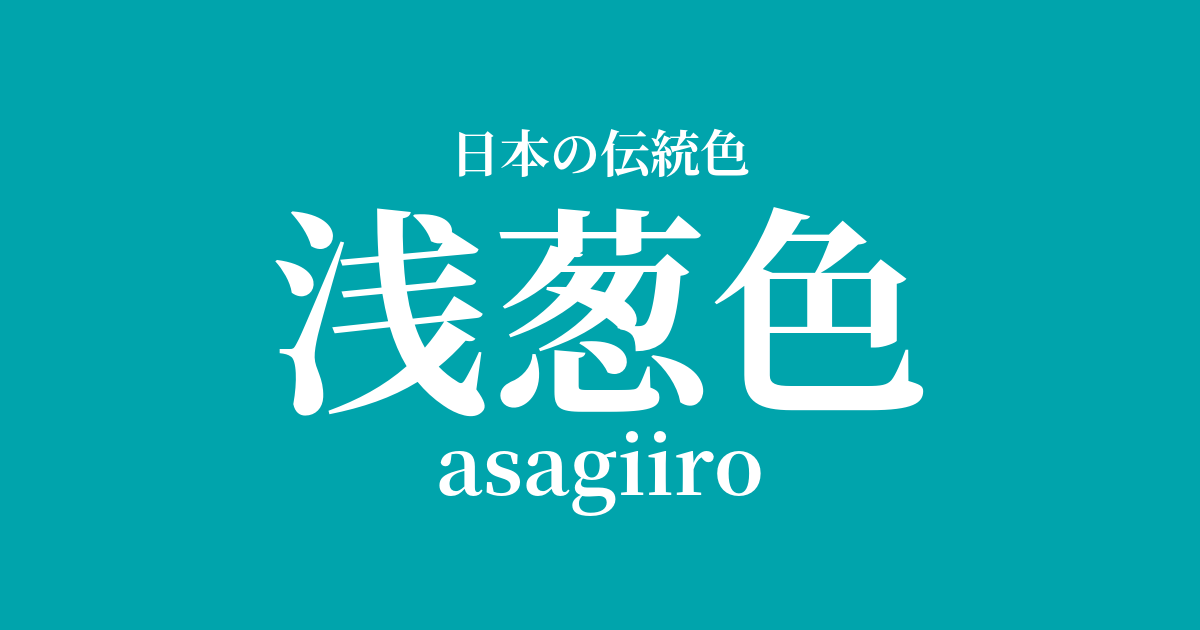
| Japanese color name | light blue |
|---|---|
| reading | Asagiiro |
| HEX | #00A4AC |
| RGB | 0, 164, 172 |
What is Asagi-iro (light blue-green)? Origin and etymology.
Asagi-iro, as its name suggests, is a bright, greenish-blue color derived from the color of young onion sprouts. It is believed that the vibrant color of onions, which have been familiar in Japan since ancient times, was incorporated into the color name. "Asa" means light in color, and "negi" refers to the onion plant, so "light onion color" is considered the direct etymology. It is the color obtained at a relatively light dyeing stage in the indigo dyeing process, and its refreshing and youthful tone is its main characteristic.
The historical background of light blue
The name "asagi-iro" (light blue) is mentioned in the "Engishiki," a compilation of laws and regulations from the Heian period, confirming that it is a color that has existed since ancient times. At that time, it was mainly a color worn by common people. Later, in the mid-Edo period, when the Kabuki actor Arashi Sangoro wore an asagi-iro costume on stage, it became extremely popular among common people as a stylish color.
Historically, the most symbolic use of light blue is arguably seen in the haori jackets worn by the Shinsengumi, a group active during the late Edo period. The striped haori they wore were also known as "asagi-ura" and became a symbol of the group. These haori are said to have been modeled after the attire of the Ako ronin, famous from the Chushingura story, and have left a strong impression on later generations as a color symbolizing the purity and youthfulness of samurai.
Related literature, waka poetry, and seasonal words
Due to its refreshing hue, the light blue color has been used in literary works and classical performing arts to express youth and freshness. It frequently appeared in ukiyo-e prints and kabuki costumes, especially during the Edo period, and became established as a color that adorned the sophisticated townspeople's culture. Although the word "light blue" itself is not a seasonal word, the words from which it derives, "onion" and "young onion," are seasonal words for spring, and light blue is also seen as a color that evokes the youthful vitality of spring.
Wearing light blue, who will I show this to?
Color scheme preview
This is to check the readability of the text when this color is used as the background.
A proposed color scheme in light blue.
Indigo (#165E83)
Like light blue, this color combination is derived from the varying shades of indigo dye. Combining it with indigo creates a color gradation, resulting in a unified and calming Japanese atmosphere. It is suitable for layering kimonos and traditional Japanese designs.
Blue gold (#FABE29)
The vibrant blue-green of Asagi-iro and the warm color of Ukon-iro are close to complementary colors, and they vividly enhance each other's beauty. This creates a lively and cheerful impression, and is a gorgeous combination that evokes festivals and celebrations.
White training (#FFFFFF)
When paired with pure white, the refreshing quality of light blue is further enhanced. This creates a cool, refreshing color scheme reminiscent of the sky or water, giving a simple and modern impression. It's perfect for summer clothing and clean designs.
Practical Scenes
Asagi (light blue) is a refreshing and cool-looking color, making it a popular choice for summer kimonos, yukata, and traditional Japanese accessories such as tenugui (hand towels). Its cool appearance makes it particularly favored for hot weather. Furthermore, as it is widely known as the color of the Shinsengumi's haori (jacket), it has become an essential color in designs and stage costumes with historical themes.
In modern interior design, incorporating it as an accent color in wallpaper, curtains, and cushions brings a bright and open atmosphere to a room. It pairs particularly well with natural spaces based on white and wood tones. In web design, it is used as a key color or button color for corporate websites because it gives a clean and trustworthy impression.