
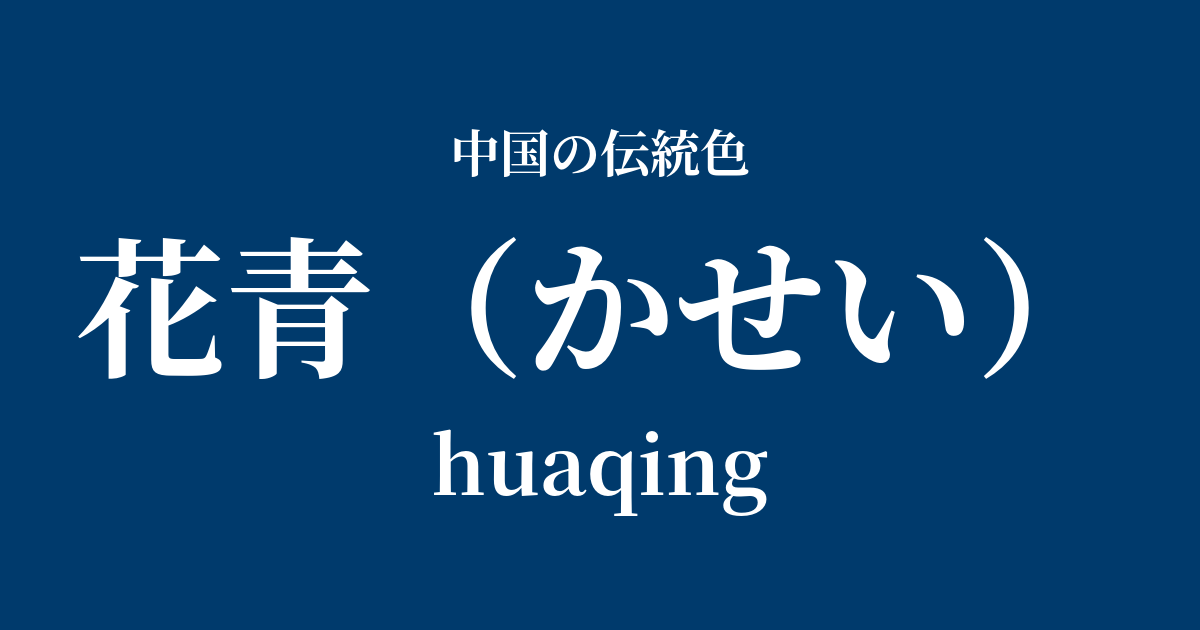
| Color name | flower blue |
|---|---|
| reading | Kasei |
| pinyin | huaqing |
| HEX | #003A6C |
| RGB | 0, 58, 108 |
What is Hanasei? Origin and etymology
Kasei is a deep, calming blue color made from the indigo plant. The character "花" (hana) here means "essence" or "the finest," and "青" (sei) refers to the color indigo. In other words, Kasei is a name that represents a select, beautiful blue color that can be called the "essence of indigo."
This color primarily developed as a pigment used in Chinese painting. It is produced by removing impurities and refining a precipitated indigo called "denran," which is made by fermenting indigo leaves. Because it dissolves easily in water and produces a transparent color, it was particularly valued for coloring ink paintings.
Historical background of Hanasei
The history of indigo dyeing in China is very old, and its origins are said to date back to the Zhou Dynasty (circa 1046 BC – 256 BC). However, it was only during the Tang Dynasty, a period of cultural flourishing, that "flower blue" as a pigment became particularly important in the world of painting.
During the Song Dynasty (960–1279), ink painting became the dominant art form, and the technique of expressing all things using only shades of ink was perfected. In this context, low-saturation blues like huaqing (flower blue) blended well with the color of ink and were effectively used to express the depth of landscapes and the hazy atmosphere.
From the Ming to the Qing dynasties, Jingdezhen blue and white porcelain (underglaze blue) captivated the world, and in the world of painting, blue and white porcelain continued to play an important role and was favored by many literati painters.
Chinese art and crafts, including the art of flower and blue.
The color of blue-green (Hana-ao) was best utilized in Chinese landscape paintings. By layering pale blue-green over distant mountains painted in ink, it created a sense of infinite depth and a mystical atmosphere. Paintings using this technique are considered one of the origins of "blue-green landscape" paintings.
In the context of fashion culture, while "hana-ao" is the name of a pigment, its hue is deeply associated with indigo-dyed fabrics. Deep blue garments dyed with indigo have long been widely used as official attire for government officials and everyday wear for commoners, and have been cherished as a color symbolizing composure and dignity. Its dignified presence possesses a universal appeal that resonates even in modern fashion.
Blue is derived from indigo, yet it is bluer than indigo.
Color scheme preview
This is to check the readability of the text when this color is used as the background.
Flower blue color scheme proposal
Tsukihaku (#EAF4FC)
The combination of a deep night sky-like blue and a pale moonlight-like white creates a serene and clear impression. It's a dignified and elegant color scheme.
Pilestone (#994A3D)
The combination of blue, the color of the sky and water, and ochre, the color of the earth, evokes a sense of the grandeur of nature. It creates a powerful and stable color scheme.
Fujio (#FFB61E)
The contrast between the deep blue and vibrant yellow makes each color stand out. This color scheme, also seen in the dragon robes of the Ming and Qing emperors, gives a noble and magnificent impression.
Practical Scenes
In interior design, incorporating floral blue into an accent wall in a study or bedroom can create a sense of depth and have a calming effect. Using it as an accent color in small items such as cushions, artwork, or vases is also suitable for creating a sophisticated atmosphere.
In fashion, a coat or suit in floral blue gives an intelligent and urban impression. It pairs exceptionally well with neutral colors such as white, beige, and gray, creating a refined look. High-quality materials such as silk and cashmere will further enhance the depth of the floral blue color.
In the fields of web design and graphic design, it is ideal as a corporate color for companies that want to convey reliability and expertise. By using a light color for the background and incorporating this blue into the text and logo, you can create a highly visible and sophisticated image.