
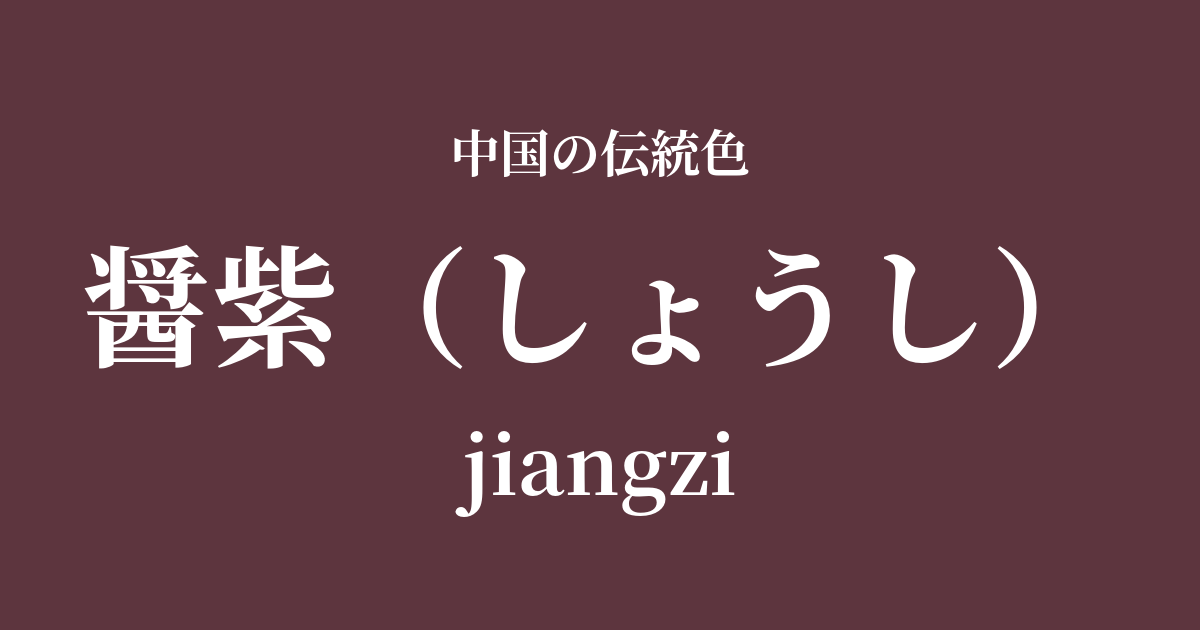
| Color name | soy sauce purple |
|---|---|
| reading | Shōshi |
| pinyin | jiangzi |
| HEX | #5D353E |
| RGB | 93, 53, 62 |
What is Jiang Zi? Origin and etymology
Jiang Zi (醤紫), as the name suggests, is a deep, reddish-dark purple color that means "purple like soy sauce." "Jiang" is a general term for fermented foods such as soy sauce and miso, and the unique deep color of matured soybeans is the origin of this color's name.
In ancient dyeing techniques, it was difficult to produce such complex colors with a single dye. It is believed that these rich and deep hues were created by repeatedly dyeing with dyes such as gromwell root (shikon) and madder. These were precious colors that required time and effort to produce.
The historical background of Jiang Zi
In ancient China, purple was considered an extremely noble color. Due to the rarity of the dye, there was a time when it was a "forbidden color," permitted only to the emperor and a select few high-ranking officials, and it was a symbol of authority and dignity.
Dark, subdued purples like Jiang Zi (a type of reddish-brown) established their status, especially from the Han dynasty onward. In a time when dignity and mature authority were valued more than ostentation, this color was favored for court ceremonial attire and the formal wear of high-ranking officials. During the Tang dynasty, the color of clothing was determined by official rank, and it is said that high-ranking officials of the third rank and above wore purple robes. Jiang Zi, too, has held special significance in history as one of the colors that signified such high status.
Jiang Zi in Chinese Art and Crafts
The rich, deep shade of Jiang Zi (a type of Chinese purple) showcases its beauty in Chinese clothing culture, particularly in Hanfu (traditional Chinese clothing). When lustrous silk fabrics are dyed Jiang Zi, the interplay of light and shadow creates an elegant and noble atmosphere. It was used as the color of clothing worn by emperors and noblewomen, as well as for men's formal wear, expressing the status and dignity of the wearer.
In the world of ceramics, deep purple colors, such as the "eggplant purple" glaze perfected during the reign of Emperor Kangxi of the Qing Dynasty, were highly valued. While Jiangzhi is more reddish, it is also considered a noble shade of purple and is thought to have played a role in adding depth and elegance to works of art.
Color scheme preview
This is to check the readability of the text when this color is used as the background.
Soy sauce purple color scheme proposal
赭石 (#A75347)
The richness of the deep purple hue and the earthy warmth of the reddish-brown color harmonize to create a traditional and dignified impression. It is suitable for creating a calm and historical atmosphere in spaces and for fashion.
Moon White (#D9E9E5)
Combining a deep soybean purple with a pure, bright moon white creates a sophisticated impression without being too heavy. It evokes an elegant and intellectual atmosphere reminiscent of the stillness of night and moonlight.
Jiang Huang (#E4A852)
The noble quality of the deep purple and the bright, vibrant yellow of the ginger yellow complement each other, creating a luxurious and striking color scheme. It evokes a festive and energetic impression reminiscent of court culture.
Practical Scenes
In the world of fashion, jasmine purple is ideal for statement pieces such as coats, dresses, and suits. It's a sophisticated yet distinctive color, and its luxurious feel is further enhanced when combined with glossy fabrics like silk and velvet.
In interior design, incorporating this color into accent walls, sofas, or curtains brings depth and tranquility to a space. It blends seamlessly into quiet spaces such as studies and bedrooms. When paired with light colors like moon white or off-white, it creates a modern and sophisticated atmosphere.
In web design and graphic design, it is suitable for brand websites that want to convey a sense of luxury and trustworthiness. When used as a background color, it can express a dignified worldview, and when gold or tangerine yellow is added as an accent color, it results in a glamorous and impressive design.