
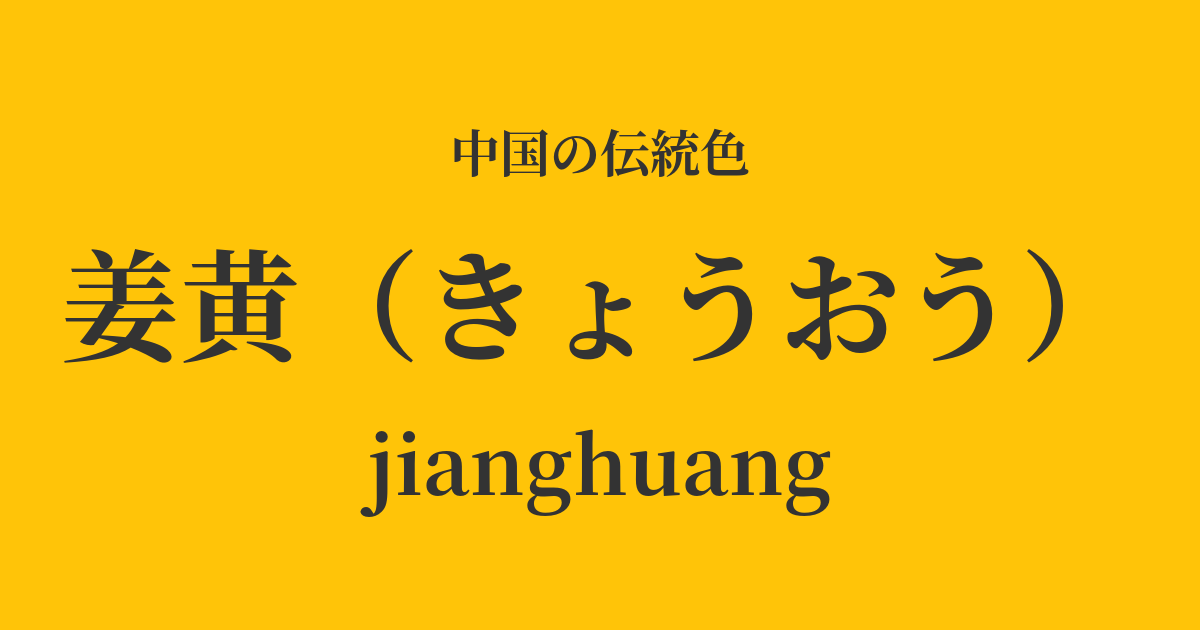
| Color name | Jiang Huang |
|---|---|
| reading | Kyoou |
| pinyin | jianghuang |
| HEX | #FFC408 |
| RGB | 255, 196, 8 |
What is Jiang Huang? Origin and Etymology
Kyo-o, as the name suggests, refers to a vibrant yellow color like that of ginger. The name is said to originate from the color of the rhizome of ginger, an indispensable spice in Asian cuisine, and also from the color of turmeric, which is also used as a spice and dye.
Turmeric, also known as "Jiang Huang," is a key ingredient in curry powder. Its vibrant yellow color has made it a valuable dye for cloth since ancient times, and it has also been highly valued for its medicinal properties.
This color is a vibrant hue reminiscent of sunlight and the bounty of the earth. It has long been believed to bring warmth and vitality to people's lives and even stimulate appetite. More than just a color, it is a color deeply rooted in daily life, imbued with wishes for health and prosperity.
Historical background of Jiang Huang
The history of ginger yellow is deeply intertwined with its history as a dye and medicine. As a readily obtainable yellow from plants, it has been widely used since ancient times to dye the clothes of ordinary people. It is said to have been particularly compatible with plant fibers such as cotton and hemp, allowing for vivid dyeing.
Furthermore, in the world of traditional Chinese medicine, turmeric (Jiang Huang) has been highly valued as a herbal medicine that promotes blood circulation and relieves pain. In this way, Jiang Huang has supported the lives of the Chinese people from both the perspectives of "color" and "health."
From the Tang Dynasty onward, certain shades of yellow, particularly a reddish-yellow called "shao" (reddish-yellow), were designated as the emperor's color, and their use by subjects was strictly forbidden. However, brighter, more approachable yellows like jianghuang (chili yellow) were distinct from the colors symbolizing the emperor's authority and are thought to have been more widely used and appreciated by the common people.
During the Ming and Qing dynasties, folk dyeing and weaving techniques developed further, and various plant dyes, including ginger yellow, vividly colored people's everyday clothes and festival attire.
Jiang Huang in Chinese Art and Crafts
In clothing culture, jiang huang (cold yellow) was a particularly favored color for Hanfu (traditional Chinese clothing) worn by commoners and young people. Its bright and cheerful hue made it suitable for celebratory and festive attire, enhancing the festive atmosphere. When dyed onto silk fabrics, jiang huang, combined with its luster, creates an even more magnificent impression.
In the world of Chinese ceramics, yellow, reminiscent of jianghuang, plays an important role. For example, the vibrant yellow glaze seen in Tang sancai ware possesses a vitality that is similar to this color. Furthermore, during the Ming dynasty, yellow-glazed porcelain was produced as the emperor's color, and among the diverse shades of this porcelain, one can find warm yellows similar to jianghuang.
In paintings, especially folk paintings (such as New Year's paintings) depicting people's lives and wishes for good fortune, jiang huang was used to vividly portray auspicious fruits (such as citrus fruits) and the clothing of figures. Its bright color brings a cheerful and joyful atmosphere to the entire picture.
Color scheme preview
This is to check the readability of the text when this color is used as the background.
Suggested color scheme: ginger yellow
Seidai (#465D8A)
This combination features vibrant ginger yellow and deep, calming dark blue. The colors complement each other, creating a modern and sophisticated impression. It's classic yet fresh, creating a refined space.
Anzu (#F7A259)
The combination of adjacent warm colors creates a unified, warm, and approachable impression. The gentle and pleasant color scheme evokes the bounty and harvest of autumn, soothing the viewer's heart.
Dark blue (#E6D0DE)
By combining a vibrant ginger yellow with a soft, elegant lotus flower color, a gentle and sophisticated atmosphere is created within the vibrancy. It is ideal for expressing feminine softness or the lightness of spring's arrival.
Practical Scenes
In interior design, incorporating amber yellow as an accent color brings brightness and warmth to a space. Using it in small items such as cushion covers, rugs, and art panels gives the entire room an energetic feel. It looks particularly good in spaces based on white, gray, and natural wood tones.
In fashion, it's incredibly effective as an accent color in an outfit. Simply incorporating ginger yellow through a scarf, bag, or socks can brighten up the entire look and create a lively atmosphere. It pairs perfectly with earth tones and denim, making it an easy color to incorporate into everyday styling.
In website and graphic design, it's effective to use it on buttons, banners, and icons where you want to attract user attention. It's suitable for brand images that convey friendliness and vitality, and it gives a positive impression. However, using it too much can strain the eyes, so it's best to use it as an accent.