
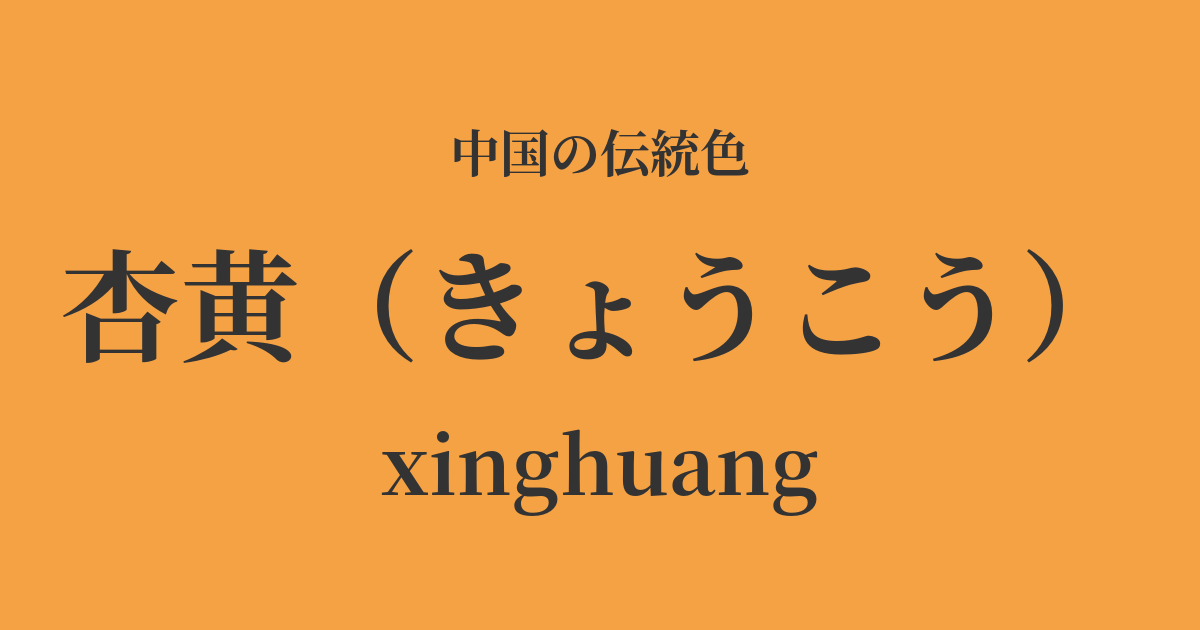
| Color name | apricot yellow |
|---|---|
| reading | Kyoko |
| pinyin | xinghuang |
| HEX | #F5A245 |
| RGB | 245, 162, 69 |
What is apricot yellow? Origin and etymology
As the name suggests, Kyoko is a warm, vibrant yellow color derived from ripe apricots.
Apricots are a fruit native to China and have been deeply rooted in people's lives since ancient times. The apricot tree, which blooms with beautiful flowers in spring and bears abundant fruit in early summer, has been considered a symbol of vitality and fertility. The apricot yellow color of its ripe fruit is cherished as a bright and hopeful hue reminiscent of sunlight and the bounty of the earth.
Historical background of apricot yellow
When discussing the history of apricot yellow, the color system of the Qing Dynasty (1644-1912) is indispensable. In the ancient Chinese Five Elements philosophy, yellow was considered the color that governs the center and was positioned as the color that symbolized the emperor, who was the center of the world.
Yellow has been considered the emperor's color since the Sui and Tang dynasties, but the regulations became even stricter during the Qing dynasty. Among the many shades of yellow, "Ming Huang" and "Xing Huang" were designated as the highest-ranking colors that could only be used by the emperor and a select few members of the imperial family.
While the most prestigious "bright yellow" was used in important ceremonies such as coronations, "apricot yellow" is said to have been used as the color of the emperor's everyday attire. It was strictly forbidden for anyone other than the emperor to wear this color, and apricot yellow played a role in visually representing absolute authority and supreme status.
Apricot blossoms in Chinese art and crafts
Apricot yellow can be seen in the clothing and crafts that adorned the court culture of the Qing dynasty.
Particularly famous is the "dragon robe," a symbol of the emperor's authority. Made of apricot-yellow silk, the garment is intricately embroidered with auspicious motifs such as dragons and auspicious clouds using gold and colorful silk threads, making it a truly magnificent work of art. These garments were the culmination of the highest level of dyeing and weaving technology of the time.
Furthermore, some ceramics used in the royal court also featured a yellow glaze called "koyu" (yellow glaze). This yellow-glazed porcelain, with its apricot-yellow hue, was specially made for the emperor and royalty's tableware, or for ceremonial purposes, and its dignified beauty continues to be highly valued to this day.
Color scheme preview
This is to check the readability of the text when this color is used as the background.
Apricot yellow color scheme proposal
Ai (#293C55)
The combination with deep, subdued indigo is a dignified color scheme also seen in the attire of emperors during the Qing Dynasty. It balances the vibrancy of the apricot yellow, giving an impression of dignity and sophistication.
赭 (#AD4A2F)
By incorporating a reddish-brown color, it creates a warm and calming atmosphere reminiscent of the abundant harvests of autumn and the twilight sky. It gives a harmonious and pleasant impression.
Matsuka Midori (#BCEE68)
Adding a bright, youthful green reminiscent of pine needles creates a vibrant color scheme that evokes the apricot tree itself, giving a natural, fresh, and lively impression.
Practical Scenes
Apricot yellow is an attractive color that gives off an impression of dignity due to its historical background, while also possessing a friendly quality derived from fruit.
In interior design, incorporating it as an accent in cushion covers, art panels, or rugs adds warmth and elegance to the space. It pairs particularly well with wooden furniture and gold accessories, creating a sophisticated atmosphere.
In fashion, it's recommended to incorporate apricot yellow through accessories such as scarves, bags, and jewelry. In particular, when paired with clothing in muted colors such as navy, brown, and charcoal gray, apricot yellow acts as an accent color, creating an elegant and sophisticated impression.
In web design, it's effective when used for buttons and banners you want to attract attention. When using it as a background, slightly reducing the saturation or using plenty of white or light gray space can create a page with high visibility and a warm feel.