
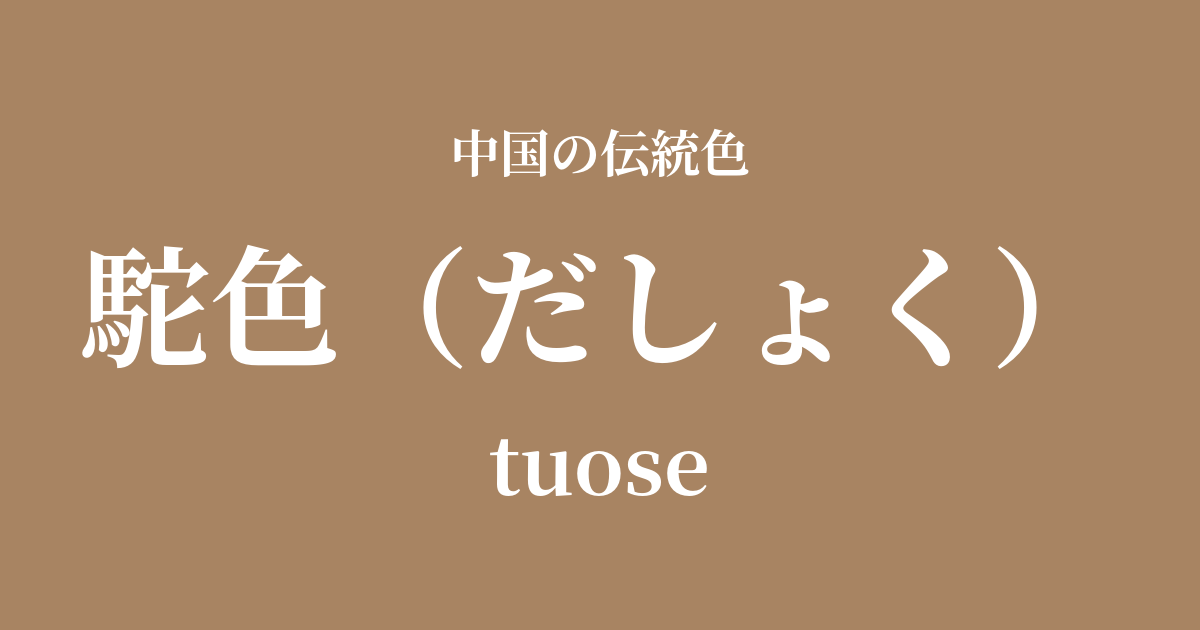
| Color name | blue |
|---|---|
| reading | Dashoku |
| pinyin | tuose |
| HEX | #A88462 |
| RGB | 168, 132, 98 |
What is "驼色"? Origin and etymology
Camel brown, as the name suggests, is a warm, yellowish-brown color derived from the color of a camel's coat. In particular, it is believed to originate from the soft, warm winter coat of the two-humped camel that inhabits the desert regions of Central Asia.
This color, rather than being created by dyes, has existed in people's lives since ancient times as a natural color found in the world. Its hue, reminiscent of the earth, sand, and withered grass, evokes a sense of comfort and simple beauty in people.
Inspired by the image of camels silently traversing the vast desert, the color "rhubarb" evokes feelings of "steadiness," "patience," and "trust." It can be described as a calm yet powerful color that embodies the vitality needed to survive in harsh natural environments.
The historical background of the vermilion color
While there are few records indicating that the color "liu" (驼) was officially designated as a color symbolizing a particular dynasty, it was a color of significant importance in Chinese history, particularly in the trade along the Silk Road.
Camels were known as "ships of the desert" and were indispensable animals for ancient East-West trade. Therefore, the color of camel brown became etched in people's minds as a symbol of caravans traversing the Silk Road and cultural exchange with distant lands. During the Tang Dynasty, a rich international culture flourished, and many "Tang sancai" ceramics shaped like camels were produced. A yellowish-brown color similar to camel brown was effectively used in the glaze of these ceramics.
In contrast to the vibrant colors used in the royal court, the dark brown color was favored in more practical and understated settings, such as the clothing of commoners and the robes of monks. Its understated hue is thought to reflect a simple and robust spirit, and a philosophy of living in harmony with nature.
Liu Li in Chinese Art and Crafts
Due to its natural hue, the liu color has been incorporated into various forms of Chinese art, crafts, and clothing culture.
In clothing, it was particularly favored for its warm texture, especially in autumn and winter Hanfu (traditional Chinese clothing) and overcoats. It pairs exceptionally well with natural materials such as wool, linen, and cotton, beautifully enhancing the texture of the materials themselves. It could be said to be the origin of the "camel color" in modern fashion.
In the world of ceramics, the camel figures found in Tang Dynasty sancai porcelain are famous, but a similar shade of red can also be seen as a glaze for simple pottery that makes the most of the texture of the clay. Furthermore, in landscape painting, its subdued color tones were used to express depth and a sense of the season when depicting vast landscapes, rocky surfaces, and withered mountains in autumn.
Great desert solitary smoke, Changhe falling sun
Color scheme preview
This is to check the readability of the text when this color is used as the background.
Red color scheme suggestion
Yassei (#134857)
When combined with the deep indigo color, the warmth of the rui-iro (a type of dark blue) is enhanced, creating an intelligent and calm impression. The two colors create a beautiful contrast, resulting in a sophisticated and mature atmosphere.
Hot fat (#9D2933)
The deep red of the rouge adds vibrancy and elegance to the natural tone of the ochre. The combination of warm colors creates an elegant and feminine impression, adding a touch of color to your outfit.
Blue green (#788B56)
The earthy red and the vibrant green reminiscent of plants create a color scheme that evokes the harmony of nature. The combination of earth tones creates a calm and relaxed atmosphere, bringing peace to the mind.
Practical Scenes
Due to its versatility and calming atmosphere, the color "rhubarb" can be used in a variety of modern situations.
In fashion, navy is a classic color that works well in any season, appearing on coats, sweaters, and pants. It's especially prominent in autumn and winter outfits, adding warmth and elegance. Pairing it with basic colors like white, black, and navy creates a sophisticated look.
In interior design, it's ideal for spaces where you want to relax, such as living rooms and bedrooms. Even when used in large areas like wallpaper, curtains, and sofas, it doesn't feel overwhelming, creating a calm and comfortable atmosphere. It also pairs exceptionally well with wooden furniture and houseplants.
In web and graphic design, using it as a background or accent color gives the entire site a sense of trust and natural warmth. It is suitable for brands representing organic products, traditional crafts, and lifestyle products.