
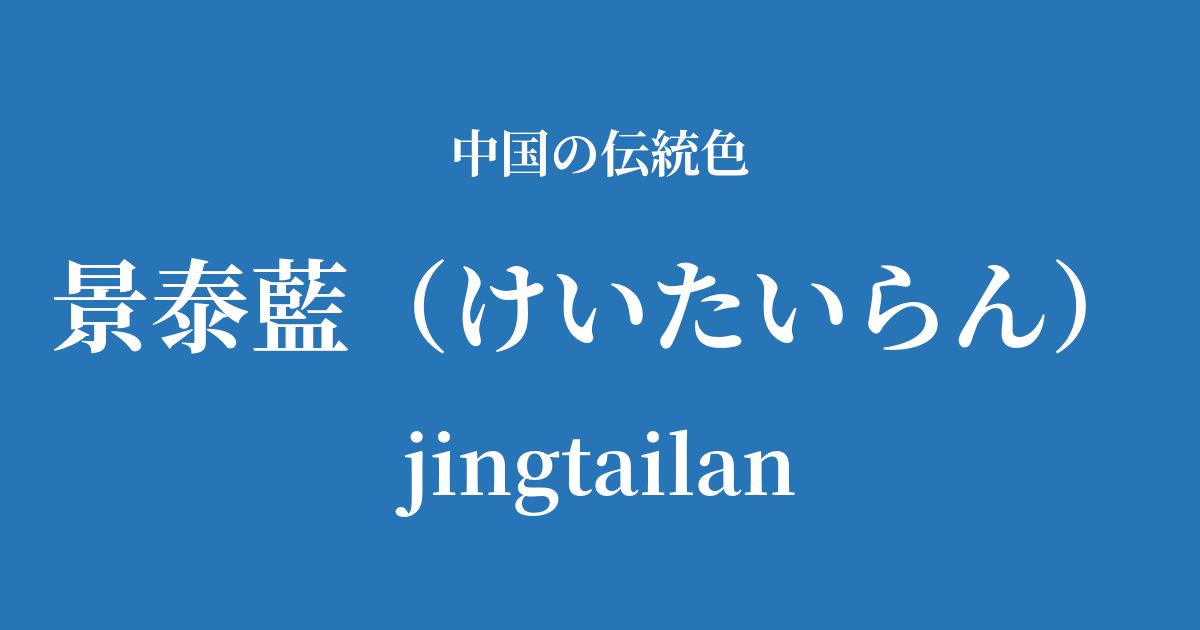
| Color name | Keitai Ai |
|---|---|
| reading | No need for a cell phone |
| pinyin | jingtailan |
| HEX | #2775B6 |
| RGB | 39, 117, 182 |
What is Jingtai Lan? Origin and Etymology
As its name suggests, Jingtai-ran is a deep, vibrant blue color originating from the Ming Dynasty in China.
The name of this color originates from a certain work of art that reached its peak during the reign of Emperor Jingtai, the seventh emperor of the Ming Dynasty (1450-1456). It was a type of enamelware, also known as cloisonné, made by firing a vitreous glaze onto a copper base, called "Jingtai Lan."
The clear blue glaze used in this craftwork, reminiscent of the gemstone lapis lazuli, is particularly magnificent, and later generations came to call the blue color itself "Jingtai blue." It can be said to be an elegant name that links the color with the era, meaning "blue of the Jingtai period."
Historical background of Jingtai Lan
The technique of Jingtai lantern glazing itself is believed to have been introduced from the Arab world in the west during the Yuan Dynasty. However, it was during the Ming Dynasty that this technique merged with Chinese aesthetics and blossomed into a distinct art form.
Particularly during the reign of Emperor Jingtai, the court workshops made continuous improvements to their techniques, resulting in the creation of exquisite and colorful works that were unlike anything before. Emperor Jingtai himself deeply loved this blue color, which encouraged its production, and Jingtai blue established itself as a symbolic art form of the imperial court.
During the subsequent Qing Dynasty, particularly under the reign of Emperor Qianlong, the production of Jingtai ware reached its peak. The techniques became even more refined, and a wide variety of items were created, not only utensils but also ornaments and furnishings. This color maintained its prestige and beauty for a long time, as it was a noble color that only emperors and aristocrats could possess.
Jingtai Lan in Chinese Art and Crafts
The color most deeply associated with Jingtairan is, of course, the art and craft of "Jingtairan (cloisonné enamel)." The technique involves creating outlines of patterns on a copper base using thin metal wires (called "sashi"), filling the spaces with colorful glazes, and then firing it. This is an extremely laborious process. The finished vessels exude a magnificent beauty, with the golden color of the metal wires and the vibrant colors of the glazes harmonizing with each other. This blue was the leading color in this technique.
This deep, clear blue color can also be seen in Qing Dynasty ceramics. The glazing techniques of Jingtairan were applied, and beautiful blue patterns were painted on the surface of the porcelain. The contrast between the purity of the white porcelain and the deep blue of Jingtairan captivated many people.
In the realm of fashion culture, this noble blue was sometimes incorporated into formal attire and ornaments used in the royal court. When this color was dyed onto lustrous silk fabrics, its depth and vibrancy were further enhanced, signifying the high status of the wearer.
Color scheme preview
This is to check the readability of the text when this color is used as the background.
Jing Tai Rin's color scheme proposal
Fujio (#FFB61E)
This combination evokes the gold trim used in Jingtai ware. Combined with yellow, the emperor's color, it creates a lavish and dignified atmosphere reminiscent of court culture.
Tsukihaku (#EAF4FC)
It gives a pure and refined impression, like a blue pattern painted on white porcelain. It enhances the vibrancy of the Jingtai blue while creating an overall elegant and calm atmosphere.
Matsuishi Green (#23B7A1)
This exotic and vibrant color scheme is reminiscent of peacock feathers. When combined with other blue-green tones, the colors complement each other, creating a deep and harmonious impression.
Practical Scenes
In interior design, using jasmine as an accent color can add elegance and depth to a space. Incorporating it into cushions, curtains, or art panels will give the entire room a refined look. Combining it with gold or brass lighting and accessories will create an even more glamorous atmosphere.
In fashion, this color has a leading role. Boldly incorporating it into large items like dresses and coats creates an elegant and striking look. It's also recommended to use it as an accent color in accessories such as scarves, bags, and jewelry. When paired with basic colors like white, beige, and gray, the beauty of blue truly shines.
In web and graphic design, it's effective when you want to convey a sense of luxury and trustworthiness. Using it as the main color for a brand site, or as an accent for headings and buttons, can create a sophisticated and intelligent image.