
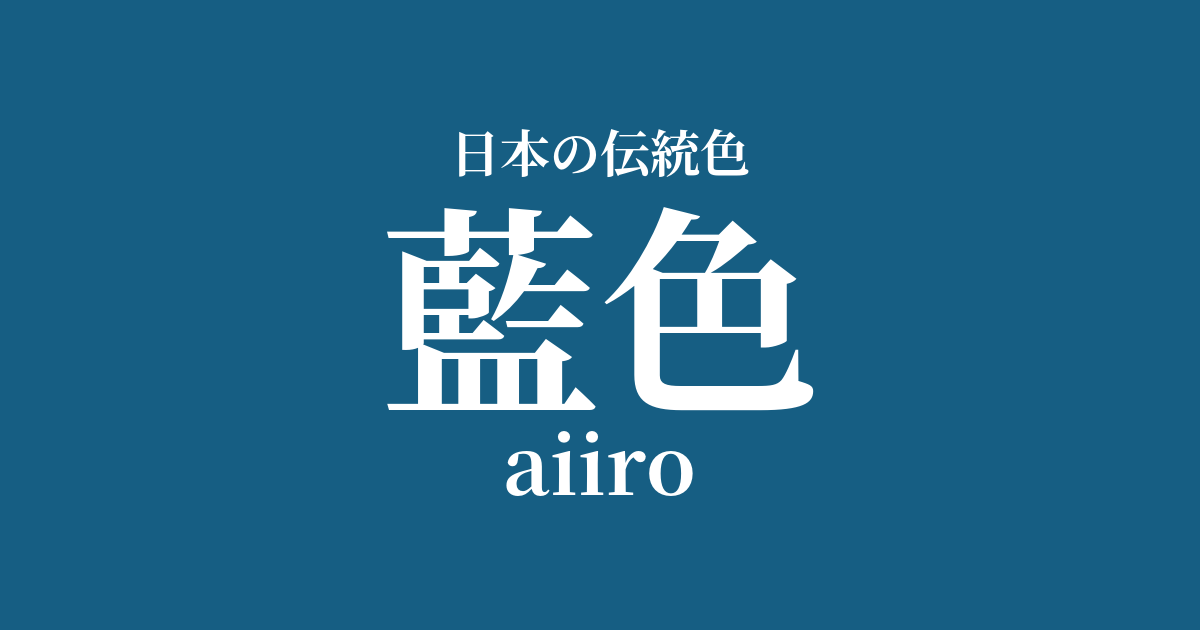
| Japanese color name | Indigo |
|---|---|
| reading | aiiro |
| HEX | #165E83 |
| RGB | 22, 94, 131 |
What is indigo? Origin and etymology
The color indigo gets its name from the fact that it is dyed using the leaves of the Polygonum tinctorium plant, an annual herb belonging to the Polygonaceae family. The dye made by harvesting, drying, and fermenting the leaves of Polygonum tinctorium is called "sukumo." This sukumo is placed in a water jar, and wood ash lye and lime are added to make it alkaline and ferment it, creating an indigo dye solution. This technique is called "ai-date" and is a traditional method in which the experience and intuition of the craftsman are considered important.
Indigo dyeing is characterized by the process of immersing the fabric in a dye solution, lifting it out, and exposing it to air, which causes oxidation and the development of a beautiful blue color. The shade of the color can be freely adjusted by the number of times this dyeing process is repeated. There are many names for the colors produced by indigo dyeing, from lightest to darkest, such as "kame-nozoki," "asagi," "hanada," the standard shade "aiiro," and the even darker "kon-iro," which speak to the richness of Japan's color culture.
The historical background of indigo
The history of indigo dyeing in Japan is long, and although its origins are uncertain, indigo-dyed fabrics remain among the treasures of the Shōsōin from the Nara period. During the Heian period, it was treated as a color used by people of high status, and regulations concerning the cultivation and tribute of indigo can be found in the Engishiki (a set of laws and regulations). In this era, indigo was considered a color of high status, second only to purple.
With the rise of the samurai class during the Kamakura period, and their preference for a simple, robust, and upright character led to the widespread use of the subdued color indigo. In particular, indigo-dyed cloth was favored for the "yoroi-shita," the undergarments worn beneath armor. It is said that this was because the antibacterial and hemostatic properties of indigo were highly valued on the battlefield.
During the Edo period, the widespread cultivation of cotton throughout Japan led to indigo dyeing becoming deeply ingrained in the lives of ordinary people. Durable, fade-resistant, and stain-resistant, indigo-colored clothing was widely used for work clothes and everyday wear. Indigo was used in every aspect of life, from noren curtains and tenugui towels to futons, and Japanese towns were filled with the color indigo. It is well known that foreign experts employed in the Meiji era praised this sight as "Japan Blue."
Related literature, waka poetry, and seasonal words
Indigo has appeared in literary works since ancient times. In the Manyoshu, there are poems that use the expression "dyed in blue (indigo)," which means to dye with indigo. Also, in Heian period literature such as The Tale of Genji, a dark bluish-gray color dyed with indigo, called "aonibi," is depicted as the color of mourning clothes, giving us a glimpse into the color culture of the time.
In the world of haiku, "indigo flower" is used as a seasonal word for autumn. This is because the indigo harvest season is from summer to autumn, and it blooms with small red flowers around that time. In addition, words related to the cultivation of indigo and the dye-making process, such as "harvesting indigo" and "pounding indigo dye," are also seasonal words, demonstrating the close relationship between people's lives and indigo.
They harvested the indigo, bundled it, and stood it upright.
Color scheme preview
This is to check the readability of the text when this color is used as the background.
Indigo color scheme proposal
Kutsuha color (#915E33)
The indigo blue and the withered leaf brown are close to complementary colors, enhancing each other's beauty. This traditional color scheme evokes a calm and deep autumn scene and is well-suited to emphasizing a Japanese aesthetic.
White training (#FFFFFF)
The combination of deep indigo and pure white is a fundamental color scheme that conveys a sense of cleanliness and freshness. Its clear contrast and high visibility make it frequently used in traditional Japanese designs such as yukata and tenugui (hand towels).
Blue gold (#FABE2C)
Against the deep indigo, the vibrant turmeric yellow creates a strong contrast, acting as an accent color. This combination, reminiscent of the moon floating in the night sky, offers high visibility and simultaneously conveys both elegance and sophistication.
Practical Scenes
In the world of kimono, indigo is one of the most fundamental colors. During the Edo period, it was widely used in cotton kimonos and yukata, adding color to the lives of ordinary people. Even today, its calming hue is loved by people of all genders and ages, and it remains a highly popular staple color for summer yukata, giving a cool and refreshing impression.
In interior design, indigo is used to bring a sense of calm and depth to a space. When incorporated into fabrics such as wallpaper, curtains, and cushions, it harmonizes well not only with Japanese-style spaces but also with modern styles. It is believed to have a calming effect, making it suitable for spaces where relaxation is desired, such as bedrooms and studies.
In the fields of web and graphic design, indigo is used as a color that symbolizes trust, sincerity, and tradition. It is favored as a corporate color for companies and for brand websites dealing with historical products. When combined with white or gray, it creates a sophisticated impression, and when accented with gold or yellow, it can create a sense of luxury.