
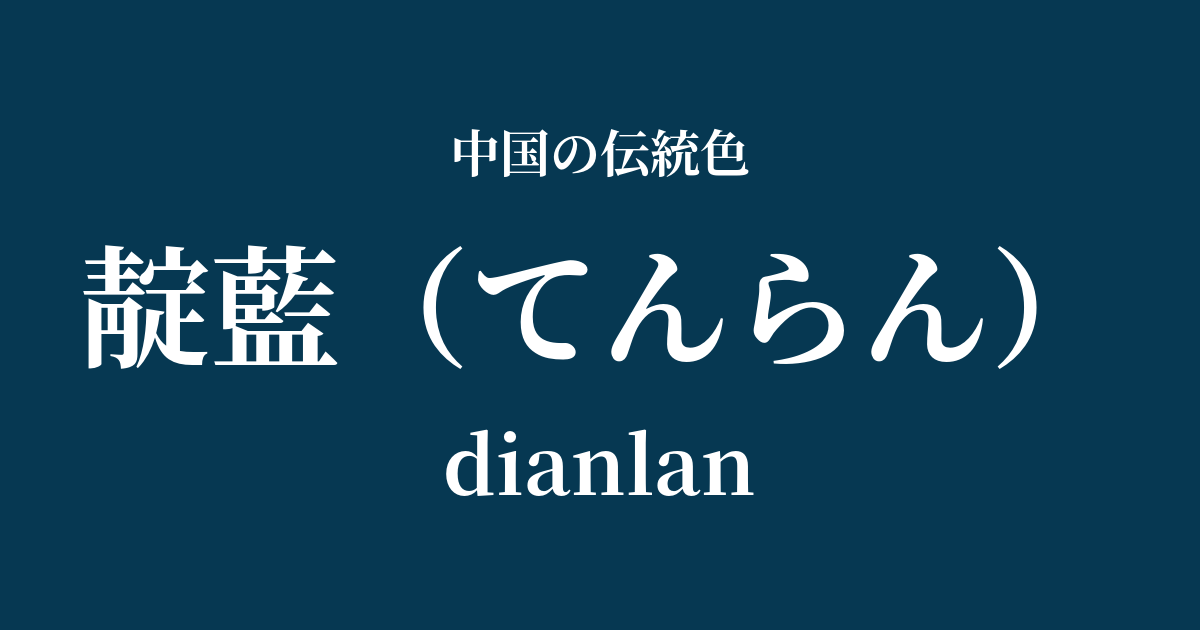
| Color name | Indigo blue |
|---|---|
| reading | Tenran |
| pinyin | dianlan |
| HEX | #063852 |
| RGB | 6, 56, 82 |
What is Deulan? Origin and etymology
Tenran refers to a deep, rich blue color achieved by dyeing with "ten," a dye made from the indigo plant. "Ten" refers to the indigo dye produced by precipitation, while "ran" refers to the plant itself from which the dye is made.
The source of this color comes from the leaves of plants such as Polygonum tinctorium and Indigo. These leaves are harvested, soaked in water to ferment, and then mixed with lime and other substances, causing the blue component to precipitate. This precipitate is the dye called "randen," and it is the source of the color of dian indigo. This manufacturing method is said to be the origin of the Japanese word "senchin" (precipitation).
One of the characteristics of indigo dyeing is that the shade of color can be freely adjusted by the number of times the dye is applied. Deanran refers to a deep, almost black, dark blue that is created by repeatedly dyeing the fabric, and the rich depth of color is embodied in the effort and time required for this process.
Historical background of Deanlan
The history of indigo dyeing in China is very old, dating back thousands of years. The "Rites of Zhou," a text from the Zhou Dynasty (circa 1046 BC – 256 BC), already mentions the existence of specialized positions for managing indigo dyeing, suggesting that it was an important industry even back then.
During the Qin and Han dynasties, indigo became widely used as a color for the clothing of common people. Indigo dye, which could dye cotton and hemp durably and was resistant to fading, was a practical color indispensable to people's daily lives. On the other hand, bright colors such as yellow, red, and purple required expensive dyes and were therefore mainly reserved for the aristocracy.
During the Ming and Qing dynasties, indigo dyeing techniques reached their peak as a folk craft. In particular, a type of stencil dyeing called "lan-inkafu" (藍印花布) flourished, mainly in the Jiangnan region. Simple yet beautiful auspicious patterns were dyed with indigo onto white cotton cloth, and the vibrant contrast captivated many people, adorning all aspects of life, from clothing and bedding to curtains.
Deirdream in Chinese Art and Crafts
The color indigo is particularly deeply intertwined with Chinese clothing culture. Many Hanfu, the everyday clothing of ordinary people, were dyed in this practical and beautiful blue. Furthermore, many traditional costumes of ethnic minorities also feature beautiful indigo dyeing with unique patterns, reflecting the culture and aesthetic sensibilities of each region.
"Ai-inka-fu" is a representative art form of indigo dyeing. A pattern from a stencil is transferred onto the cloth using a paste made from soybean flour and lime, and after drying, it is dyed in an indigo vat. When the paste is scraped off the dyed cloth, a clear white pattern is revealed. The designs are diverse, including phoenixes, dragons, peonies, and children, and embody people's wishes for happiness and longevity.
In the world of ceramics, the cobalt blue of blue-and-white porcelain (blue and white porcelain) is famous, but it is said that the simple and calming aesthetic of the blue of the porcelain also influenced the designs of pottery made in private kilns. There you will find a warm, popular beauty that is different from the opulent porcelain of the royal court.
blue, blue, blue
Color scheme preview
This is to check the readability of the text when this color is used as the background.
Color scheme suggestion
Moon white (#D9D6C3)
By combining a deep indigo with a pale moonlight-like white, it evokes a quiet night sky, creating a calm and sophisticated impression. It's perfect for when you want to project an intellectual calmness and elegance.
赭石 (#A84532)
The combination of deep blue (deutzia) and reddish-brown (ochre) creates a simple yet powerful contrast reminiscent of the earth or pottery. It's a warm, stable, and traditional color scheme.
Matsuka (#B3B47A)
Adding pine blossoms, with their gentle yellowish-green color reminiscent of pine pollen, evokes the vitality of indigo leaves and the breath of nature. This combination is recommended for creating a natural, soothing, and calming space.
Practical Scenes
In interior design, deep blue is a color that brings depth and tranquility to a space. When used in large areas such as a wall, sofa, or rug, it creates a quiet and contemplative atmosphere. When combined with off-white, cream, or solid wood furniture, it creates a comfortable space that is both modern and somehow nostalgic.
In the world of fashion, indigo is most familiar as the color of denim. It can be incorporated into jeans, jackets, shirts, and dresses, giving an impression of sincerity and intelligence. It's a timeless color unaffected by trends, and works well in a wide range of situations, from casual to slightly more formal.
In web and graphic design, using it as a background color can enhance the text and images placed on top, conveying a sense of reliability and expertise. Using it as a main color can also help build a calm and sophisticated brand image.