
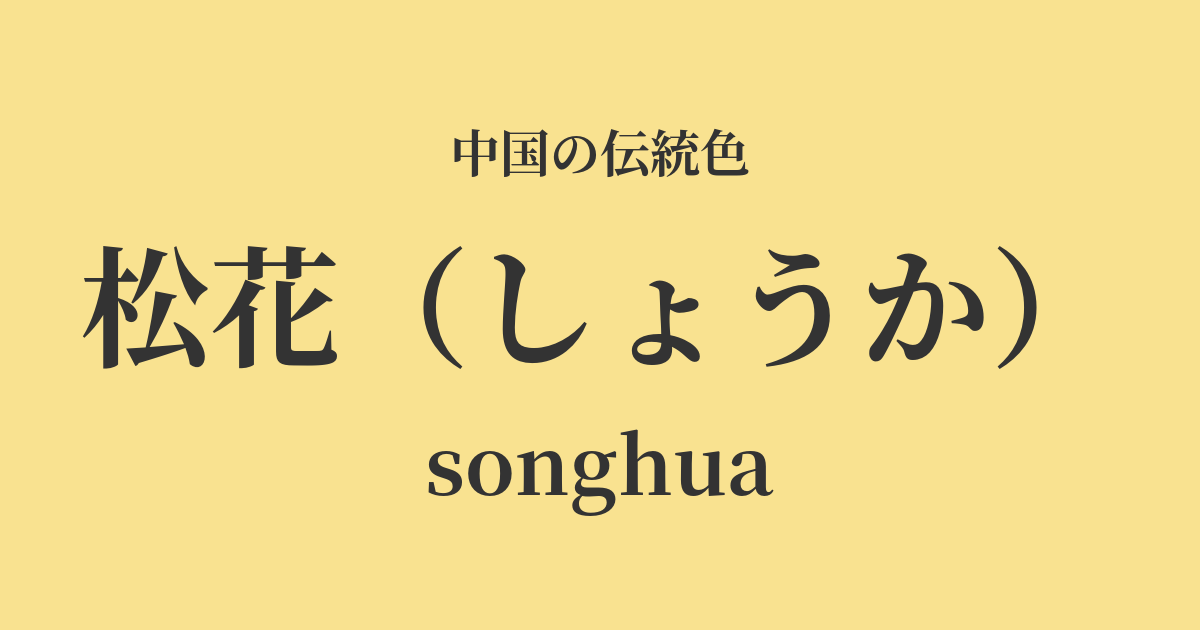
| Color name | Matsuka |
|---|---|
| reading | Shoka |
| pinyin | Songhua |
| HEX | #F9E290 |
| RGB | 249, 226, 144 |
What is Matsuhana? Origin and etymology
"Shoka" (松花), as the name suggests, is a gentle, pale yellow color derived from the color of the pollen of pine blossoms that bloom in spring.
With the arrival of spring, the yellow pollen fluttering from pine trees has long been a symbol of the breath of life and the beginning of a new season. This delicate and bright yellow has been deeply etched in people's hearts as a symbol of nature's bounty and regeneration.
Historical background of Matsuhana
Songhua yellow is deeply intertwined with Chinese court culture. Particularly from the Tang Dynasty onward, yellow was considered a noble color symbolizing the emperor. While the vibrant "bright yellow" was reserved exclusively for the emperor, pale yellows like "songhua" were permitted to be worn by royalty and high-ranking nobles.
During the Qing Dynasty, a strict system of distinguishing social status by the color of clothing was established. The dragon robe worn by the emperor was designated as "bright yellow," but it is said that the crown prince and other princes wore slightly different shades of yellow, such as "apricot yellow" or "songflower." These colors expressed a modest dignity that was noble yet distinct from the color that represented the emperor himself.
Songhua in Chinese Art and Crafts
The elegant appearance of the pine flower color can also be seen in Chinese clothing culture and crafts.
In silk fabrics, especially in Hanfu (traditional Chinese clothing), this color was often used for the attire of women of noble status. Dyed on lustrous silk, the pine blossom color gives an elegant and soft impression, enhancing the wearer's refined elegance.
Furthermore, in the world of ceramics, a pale yellow glaze reminiscent of "Songhua" can be seen. Yellow-glazed porcelain, especially that produced in the Jingdezhen kilns during the Qing dynasty, was highly prized as an item for the imperial court, and its uniform and beautiful coloration is considered proof of advanced technology. In painting, it was used effectively to depict spring scenes and gentle sunlight.
Pine flower sake, shunsui sencha.
Color scheme preview
This is to check the readability of the text when this color is used as the background.
Matsuhana's color scheme proposal
Pine green (#2B443F)
Like pine blossoms and leaves, this combination is natural and harmonious. The bright pine blossom color is complemented by the pine green, creating a calm and dignified impression. It is also suitable for traditional designs and Japanese-style spaces.
Tensei (#81C7D4)
By combining it with a clear, sky-blue reminiscent of a spring day, it creates a refreshing and open atmosphere. The warmth of the pine-green and the coolness of the sky-blue complement each other, giving a light and sophisticated impression.
Beni Kaido (#F2A0A1)
By combining it with a gentle red reminiscent of the flowering crabapple, you can create a vibrant and warm scene of spring in full bloom. It evokes feminine elegance and loveliness, making it a great choice for fashion and cosmetic color schemes.
Practical Scenes
In interior design, incorporating pine blossom green into wallpaper, curtains, cushions, and other fabrics will create a bright and calming atmosphere throughout the entire space. It pairs particularly well with wooden furniture, creating a warm and natural ambiance.
In fashion, choosing this color for blouses, dresses, or scarves brightens the face and gives an elegant and gentle impression. It's perfect for spring outfits and harmonizes beautifully with basic colors such as white, beige, and navy.
In web and graphic design, using this color as a background or accent color can create a friendly and trustworthy image. It is particularly suitable for traditional crafts, natural cosmetics, and lifestyle brands.