
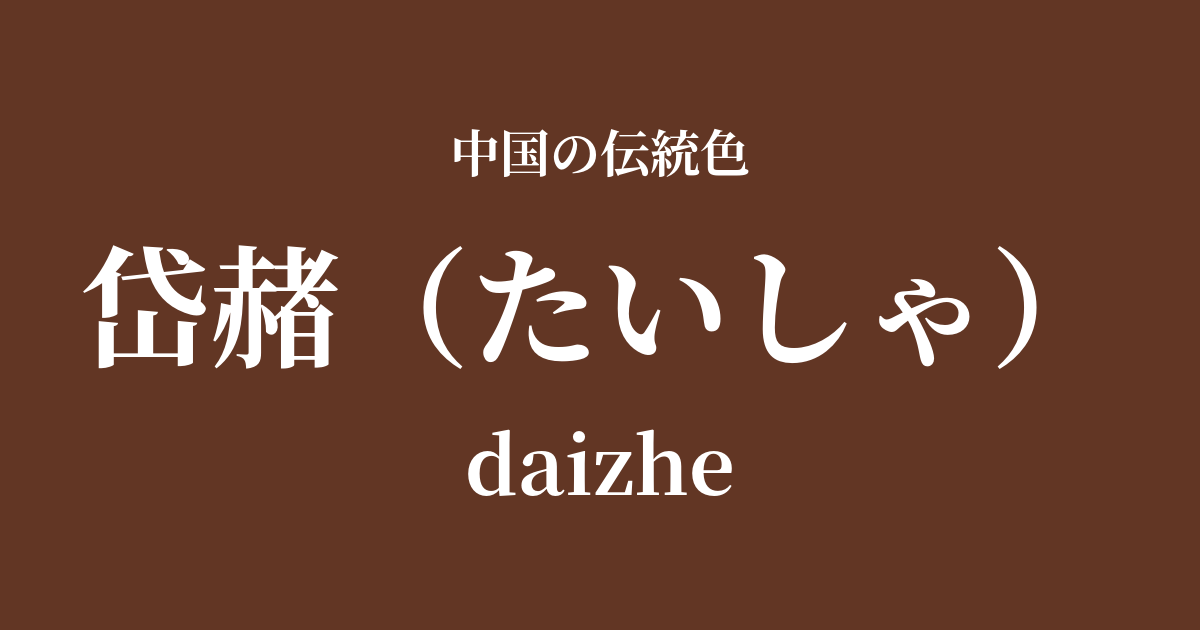
| Color name | Daihaku |
|---|---|
| reading | Taisha |
| pinyin | daizhe |
| HEX | #623624 |
| RGB | 98, 54, 36 |
What is Daisha? Origin and etymology
Taisha, as its name suggests, is a deep, calm reddish-brown color derived from the soil of Mount Tai, the most sacred mountain in China.
The character "岱" is taken from "岱宗" (Taizong), another name for Mount Tai, and "赭" means red clay or the reddish-brown pigment made from it. In other words, Daisha is a color name with an extremely specific and sacred origin: "the color of the red clay of Mount Tai."
Mount Tai has been considered the foremost of the Five Great Mountains since ancient times and is known as the place where successive emperors performed the Fengshan ceremony, worshipping the gods of heaven and earth. Therefore, the soil of Mount Tai was not merely soil, but was considered sacred, possessing power that connected to heaven. The color of this soil, Dai-sha, has also been deeply etched in people's hearts as a special color symbolizing reverence for nature and sacred authority.
Historical background of Daisha
The history of Dai-O is deeply intertwined with the history of the worship of Mount Tai. Records show that many rulers, from the legendary Emperor Shun to Qin Shi Huang and Emperor Wu of Han, performed the Fengshan ceremony in this place.
It is said that clay from Mount Tai was used for the ritual vessels and altars used in such sacred ceremonies. The ochre color is thought to have played a role in visually representing the solemn atmosphere of these ceremonies and the authority of the emperor.
Furthermore, the pigment "shado," derived from natural soil, has been used in architecture and murals since ancient times. In particular, in important buildings such as palaces and temples, reddish-brown pigments like daisha were believed to make the buildings appear majestic and to have the power to ward off evil spirits. Those who saw that color must have felt both the power of the earth and the sacredness of the heavens.
Dai ochre in Chinese art and crafts
The rich, deep ochre color can be found in expressive forms across various fields of Chinese art.
In landscape painting, a pigment called ochre was used to depict the rocky surfaces of mountains and the texture of dry earth. The color of ochre evokes a sense of warmth and the passage of time in the depicted landscape.
Furthermore, in the world of ceramics, reddish-brown glazes similar to daisha have existed since ancient times. In particular, the simple yet powerful forms of ancient pottery and the natural colors produced by glazes containing a lot of iron seem to encapsulate the very energy of the earth within the vessel.
In clothing culture, "daisha" is rarely used as a direct dye color, but it has been a part of people's lives as one of the natural earth tones produced by techniques such as clay dyeing. In particular, the subdued colors used in the clothing of Taoist priests who avoided ostentation and in the everyday wear of ordinary people can be said to reflect the simple and steady aspects of daisha.
Color scheme preview
This is to check the readability of the text when this color is used as the background.
Ochre color scheme proposal
Moon White (#D9E4E8)
By combining the deep, earthy color of ochre with the clear, moon-like light of moonlight, this color scheme creates a serene and refined impression. It's a calm color combination that evokes a quiet nighttime landscape.
Matsuka (#BCEE68)
The combination of the calm, earthy ochre and the vibrant color of pine blossoms creates a color scheme that evokes a sense of life. It gives the impression of a harmonious blend of natural strength and freshness.
Gen (#3D3B4F)
The combination of deep reddish-brown ochre and a profound, almost blackish black creates a highly dignified and gravitas-filled impression. This color scheme is ideal for expressing historical depth and unwavering authority.
Practical Scenes
In interior design, ochre brings a sense of calm and sophistication to a space. By incorporating it as an accent wall, or by choosing it as the color for leather sofas or heavy wooden furniture, you can give a study or living room a refined and elegant feel.
In the world of fashion, ochre is perfect for autumn and winter outfits. Incorporating it into wool coats, leather jackets, leather shoes, and bags creates a classic and sophisticated look. As an earth tone, it pairs well with other basic colors such as beige, khaki, and navy.
In web and graphic design, using ochre as a background or accent color brings a sense of reliability, stability, and historical depth to the entire site. It is particularly suitable for brands dealing in traditional crafts, websites showcasing historical buildings, and law firms—fields where trustworthiness is paramount.