
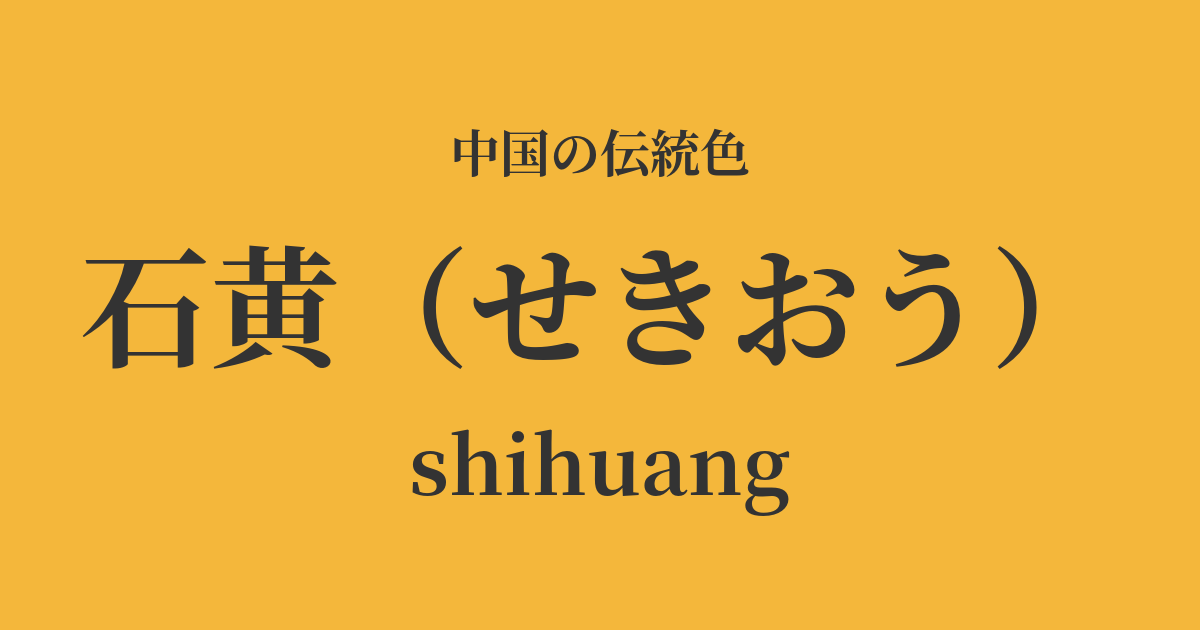
| Color name | stone yellow |
|---|---|
| reading | Sekiou |
| pinyin | shihuang |
| HEX | #F4B73B |
| RGB | 244, 183, 59 |
What is orpiment? Origin and etymology
Sekiō, as its name suggests, means "stone yellow," and its color originates from a pigment made by crushing the mineral orpiment. In English, it is called orpiment, and it has been used as a valuable yellow pigment in various parts of the world since ancient times.
Its main component is arsenic trisulfide, and it is known to be highly toxic. Its brilliant, vibrant yellow color captivated people, but it was a color that required careful handling.
In Taoism, it was sometimes believed to be one of the ingredients in "elixir of immortality." However, due to its toxicity, it is said that emperors and nobles who consumed the elixir of immortality sometimes lost their lives.
Historical background of orpiment
The history of yellow is ancient, and in China it held special significance as a symbol of authority and nobility. Its importance increased even further after yellow was designated as the color of the emperor, who presides over the center, in the Five Elements philosophy.
During the Sui and Tang dynasties, it was customary to dye the paper on which imperial edicts were written with orpiment. This was called "huangma paper," and it was believed that the sulfur component in orpiment had insect-repellent properties. It also served the practical purpose of protecting important official documents from insect damage.
Thus, orpiment was considered the color of the emperor, or a color of comparable nobility, and was one of the "forbidden colors" whose general use was restricted. Its brilliance truly symbolized the authority of the emperor.
Lithoph in Chinese Art and Crafts
The vibrant color of orpiment was highly valued in the world of Chinese art and crafts. In Buddhist art, including the murals of the Dunhuang Mogao Caves, it was frequently used as a majestic yellow to adorn the halos and robes of Buddha statues. Its radiance stood out even in the dark caves, creating a sacred atmosphere.
In painting, especially in the highly detailed style known as "gongbi-ga," it was an indispensable color for the feathers of birds in flower-and-bird paintings and for the noble attire of figures. Its ability to maintain its vibrancy without becoming muddy when mixed with other pigments was another reason why it was favored by painters.
Furthermore, in the field of clothing culture, it was used as the color to dye the highest-ranking garments, such as the dragon robe worn by the emperor. The lustrous golden glow of silk fabrics dyed with orpiment is said to have been so beautiful that it overwhelmed those who saw it.
Color scheme preview
This is to check the readability of the text when this color is used as the background.
Color scheme proposal for orpiment
Navy blue (#223A55)
The combination of vibrant ore yellow and deep, calming navy blue powerfully enhances each other's beauty. It creates a dignified and imposing impression, making it ideal for designs that convey authority and trustworthiness.
Verdigris (#408355)
This traditional color scheme is also seen in the opulent decorations of temples. It evokes a sense of natural vitality while creating a vibrant and exotic atmosphere. It is ideal for creating artistic and unique spaces.
赭石 (#A45E49)
The combination of yellow and reddish-brown earth tones brings warmth and stability. It evokes the grandeur and abundance of the earth, creating a calm impression that is both approachable and substantial.
Practical Scenes
In interior design, it's recommended to use orpiment as an accent color. Using orpiment in cushion covers, art panels, or small accessories will give the entire space a bright and vibrant feel. Using it as a substitute for gold decorations will create a warmer, more luxurious atmosphere.
In fashion, incorporating orpiment through accessories such as scarves, obi sashes, and bags makes it the focal point of an outfit. In particular, when paired with dark-colored clothing such as black, navy, or deep green, the vibrancy of orpiment stands out, creating a sophisticated style.
In web design and graphic design, it's effective when used for buttons and banners that you want to attract attention. It also works well for brand websites where you want to create a sense of luxury or exclusivity. However, because of its high saturation, when using it as a background color over a large area, you need to consider the readability of the text.