
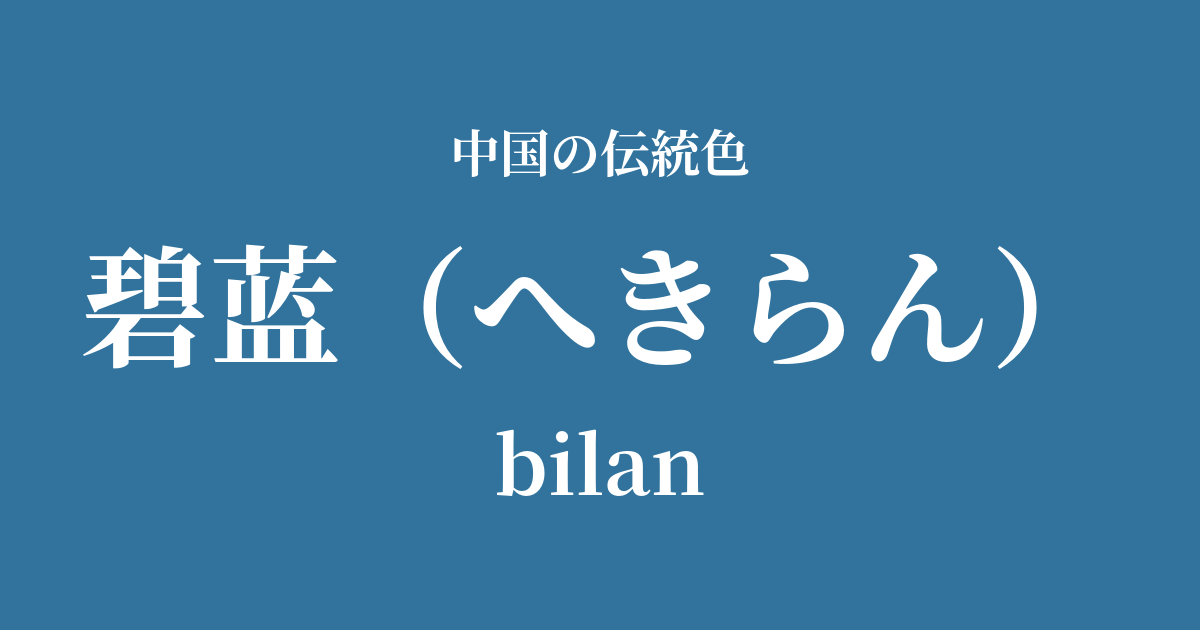
| Color name | Blue blue |
|---|---|
| reading | Hekiran |
| pinyin | bilan |
| HEX | #31739D |
| RGB | 49, 115, 157 |
What is "碧蓝"? Origin and etymology
"Hekiran" (碧蓝) is, as the name suggests, made up of two kanji characters: "heki" (碧) and "ran" (蓝). "Heki" refers to jasper, a beautiful blue-green gemstone that has been treated as a precious material since ancient times.
On the other hand, "蓝" is a word that means blue in general. Originally, it referred to the indigo plant used as a dye, but it gradually came to represent a wide range of blue colors.
The combination of these two, "碧蓝" (bīlán), means "a beautiful and clear blue like jasper." Specifically, it has been used to describe the magnificent and pure blue found in nature, such as the color of a clear sky after the rain, or the deep, calm color of the sea or lake.
More than just a simple blue, this color embodies a jewel-like elegance and a sense of boundless openness, like an endless sky. It's a color name imbued with a poetic sensibility, reflecting people's awe at the beauty of nature and their naming of that scene.
The historical background of the blue
While there are few records indicating that the word "blue-green" was designated as the color of a specific dynasty, this shade has been deeply rooted in the lives and culture of the Chinese people since ancient times.
In particular, in the world of literature, poets of the Tang and Song dynasties used this word when describing magnificent natural landscapes. In their poems, they used "碧蓝" to describe the blueness of the sky and the depth of the water, conveying the beauty of the scenery and their own feelings.
In court culture, blue hues held an important place in ceramics and clothing. For example, the refined blue of celadon, which flourished during the Song dynasty, and the vibrant cobalt blue of blue-and-white porcelain, which developed from the Yuan dynasty onward, captivated people. It is thought that "碧蓝" (bīlán) existed in the aesthetic sense as a term referring to a particularly ideal and clear shade of blue among these many shades.
Blue in Chinese Art and Crafts
In Chinese art, the color reminiscent of "blue-green" can be found in a variety of works.
The most symbolic example is the world of ceramics. In particular, the blue and white porcelain (blue and white porcelain) produced during the Yuan, Ming, and Qing dynasties is characterized by its cobalt blue that stands out against the white porcelain surface. Among these, the deep, clear blue painted with high-quality pigments perfectly matches the image of "blue and white." These ceramics were not only cherished in the imperial court but were also transported along the Silk Road to countries as far away as the west.
Furthermore, in landscape paintings, colors similar to "blue-green" are used to depict the sky and water. In particular, in meticulous brushwork painting, mineral pigments such as tetrachloride were sometimes used to depict a blue that was even more vivid and idealized than reality.
In fashion culture, blue was favored as a color that conveyed calmness and dignity. It is said that the silk garments worn by people of high social standing were dyed in a deep, beautiful blue, symbolizing their status and refinement.
A rain-washed layer of sky, an autumn fresh blue indigo.
Color scheme preview
This is to check the readability of the text when this color is used as the background.
A blue color scheme proposal
Anzu (#F7C274)
By combining deep blue (azure) with warm, bright apricot yellow, the colors complement each other, creating a vibrant and sophisticated impression. This color scheme creates a beautiful contrast reminiscent of the twilight sky and light.
Moon White (#D9E6E5)
The deep azure blue, combined with a pale, pure moonlight-like white, creates a calm and elegant atmosphere reminiscent of a quiet, clear night sky. It gives a composed and sophisticated impression.
Pilestone (#99462A)
Combining azure, the color of the sky and sea, with ochre, the color of the earth, creates a stable and calming color scheme that evokes the grandeur of nature. The combination with earth tones provides a sense of security and depth.
Practical Scenes
The intellectual and calm atmosphere of the color blue can be utilized in a variety of modern situations.
In interior design, incorporating it as an accent wall in a living room or study brings depth and tranquility to the space. It pairs well with white furniture and natural wood, creating a modern and sophisticated atmosphere. Using it as a pop of color with small items such as cushions, artwork, or vases is also recommended.
In fashion, azure dresses and coats enhance the elegance and intelligence of the wearer. For a more casual approach, simply adding a single accessory such as a scarf, bag, or jewelry will tighten up the overall look and create a sophisticated impression. The beauty of azure stands out when paired with basic colors such as white, beige, and gray.
In the fields of web and graphic design, this color is suitable as the main color for corporate websites that want to convey trustworthiness and integrity, or for services that handle specialized information. It also creates a beautiful contrast with white text, resulting in a clean and highly legible design.