
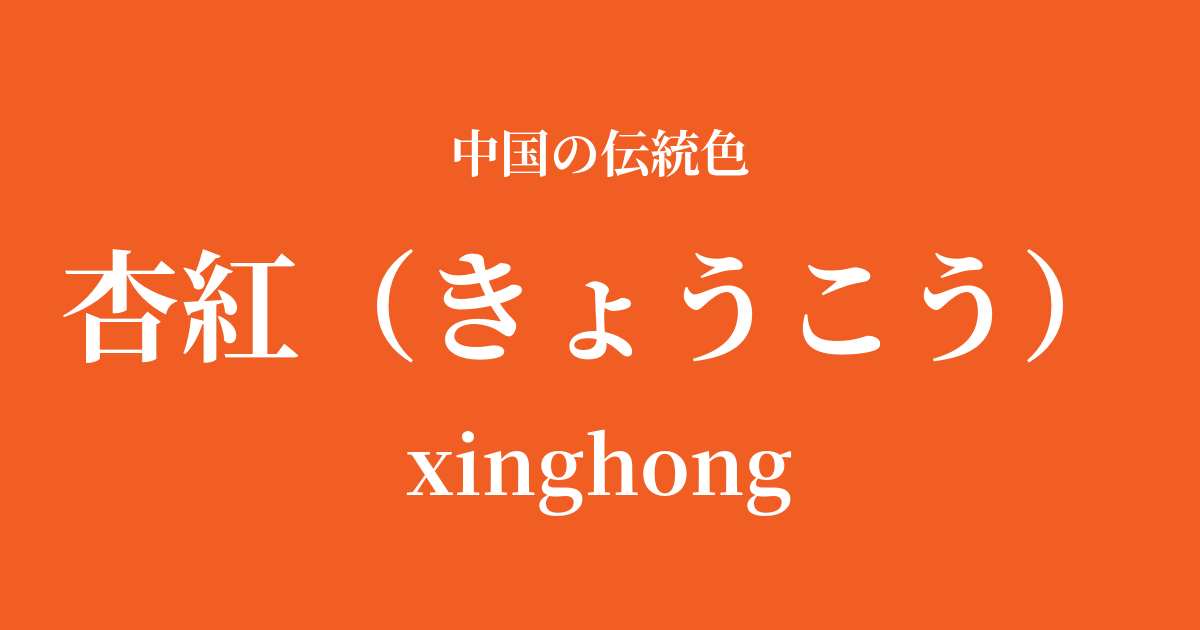
| Color name | apricot red |
|---|---|
| reading | Kyoko |
| pinyin | xinghong |
| HEX | #F05E23 |
| RGB | 240, 94, 35 |
What is apricot red? Origin and etymology
As the name suggests, Kyokou is a vibrant, warm orange-red color derived from apricots that have ripened under plenty of sunlight.
Apricots, a fruit native to China, have long been deeply rooted in people's lives. The reddish-orange color that the sweet and sour fruit displays when ripe evokes a sense of vitality and abundance in those who see it. Rather than simply describing it as "red," naming it after a specific fruit conveys not only the freshness and familiarity behind the color, but also the sense of freshness and approachability that lies within it.
The historical background of apricot red
Apricots have been cherished in China since ancient times, even appearing in the "Book of Songs," a text more than 3,000 years old. During the Tang Dynasty in particular, apricots acquired a special significance.
At that time, the results of the imperial examination, the civil service examination, were announced in the spring, when apricot blossoms were in full bloom. The successful candidates were invited to an apricot orchard on the banks of the Qujiang River in Chang'an, where the emperor bestowed upon them a celebratory banquet. This banquet, known as the "Apricot Orchard Banquet," was the highest honor for the young elite, and from this point on, the apricot came to be seen as a symbol of success and advancement.
The apricot red color became etched in people's hearts as a color that adorned such glorious successes and joyous occasions. It is believed to have been favored for use in celebratory events and festivals.
Apricot Red in Chinese Art and Crafts
The vibrant apricot red hue has been used to express various aspects of Chinese art.
In the world of ceramics, techniques such as "alum red," which developed during the Ming Dynasty, and "coral red glaze," perfected during the Qing Dynasty, exhibit beautiful colors similar to apricot red. Porcelain adorned with these red pigments and glazes was highly valued as courtware and captivated people with its splendor.
In painting, especially in the art of meticulous brushwork, this color is used for apricots and flower petals in bird-and-flower paintings, or for the clothing of women in portraits, adding a sense of life and vibrancy to the image.
Furthermore, apricot red was a popular color in traditional clothing culture, such as Hanfu. In particular, apricot red dyed on lustrous silk fabrics changes its appearance depending on the light, creating an elegant and refined look.
Spring colors fill the garden, yet the gates cannot be contained; a single red apricot branch emerges from the wall.
Color scheme preview
This is to check the readability of the text when this color is used as the background.
Apricot Red Color Scheme Proposal
Midori Matsuishi (#31706C)
Combining vibrant apricot red with deep, calming pine-green creates a sophisticated impression, as each color enhances the other. This color scheme is both classic and modern.
Yellow (#FFF143)
The combination of warm colors creates a very bright, warm, and energetic impression. It's a color scheme full of happiness, reminiscent of the arrival of spring and the joy of harvest.
赭石 (#9C3823)
The earthy ochre tones firmly support the vibrant apricot red, bringing a sense of stability and gravitas to the overall design. It's a warm and calming color scheme that evokes the bountiful harvest of autumn.
Practical Scenes
The bright and positive impression that apricot red conveys can be utilized in a variety of modern situations.
In interior design, incorporating this color as an accent in items such as cushion covers, rugs, and artwork brings warmth and vibrancy to the entire space. It looks particularly good in natural spaces based on white, beige, and wood tones, creating a pleasant accent.
In fashion, it's incredibly effective as an accent color in an outfit. Adding just one item, such as a scarf, bag, or shoes, instantly brightens up the entire look. Furthermore, boldly incorporating it into larger items like dresses or skirts creates a confident and striking style.
In web and graphic design, using buttons and banners that you want to attract attention can be expected to draw the user's eye and encourage them to take action.