
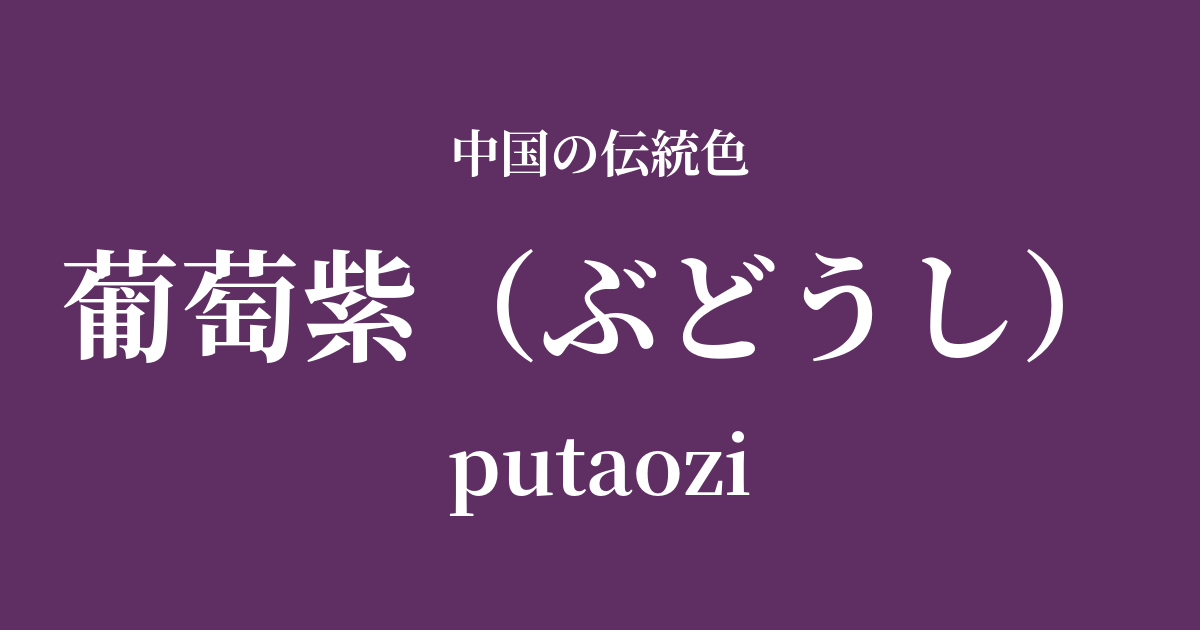
| Color name | grape purple |
|---|---|
| reading | grapes |
| pinyin | putaozi |
| HEX | #5F2F64 |
| RGB | 95, 47, 100 |
What is "grape purple"? Origin and etymology
Grape purple, as the name suggests, is a color name derived from the fruit "grape," which originates from the Western Regions. It refers to a deep, reddish-purple color reminiscent of the skin of ripe black grapes and the wine made from them.
The background to this color lies in the famous anecdote of Zhang Qian bringing grapes back from the Western Regions during the reign of Emperor Wu of the Western Han Dynasty in the 2nd century BC. This rare fruit, brought from a distant foreign land, came to be a symbol of abundance and vitality, and its color acquired special significance.
On the other hand, the color "purple" itself has held a special status in ancient China. Just as the star at the center of the heavens where the Emperor of Heaven resides is called "Ziwei Star," purple was considered the color that represented the center of the heavens and the universe, and by extension, it was positioned as the noblest color, symbolizing emperors and high-ranking nobles.
In this way, the image of abundance associated with "grapes," which originated in the Western Regions, and the noble image associated with the traditional color "purple" merged to create the elegant and profound color name "grape purple."
Historical background of grape purple
Since the Han dynasty, when grapes were first introduced to China, their culture gradually spread. In particular, during the Tang dynasty, when a rich and international culture flourished, grapes became extremely popular as a motif in art and crafts.
The Tang Dynasty was also a time when purple was institutionally established as a noble color. According to the legal code, the color of clothing (official attire) worn by officials was determined according to their rank, and only officials of the highest rank, third rank or above, were permitted to wear purple robes. Therefore, purple was a color of aspiration for ordinary people and a symbol of authority and glory.
Given this background, it is believed that grape purple was cherished in the imperial court and aristocratic society as a sophisticated color symbolizing wealth and power. Its exotic and elegant hue was likely a fitting color to adorn the glamorous lifestyle of Chang'an, a major international city. It is also said that the wine-drinking culture that flourished during the Tang Dynasty influenced the spread of this color.
Grape purple in Chinese art and crafts
The color grape purple holds an important place in Chinese clothing culture, particularly in the world of Hanfu. This deep purple was likely used in the elegant garments worn by aristocratic women during the Tang Dynasty, as well as in the dignified purple robes worn by high-ranking officials. Even today, it remains a popular color for adding elegance and splendor to Hanfu designs.
Furthermore, because of its vitality, extending its vines and bearing abundant fruit, the grape motif was cherished as an auspicious pattern symbolizing "progeny and prosperity" and "abundance." The "grape arabesque pattern" has been depicted on various arts and crafts such as ceramics, silk fabrics, and metalwork, and both its design and the grape purple color have added vibrancy to people's lives.
Grape sake night light cup and greedy biwa horse event held.
Color scheme preview
This is to check the readability of the text when this color is used as the background.
Grape purple color scheme proposal
Moon White (#D7E2E7)
By combining it with Tsukishiro, a pale bluish-white reminiscent of moonlight, the mystical quality of grape purple is highlighted. It gives an impression of calmness and elegance, like a quiet night scene.
Autumn color (#D9B611)
The muted yellow tones of autumn evoke the image of ripe grapes and the bountiful harvest of autumn. The colors complement each other, creating a warm, luxurious, and classic impression.
Matsuka Midori (#BCEE68)
Adding a bright, youthful pine needle-like green, such as Matsuhana-ryoku, creates a natural and vibrant color scheme reminiscent of grape leaves and berries. It softens the richness of grape purple, giving a fresh yet refined impression.
Practical Scenes
In the world of fashion, grape purple evokes an elegant and noble atmosphere. Incorporating it into statement pieces such as dresses and coats creates an instantly memorable look. Furthermore, using it as an accent color in accessories like scarves, bags, and jewelry adds depth and refinement to the overall outfit.
In interior design, it brings a luxurious and tranquil atmosphere to a space. It's recommended to incorporate it into accent walls in the living room, or into velvet sofas, cushions, and curtains. When combined with indirect lighting, the shadows and highlights of the color are even more beautiful, creating a dramatic space.
In web and graphic design, this color is effective when you want to convey a sense of luxury, reliability, and expertise. Using it as the main color for luxury brand websites or content related to history and culture can convey a sophisticated and refined worldview. Using it as an accent color for buttons and headings will attract the user's attention and result in a memorable design.