
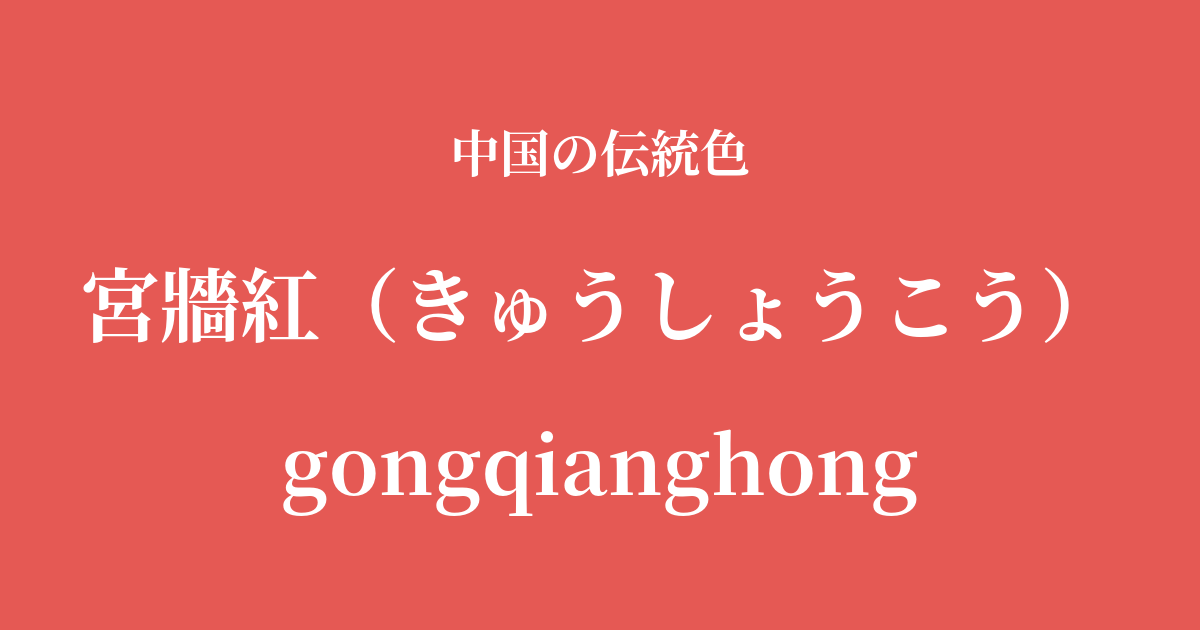
| Color name | Miyake Beni |
|---|---|
| reading | Kyūshōkō |
| pinyin | gongqianghong |
| HEX | #E55954 |
| RGB | 229, 89, 84 |
What is "Gongqianghong"? Origin and etymology
Palace Red (宫墙红), as the name suggests, means "the red of the palace walls," a deep and majestic color. "宫" means palace, "墙" means wall, and "红" means red, and it is especially known worldwide as the color of the walls of the Forbidden City in Beijing.
This color is not merely decorative; it is deeply connected to traditional Chinese thought. In ancient Chinese Five Elements philosophy, red symbolizes the element of "fire" and represents the south. It has long been revered as an auspicious color, signifying the sun, vitality, passion, and good fortune.
It is said that this color was used on the walls of the Forbidden City partly for the purpose of warding off evil and misfortune. The desire to protect the sacred space where the emperor resided from evil spirits and to pray for the peace and prosperity of the nation was embodied in this vibrant red.
Historical background of the shrine
The history of red palace walls dates back to the Ming Dynasty. In the early 15th century, when Emperor Yongle moved the capital to Beijing and built the Forbidden City, this red color was designated as the dominant color of the palace. The vivid contrast with the yellow glazed tiles became established as a design symbolizing the authority of the emperor and was carried over to the subsequent Qing Dynasty.
This color was a special color reserved for the emperor and the royal family, and it was strictly forbidden for ordinary people to use it in their own homes. The red of the palace walls served to visually convey absolute power and inviolable dignity to those who saw it.
Having withstood centuries of weathering and repeated layers of paint, the red walls of the palace are a testament to history, having witnessed the rise and fall of dynasties. Today, as a symbol of the Palace Museum, they quietly speak to visitors about the profound depths of China's long and rich history and culture.
Red palace walls in Chinese art and crafts
Red palace walls are one of the most symbolic colors in Chinese architectural art. The magnificent scenery created by the red walls of the Forbidden City and the yellow glazed tiles, the color of the emperor, is considered the pinnacle of Chinese architectural beauty. This color scheme is also thought to represent a cosmic view of harmony between heaven and earth and yin and yang.
Palace red frequently appears in the meticulous paintings of palaces and buildings created by court painters. This color was an indispensable element in depicting the splendor of the palace and the lifestyles of the emperor and nobility.
In the world of ceramics, vibrant red glazes (red glazes) reminiscent of the red glazes found on palace walls were highly valued. In particular, the "Ji Hong" of the Ming Dynasty and the "Lang Yao Hong" of the Qing Dynasty were considered treasures for their deep, lustrous red color and were produced as gifts for the emperor.
In fashion culture, this color was sometimes used for "auspicious attire" worn at festivals and ceremonies. The vibrant and joyful red added a touch of splendor to the clothing worn on special occasions.
Lost ancient palace, Miyahana Jakushoku.
Color scheme preview
This is to check the readability of the text when this color is used as the background.
Color scheme suggestion for 宫墙红
Glass Yellow (#F2A634)
This is the most classic and majestic combination, symbolizing the walls and roof tiles of the Forbidden City. It expresses the authority and wealth of the emperor, giving an impression of dignity and splendor.
Moon White (#D9E9E5)
By combining the vibrant palace red with the quiet and pure moon white, the intensity of the red is softened. This creates a refined elegance and gives a graceful and calm impression.
Black (#504F4F)
The deep ink color complements the vibrancy of the palace wall red, creating a powerful and modern atmosphere. This color scheme is both traditional and contemporary, resulting in a stylish and sophisticated impression.
Practical Scenes
In interior design, palace red adds a dramatic accent to a space. Using it as an accent wall, or incorporating it through fabrics like cushions, rugs, and curtains, creates a warm and luxurious feel throughout the room. It pairs particularly well with dark brown wooden furniture and gold-colored ornaments.
In the world of fashion, using this color in statement dresses and coats can create a confident and glamorous style. Additionally, using it as an accent color in accessories such as scarves, bags, and shoes can tighten up the overall look and create a sophisticated impression. It's recommended to pair it with basic colors like black, white, beige, and navy.
In web and graphic design, this color is a powerful accent color that captures the viewer's attention. It is particularly suitable for websites and advertisements related to traditional culture, luxury goods, and celebrations. When placed against a white background, this color stands out vividly, conveying a strong brand image.