
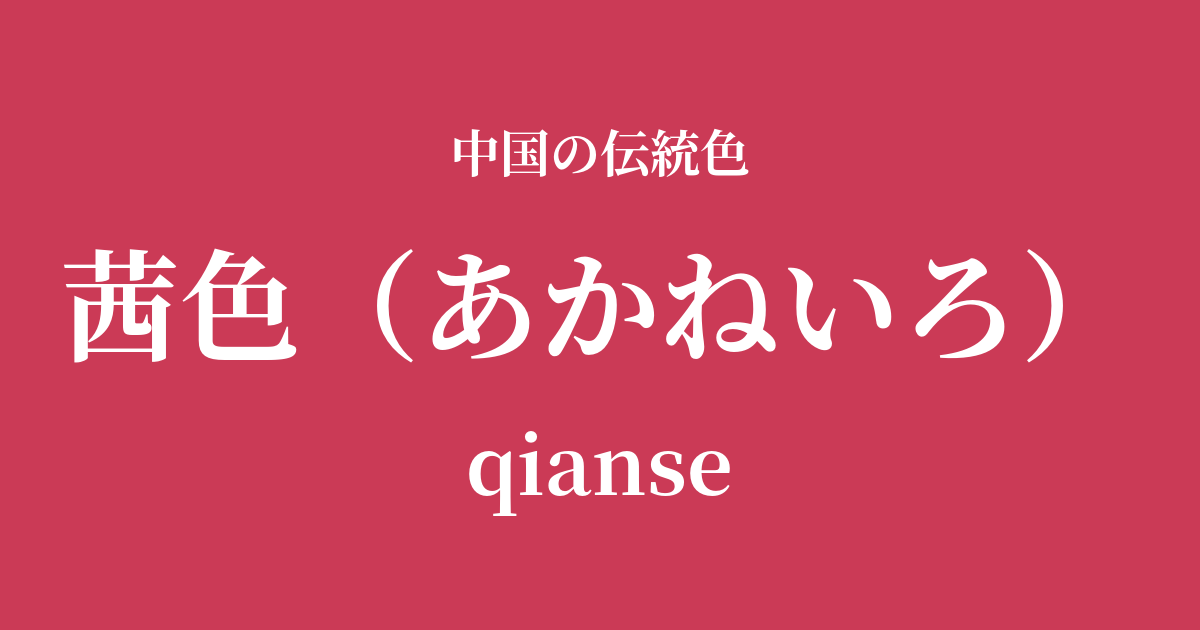
| Color name | madder red |
|---|---|
| reading | crimson |
| pinyin | qianse |
| HEX | #CB3A56 |
| RGB | 203, 58, 86 |
What is "Akane-iro" (crimson)? Origin and etymology.
Akaneiro refers to a deep, vibrant red color dyed using the roots of the madder plant, "akane," which belongs to the Rubiaceae family.
The origin of its name is very old; the character for akane (茜) is written as "western grass," suggesting that it embodies the meaning of grass that dyes the western sky where the sun sets, that is, the color of sunset. This color, which is passionate yet somehow evokes a nostalgic warmth, has been close to people's lives and has been loved for a long time.
Crimson historical background
The history of madder dyeing is very old, and descriptions of the madder plant can be found in the "Book of Songs," the oldest collection of Chinese poetry. This suggests that its roots were already recognized as a valuable red dye during the Zhou dynasty.
During the Han Dynasty, madder was widely cultivated as an important dye crop, and its dyes were used for the clothing of people of high social standing. The vibrant red color was also a symbol of authority and wealth.
During the Tang Dynasty, brighter safflower dyes became popular, but madder dyes, with their deep, rich colors, continued to be widely used among ordinary people. As a color symbolizing vitality and passion, it adorned various aspects of people's lives.
Crimson in Chinese Art and Crafts
Madder red has played an important role in Chinese clothing culture. In particular, it was frequently used in Hanfu (traditional Chinese clothing) for women's clothing, sashes, and hair ornaments, adding splendor and elegance. It was also sometimes used as part of wedding attire and was cherished as a color symbolizing good fortune and joy.
In the world of painting, pigments close to crimson were used in paintings and murals to depict figures' clothing and accessories, or to portray sunsets. This vivid red gave the painting a sense of life and passion, and helped to richly express narrative. Ceramics were also created using a deep red glaze reminiscent of crimson, and their beauty captivated many people.
One way Zanyou Pou underwater, Hanjiang Mizui Hanjiang Hong
Color scheme preview
This is to check the readability of the text when this color is used as the background.
Crimson color scheme proposal
Moon White (#D7DDE4)
The vibrant crimson is enhanced by the quiet, pure color of moonlight. This elegant combination creates a poetic and tranquil atmosphere, reminiscent of a sunset sky and soft moonlight.
Female yellow (#F8D86A)
The crimson red and the brilliant yellow of the orpiment create a luxurious and energetic impression reminiscent of Chinese court culture. It is a color scheme that is suitable for celebrations and auspicious occasions, and is sure to brighten the hearts of those who see it.
Red (#495859)
The deep dark brown tones complement the passionate crimson, creating a sophisticated and urban impression. Incorporating it into fashion or interior design evokes a modern yet profound sense of style.
Practical Scenes
In the world of fashion, madder red adds a passionate and vibrant accent to an entire outfit when incorporated into dresses, skirts, or accessories such as scarves and bags. It is a color that adds depth and warmth to autumn and winter attire in particular.
In interior design, using crimson in fabrics such as cushion covers, rugs, and curtains brings energy and warmth to a space. An accent wall painted crimson is also effective in creating a dramatic atmosphere. It harmonizes beautifully with materials such as wood and brass.
In web design and graphic design, using crimson for call-to-action buttons or important headings can attract users' attention. However, overuse can create a sense of oppression, so it's best to use it as an accent color to maintain a sophisticated impression.