
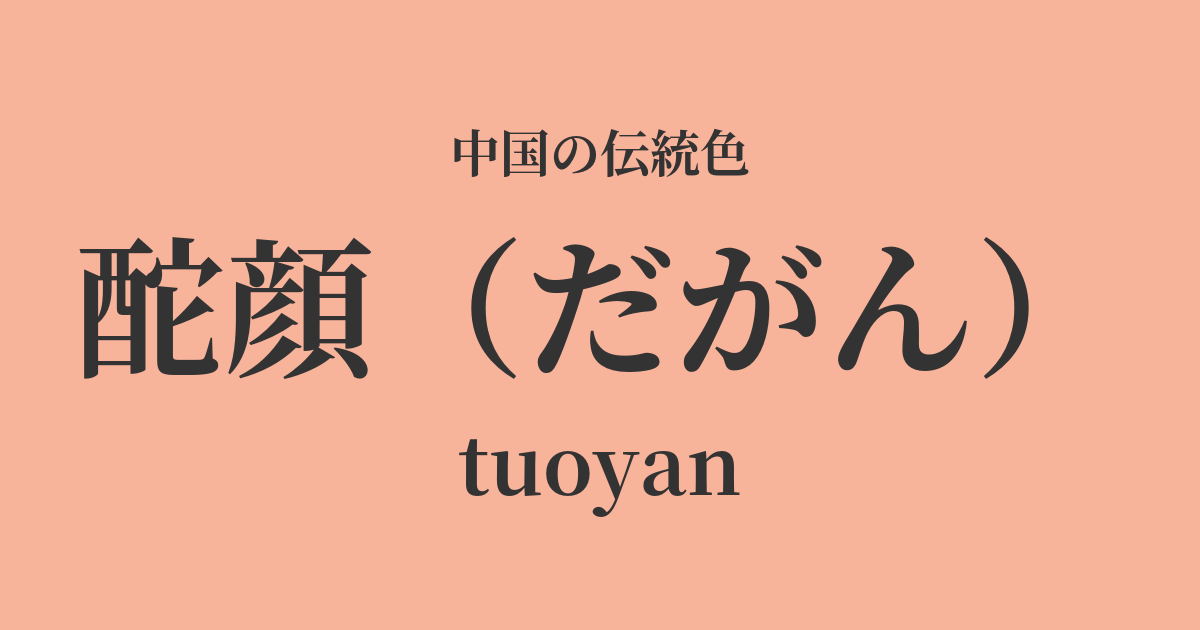
| Color name | 酡顔 |
|---|---|
| reading | But |
| pinyin | tuoyan |
| HEX | #F8B39B |
| RGB | 248, 179, 155 |
What is a 酡颜? Origin and etymology
"Dagan" is an elegant and vibrant color that describes the blush on the cheeks after drinking alcohol.
The kanji character "酡" means the appearance of a face turning red from drinking alcohol, and "顔" literally means face. In other words, this color has been perceived not simply as red, but as a warm hue that seems to seep out from within, accompanied by feelings of happiness and exhilaration.
It's a very human-like color name, symbolizing youthfulness and healthy beauty, while also conveying a subtle sense of sensuality.
Historical background of riyan
The cultural background of the "mianyan" look is deeply intertwined with the aesthetic sensibilities of the Tang Dynasty. At that time, a voluptuous and healthy feminine beauty was considered ideal, and women, as exemplified by Yang Guifei, applied makeup to maximize their attractiveness.
Among these, "red cheeks" (kōshō) were a very important element. Cheeks that naturally flushed from drinking alcohol and enjoying music and dance at a banquet were considered a sign of beauty. This scene enriched the image of the color "mogan" (red cheeks) and became established as an expression of feminine beauty in later literature and art.
From the lavish banquets of the royal court to the modest celebrations of ordinary people, this color has lived on throughout history, reflecting the warm expressions of people enjoying alcohol.
酡颜 in Chinese art and crafts
In the world of art, the expression of "moon-faced" can be seen in the Tang Dynasty paintings of beautiful women known as "shijoga" (court lady paintings). The plump cheeks of the court ladies depicted are faintly rosy, conveying their elegant lives and contented spirits. This went beyond mere realistic representation and was a style that symbolized the ideal of beauty at the time.
In fashion culture, this color is sometimes used in Hanfu, especially women's clothing. It was incorporated as an accent color to create a youthful and charming look, used in decorations such as cuffs, collars, and sashes. Particularly in spring attire, it was combined with colors that evoke the breath of life, such as goose yellow and willow green, to create a vibrant and cheerful impression.
Colored sleeves, Yin Qin, Jade Zhong, 2000, Drunken Red.
Color scheme preview
This is to check the readability of the text when this color is used as the background.
Color scheme suggestions for ribeye
Moon white (#D6D6D6)
By combining it with a pale, bluish-white color, the warmth and healthy complexion of the "moon-faced" shade are highlighted. This sophisticated color scheme creates a pure, elegant, and graceful atmosphere.
Mayuzai (#424C60)
The deep, calming dark blue enhances the radiant complexion of the reddish-brown color, giving it a more mature impression. The contrast between the two colors is beautiful, creating an intelligent and harmonious combination.
Ehuang (#FFF143)
The soft goose yellow, which refers to the beak color of a chick, combined with the reddish-brown, creates a bright and youthful impression reminiscent of the arrival of spring. It's a color scheme full of happiness and vitality.
Practical Scenes
In interior design, incorporating accents in fabrics such as cushion covers, curtains, and rugs brings warmth and a gentle atmosphere to the entire space. It is especially suitable for spaces where you want to relax, such as bedrooms and living rooms.
In fashion, this color is most effective when used in makeup. Incorporating a hint of this color into your blush or lip color creates a natural, healthy flush. Choosing this color for silk or cotton blouses or dresses brightens your complexion and gives you an elegant, feminine look.
In web design and graphic design, it is an effective key color for brands that want to convey friendliness and warmth. When used on beauty, wellness, and lifestyle-related websites, it can give users a sense of security and a positive impression.