
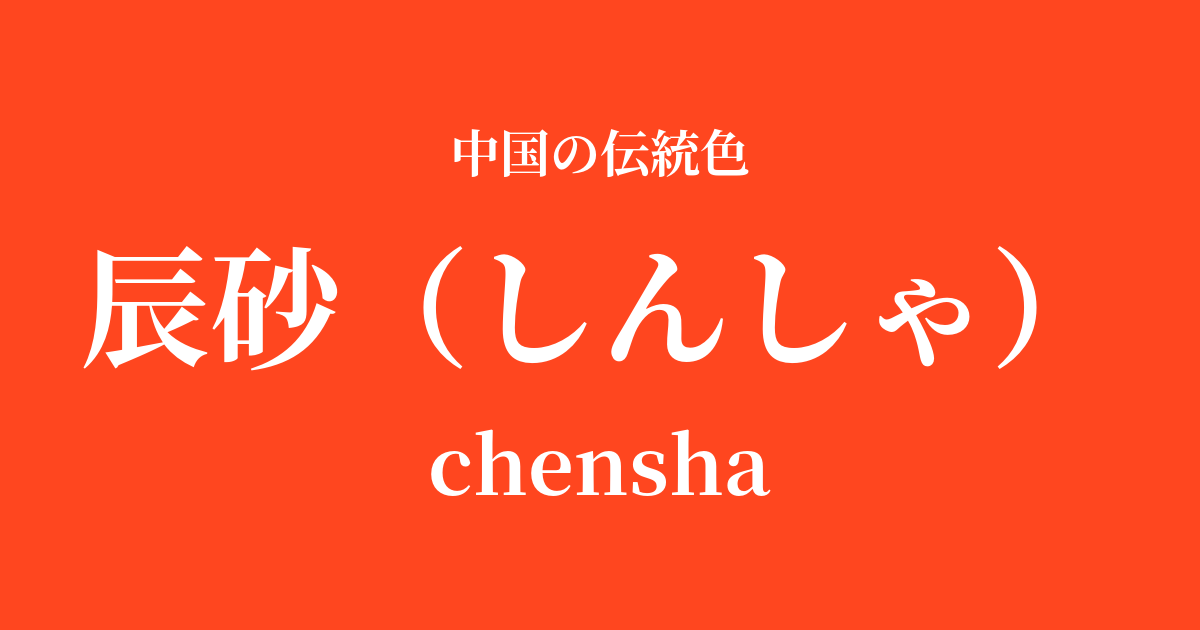
| Color name | Cinnabar |
|---|---|
| reading | new |
| pinyin | chensha |
| HEX | #FF461F |
| RGB | 255, 70, 31 |
What is cinnabar? Origin and etymology
Cinnabar is a vibrant, deep red pigment made by crushing cinnabar, a mineral whose main component is mercury sulfide. Its name originates from Chenzhou (present-day Hunan Province), a region in China that was historically a source of high-quality cinnabar.
This color has long been treated not merely as a red pigment, but as a color with special significance. In Taoism in particular, cinnabar was believed to be the most important ingredient in the "elixir of immortality," and was considered a symbol of vitality and eternity. Because of this mystical background, cinnabar has captivated people's hearts not only as a beautiful color, but also as a color possessing sacred power.
Historical background of cinnabar
The use of cinnabar is very ancient; in China, artifacts colored with cinnabar have been found even in Neolithic sites. Its vibrant, long-lasting red color was believed by ancient people to possess the power to ward off evil.
The anecdote of Qin Shi Huang attempting to ingest cinnabar in search of immortality is particularly famous. From the Han dynasty onward, cinnabar came to symbolize the highest authority, used as a color to adorn the pillars and walls of palaces, and as the color of the vermilion ink (seal paste) used for the emperor's seal.
During the Tang Dynasty, Taoism flourished, and cinnabar became even more important as an ingredient in "elixirs of immortality." However, it is said that many emperors and nobles who consumed these elixirs in the hope of achieving immortality lost their lives due to the toxicity of mercury. This color embodies a history of both light and shadow: the yearning for eternal life and the dangers that accompany its pursuit.
Cinnabar in Chinese Art and Crafts
The vibrant red of cinnabar has long been treasured as the ultimate color in the world of Chinese art and crafts. In particular, in the field of ceramics, red porcelain using cinnabar as a glaze was created. "Ji Hong," perfected during the reign of Emperor Xuande of the Ming Dynasty, and "Lang Yao Hong," fired during the reign of Emperor Kangxi of the Qing Dynasty, are highly regarded as masterpieces in the history of ceramics for their deep and beautiful red color.
In painting, cinnabar was used as an accent in landscape paintings and as a sacred color when depicting deities and talismans in Taoist paintings. Cinnabar was also used in vermilion lacquer, a raw material for high-quality lacquerware, and the lustrous red created by layering it was a symbol of wealth and power. In palace architecture, such as the Forbidden City, pillars and gates were painted with cinnabar, serving as a charm against evil and a symbol of the emperor's power.
Early uniform return tantan worldless feeling
Color scheme preview
This is to check the readability of the text when this color is used as the background.
Cinnabar color scheme proposal
Gen (#1F1F1F)
The combination of the vivid red of cinnabar and the deep, serene black of gen creates a particularly powerful and dignified impression, even within the traditional Chinese color palette. This color scheme, often seen in palaces and lacquerware, creates a gravitas that can be applied to modern designs as well.
Tsukihaku (#EAF4FC)
By combining the vibrant red of cinnabar with the pure and serene moon white, the two colors complement each other, creating a refined elegance. The result is a delicate and graceful atmosphere, much like a painting on white porcelain, giving an elegant and splendid impression.
Yuhuang (#FFB61E)
Combining the red of cinnabar with the bright yellow of orpiment, another mineral pigment, creates a very vibrant and festive impression. This color scheme is often seen in Chinese celebrations and other festive occasions, and it gives off a bright and powerful energy that uplifts the spirits of those who see it.
Practical Scenes
In interior design, cinnabar is a color that adds a dramatic accent to a space. Simply incorporating it into small items such as cushions, rugs, or artwork brings energy and a sense of luxury to the entire room. In particular, when paired with black, white, or dark wood-grain furniture, the red of cinnabar stands out, creating a sophisticated space.
In the world of fashion, cinnabar-colored dresses and scarves exude a special presence. Wearing them at celebratory occasions or parties will give you confidence and glamour. Furthermore, incorporating cinnabar into lipstick or nail polish can have the effect of making your face appear more vibrant.
In website and graphic design, this color is effective when used for buttons or important headlines that you want to attract attention. Using this color in brand logos or packaging can create a passionate, memorable, and impactful impression.