
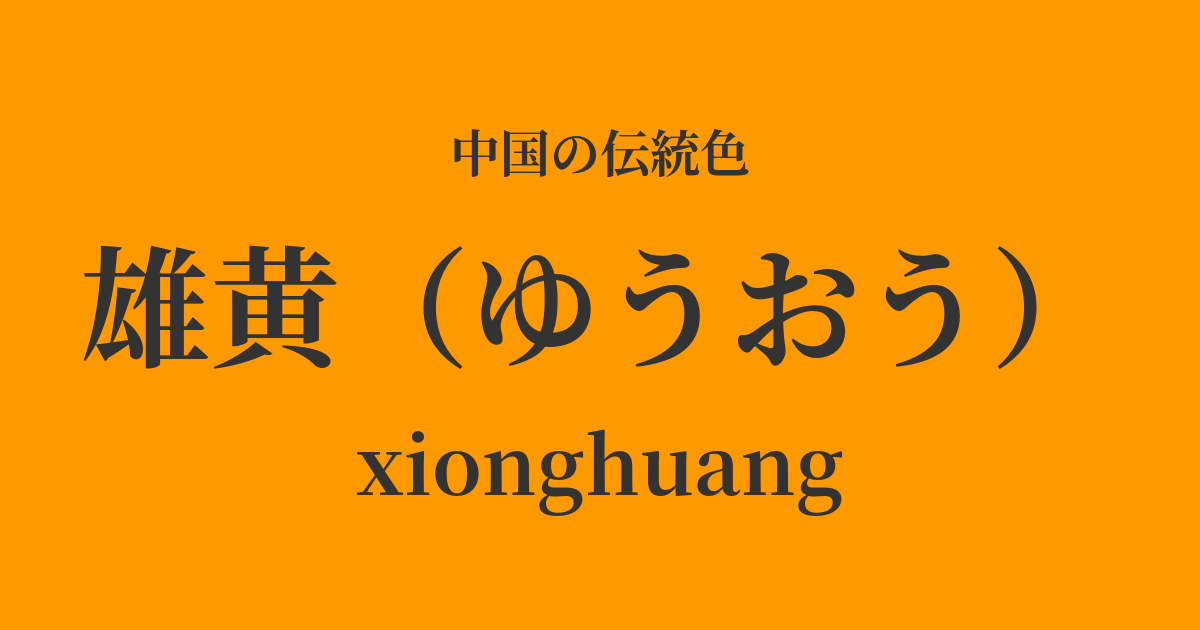
| Color name | male yellow |
|---|---|
| reading | Yuuou |
| pinyin | xionghuang |
| HEX | #FF9900 |
| RGB | 255, 153, 0 |
What is orpiment? Origin and etymology
Orpiment (yūō) is a vibrant and powerful orange color reminiscent of a rooster's comb. It is said to have been named as a counterpart to orpiment (shiō), another mineral pigment. The character "yū" (雄) symbolizes yang energy, and seems to represent the energy and strength of its color.
The origin of this color lies in a mineral called realgar (arsenic). Its main component is arsenic sulfide, and it has been used as a valuable pigment since ancient times. However, the role of realgar was not limited to mere color. Due to its components, it was also used as an antidote and insecticide in the past, and has a history closely intertwined with people's lives.
Historical background of orpiment
The history of realgar is deeply intertwined with Chinese beliefs, particularly Taoism. Taoist thinkers considered realgar an important ingredient in alchemy, specifically in the creation of the "golden elixir," an elixir of immortality. It was regarded as a mystical substance that enhanced vitality and brought eternal life. However, in reality, it contains arsenic and is highly toxic, making its consumption extremely dangerous.
In folk tradition, realgar was believed to have the power to ward off evil spirits. Especially during the Dragon Boat Festival, which takes place when epidemics are prone to spreading with the arrival of summer, it was a widespread custom to drink "realgar wine" (made by steeping realgar) or apply it to children's foreheads to pray for good health and protection from illness. This custom also appears in the famous folk legend "The Legend of the White Snake." The scene in which Bai Niangzi, a snake spirit, reveals her true form after drinking realgar wine has been passed down through generations as a story symbolizing the protective power of realgar against evil.
Orpiment in Chinese Art and Crafts
Due to its vivid color, orpiment was highly valued as a pigment in paintings in ancient times. In particular, it was often used in the coloring of temple murals and Buddhist statues to express sanctity and solemnity. Orpiment or similar colors can be seen in the murals of the Mogao Caves in Dunhuang, conveying their beauty across the ages.
In the world of ceramics, it was sometimes used as a coloring agent for glazes, but because it is prone to chemical changes when fired at high temperatures, its color can be seen in pottery fired at relatively low temperatures, such as Tang Dynasty sancai.
In the context of clothing culture, rather than being used directly as a dye, this color was symbolically employed as the color of clothing worn by emperors, high-ranking monks, and Taoist priests, due to the special meanings associated with its hue. This color, evoking vitality and mystery, played a role in enhancing the authority of those in high positions.
Long clothes can be worn, and words can be worn out.
Color scheme preview
This is to check the readability of the text when this color is used as the background.
Color scheme proposal for orpiment
Black (#333333)
The vibrant orange of orpiment is complemented by a deep, rich ink color. It creates a traditional and dignified impression, combining strength and composure. Suitable for calligraphy, painting, and designs where a sense of luxury is desired.
Stone green (#408878)
The warm hue of orpiment and the cool blue-green of the mineral pigment, stony green, create a beautiful contrast. It gives a vibrant and exotic impression, evoking the vitality of nature and the classical artistry of Dunhuang murals.
Tsukihaku (#EAF4FC)
The strong hue of orpiment is gently softened by the pure, pale, bluish-white of moonflower. It creates a noble yet light, refined, and elegant atmosphere. This elegant color scheme evokes the culture of the royal court.
Practical Scenes
In interior design, orpiment is an ideal accent color that brings warmth and energy to a space. Simply incorporating it into cushion covers, art panels, or small pieces of furniture will brighten and enliven the entire room. When combined with dark wood-grain furniture, black, or deep green, it creates a sophisticated and dignified space.
In fashion, incorporating it through accessories such as scarves, bags, and jewelry is an effective way to add a pop of color to your outfit. It looks especially stunning in autumn attire, and when paired with basic colors like black, beige, and white, the vibrancy of orpiment stands out, creating a unique yet elegant style.
In web design and graphic design, this color can be used for buttons and headings that you want to attract attention, drawing the user's gaze. By using white or light gray as a background, you can leverage the strength of this color while creating a clean and easy-to-read design.