
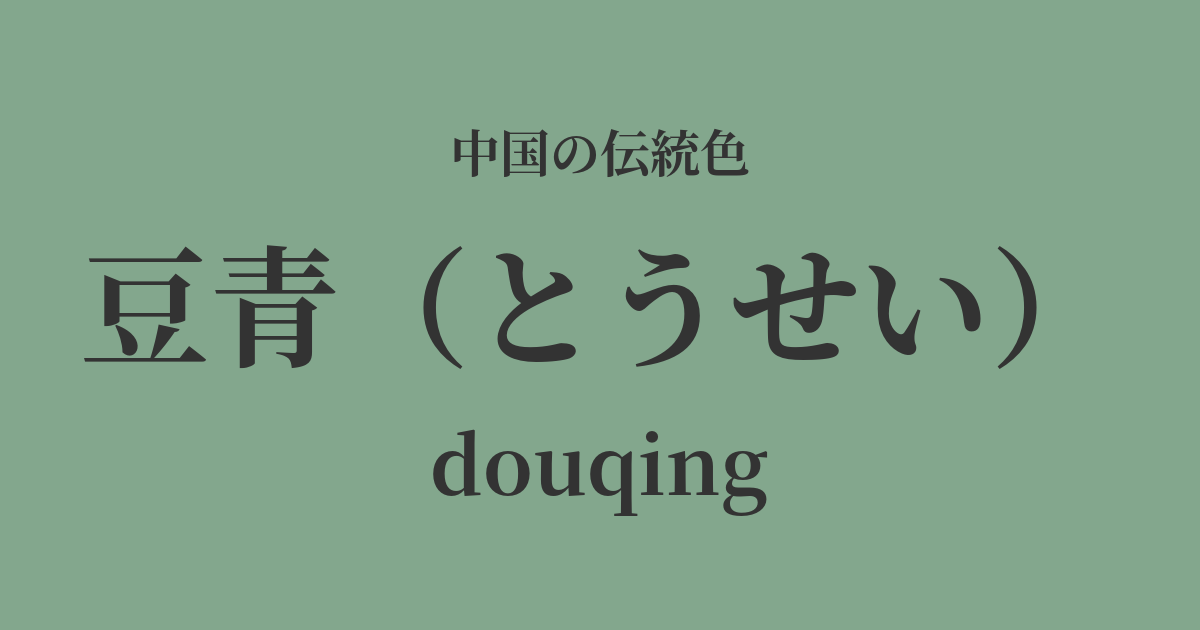
| Color name | mame blue |
|---|---|
| reading | Tosei |
| pinyin | douqing |
| HEX | #83A78D |
| RGB | 131, 167, 141 |
What is Mameao? Origin and etymology
Tousei, as its name suggests, is a mild, yellowish-green color derived from the color of unripe green beans.
This color, which evokes a sense of vitality and freshness in nature while simultaneously offering a calm and peaceful feeling, has been particularly cherished within traditional Chinese color sensibilities. More than just a color name, it is widely known as a term referring to the color of the glaze on a specific type of porcelain, namely celadon.
Historical background of Douqing
The history of the bean-blue color is deeply intertwined with the history of Chinese ceramics, particularly celadon. This color reached its peak of refinement and beauty during the Song dynasty.
The celadon porcelain fired at the Longquan kilns and other locations during that period, with its thick, lustrous glaze and deep, jade-like hue, captivated many people, from emperors to literati. Its quiet and elegant presence is considered to symbolize the aesthetic sensibilities of the Song Dynasty.
Celadon with a douqing glaze continued to be produced during the Ming and Qing dynasties, and especially during the three reigns of the Qing dynasty—Kangxi, Yongzheng, and Qianlong—the technique further developed, resulting in the creation of many more refined works. It is a dignified color that has been loved across generations.
Douqing in Chinese Art and Crafts
When most people hear the color "bean blue," they probably picture the celadon ware from the Longquan kilns of the Song Dynasty. The simple yet refined forms of the vessels, covered in a moist bean blue glaze, represent the epitome of serene beauty. This color not only enhances the food served in the vessels but also brings a sense of calm and elegance to the space itself.
Furthermore, the color bean blue was also used in clothing culture. Its elegant and understated hue paired well with lustrous fabrics such as silk, and it is said to have been a favorite color for the clothing of the aristocracy and the literati class. The traditional Chinese philosophy of valuing natural colors may have been reflected in the choice of colors for clothing.
Color scheme preview
This is to check the readability of the text when this color is used as the background.
A color scheme proposal for Mame-Ao (bean blue).
Ivory white (#FFFFF0)
The combination of the gentle green of the bean-blue and the soft white of the ivory-white creates a very elegant and clean impression. It is a sophisticated color scheme reminiscent of the celadon and white porcelain combinations of the Song Dynasty.
Pilestone (#9C543A)
The plant-like green of the bean-blue stone and the reddish-brown of the ochre stone, reminiscent of earth, create a combination that evokes a sense of harmony in nature. It creates a warm and calming atmosphere, resulting in a peaceful space that feels somehow nostalgic.
Coral beads (#F88379)
By adding the vibrant red of lively coral beads as an accent to a calming bean-blue, a modern and glamorous impression is created. The colors complement each other, resulting in a sophisticated yet playful color scheme.
Practical Scenes
Incorporating a light blue color into your interior design brings a calm and relaxing atmosphere to your space. Using it for wallpaper, curtains, or cushions in your living room or bedroom will create a peaceful and tranquil environment. It pairs particularly well with wooden furniture and houseplants.
In fashion, a bean-blue shirt or dress gives an elegant and intellectual impression. Choosing this color for clothing made from natural materials such as silk or linen results in a sophisticated look, as the quality of the material and the elegance of the color combine to create a refined outfit.
In web design, using it as a background or accent color can give users a sense of security and trust. It is suitable for brands that sell natural products or websites that showcase traditional culture.