
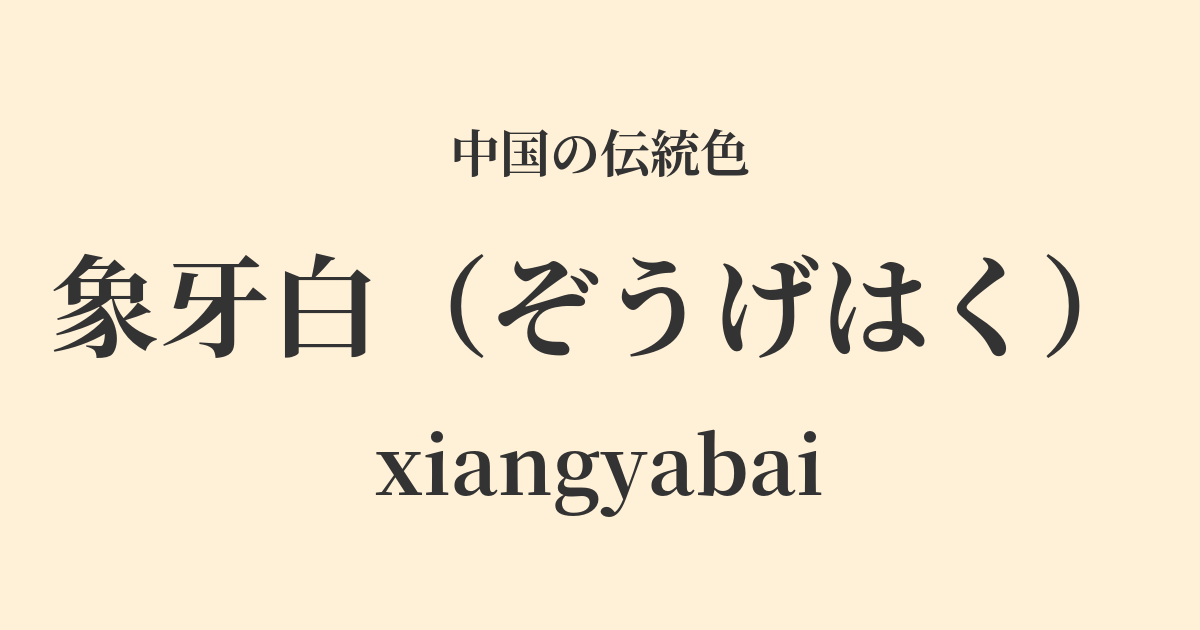
| Color name | ivory white |
|---|---|
| reading | Ivory |
| pinyin | xiangyabai |
| HEX | #FFF1D8 |
| RGB | 255, 241, 216 |
What is "Ivory White"? Origin and Etymology
Ivory white, as its name suggests, is a warm, slightly yellowish white color derived from the color of elephant tusks. It is characterized by a soft, calming hue that differs from pure white.
Since ancient times, ivory has been treated as an extremely precious and sacred material. Due to its rarity and smooth, beautiful luster, it has been considered a symbol of wealth, power, purity, and longevity. Therefore, ivory white, the color of ivory, has also come to be recognized as a noble and elegant color, and has become established as a color with special significance.
Historical background of ivory white
The use of ivory in China dates back to the Shang (Yin) dynasty before the Common Era. By this time, advanced ivory carving techniques had already been established, and numerous elaborately decorated ivory artifacts have been unearthed from the tombs of royalty and nobility. It is believed that from this period onward, the color of ivory was associated with authority.
During the Tang Dynasty, ivory products became even more refined amidst a richly international culture, and were highly valued as furnishings and decorative items in the imperial court. The elegant hue of white ivory likely added depth and tranquility to the flamboyant culture of the Tang Dynasty.
During the Ming and Qing dynasties, ivory carving techniques reached their peak. Ivory was used in every aspect of life, from the four treasures of the study (brush, ink, paper, and inkstone) adorning the studies of scholars, to the emperor's throne and the jewelry of noblewomen. In this era, ivory white was not merely the color of a material, but a color deeply rooted in culture, embodying a refined aesthetic sense.
Ivory White in Chinese Art and Crafts
The ivory white hue holds an important place in the history of Chinese ceramics. In particular, white porcelain fired at the Ding kilns during the Song dynasty was highly valued for its warm, milky white color, known as "Fen Ding" or "Ya Bai," resembling ivory. Its smooth texture and soft color reflect the aesthetic sensibilities of the people of that time and possess an elegant charm shared with ivory white.
In the realm of fashion culture, off-white silk fabrics, close to ivory white, were used for the attire of people of high social standing. In the vibrant colors of the royal court, this understated and elegant color may have been suitable for expressing the wearer's character and inner richness. It created a calm and graceful atmosphere, distinct from the tension associated with pure white.
Color scheme preview
This is to check the readability of the text when this color is used as the background.
Ivory White Color Scheme Proposal
Navy blue (#222F43)
The deep navy blue enhances the elegance and brightness of the ivory white, creating a calm and dignified impression. It's a classic and sophisticated color scheme reminiscent of court culture.
Pilestone (#9A5034)
By combining it with warm, reddish-brown stone, it creates a natural and tranquil atmosphere. The harmony of earth tones creates a peaceful space.
Jade Green (#58B295)
The refreshing coolness of jade combined with the softness of ivory white creates a pure and elegant impression. The delicate and refined color scheme evokes an oriental beauty.
Practical Scenes
In interior design, using ivory white as a base color for walls and ceilings creates a bright and warm atmosphere throughout the entire space. It pairs exceptionally well with wooden furniture and metallic accents such as gold and brass, creating a sophisticated space that is both classic and modern.
In the world of fashion, ivory white gives an elegant and soft impression, making it ideal for wedding dresses and formal wear. Furthermore, incorporating this color into high-quality materials such as silk blouses and cashmere sweaters enhances the inherent beauty of those materials. It's a versatile color that blends well with the skin and harmonizes easily with any other color.
In web and graphic design, using ivory white as a background color is easy on the eyes and subtly enhances the content. When creating a sophisticated world for a luxury brand's website or when aiming for a minimalist and calm design, ivory white helps to create a refined atmosphere.