
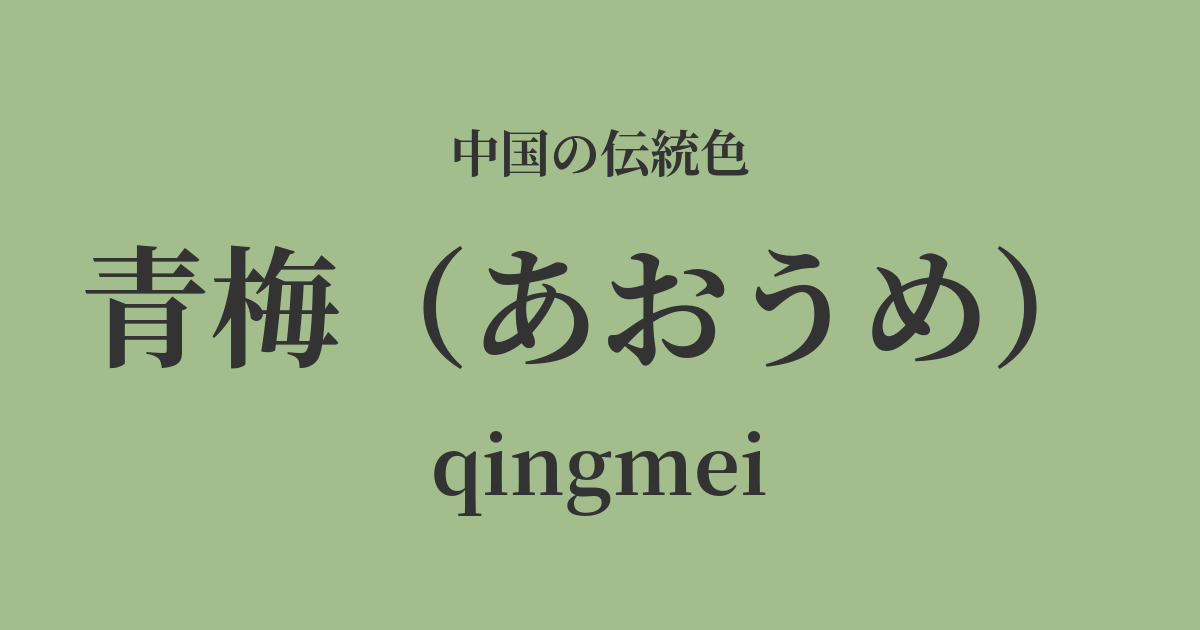
| Color name | Ome |
|---|---|
| reading | Blue plum |
| pinyin | qingmei |
| HEX | #A3BE8C |
| RGB | 163, 190, 140 |
What is Oume? Origin and etymology
As the name suggests, "aoume" (green plum) is a refreshing green color derived from the color of young, unripe plums in early summer.
This color symbolizes the vibrant beginning of a season, the sparkle of youth, and a hint of immaturity with a touch of tartness. Plums have long been deeply rooted in the lives of the Chinese people, not only for their culinary and medicinal uses, but also for the beauty of their flowers and fruits. In particular, the fresh, vibrant color of freshly harvested green plums is thought to have naturally become established as a color name, representing the familiar colors of nature in everyday life.
Historical background of Ome
The plum tree is a plant native to China, and its history spans over 3,000 years. Descriptions of plums can be found in the "Book of Songs," the oldest collection of Chinese poetry, indicating its long-standing cultural importance.
In particular, green plums have often been celebrated in poetry as a symbol of youth and love. For example, the famous story of Cao Cao, a hero of the Three Kingdoms period, telling his soldiers, who were thirsty during a march, that "there is a large plum orchard ahead with fruit on it," caused the soldiers to imagine the sourness of the plums, causing them to salivate and quench their thirst. It is likely that the soldiers were imagining fresh, green plums at that time.
During the Song Dynasty, the appreciation of plum blossoms reached its peak among literati. They praised the nobility and purity of the plum blossom, using it as the subject of many poems and paintings. The youthful vitality of the green plum blossom has been loved by people as a color that evokes hope for the new season.
Qingmei in Chinese Art and Crafts
The color of the green plum has had a significant influence on Chinese art and crafts. Particularly famous is the celadon porcelain from the Longquan kilns produced during the Song dynasty. Among them, the glaze color known as "Meizi Qing" (梅子青), considered the finest, is a moist, deep, and beautiful blue-green, just like the skin of a green plum. This can be seen as the culmination of potters' attempts to find the ideal beauty in the plums of early summer and to forever preserve that freshness on their vessels.
In the world of painting, the plum blossom, as one of the "Four Gentlemen" (plum, orchid, bamboo, and chrysanthemum), was considered a subject that symbolized a noble spirit. Along with the flowers that herald the arrival of spring, the green plums that ripen in early summer were also sometimes depicted as motifs representing the cycle of life and abundance.
In fashion culture, this refreshing green color was likely frequently used, especially in the clothing of young women. The plum-green hue dyed onto silk fabrics would have exuded an elegant sheen, enhancing the wearer's youthfulness and purity.
Rouki Takeuma comes, and the bed plays Omei. Living together with Nagasaki and Hoshiri.
Color scheme preview
This is to check the readability of the text when this color is used as the background.
A color scheme proposal for Ome
Kyou Huang (#F7B977)
The refreshing taste of green plums and the warmth of apricots combine to create a vibrant and lively impression reminiscent of early summer fruits. Their near-complementary color relationship beautifully enhances each other's hues.
Tsukihaku (#EAEAE1)
Combining the green of Ome with the pure, moon-white hues creates a very elegant and calming atmosphere. This clean and sophisticated color scheme is perfect for refined spaces and designs.
Blue color (#EDD1D8)
The vibrant green of young plums combined with the pale lotus root-like cross-section creates a gentle and lovely impression. It's a calm color scheme reminiscent of the natural colors of spring and early summer.
Practical Scenes
Incorporating a plum blossom color into your interior design brings a refreshing and calming atmosphere to your space. It's recommended to use it as an accent color in wallpaper, curtains, cushions, and other elements. It pairs particularly well with natural wooden furniture, adding a natural touch of color to Scandinavian or Japanese modern spaces.
In fashion, choosing this color for spring and summer blouses and dresses creates a youthful and refreshing look. Pairing it with natural materials like cotton and linen further enhances the natural charm of this plum-green color. Subtly incorporating it through accessories is also a lovely option.
In the fields of web and graphic design, it is effective as a key color for websites themed around organic products, health, and lifestyle. It can convey an image that makes viewers feel safe, trustworthy, and connected to nature.