
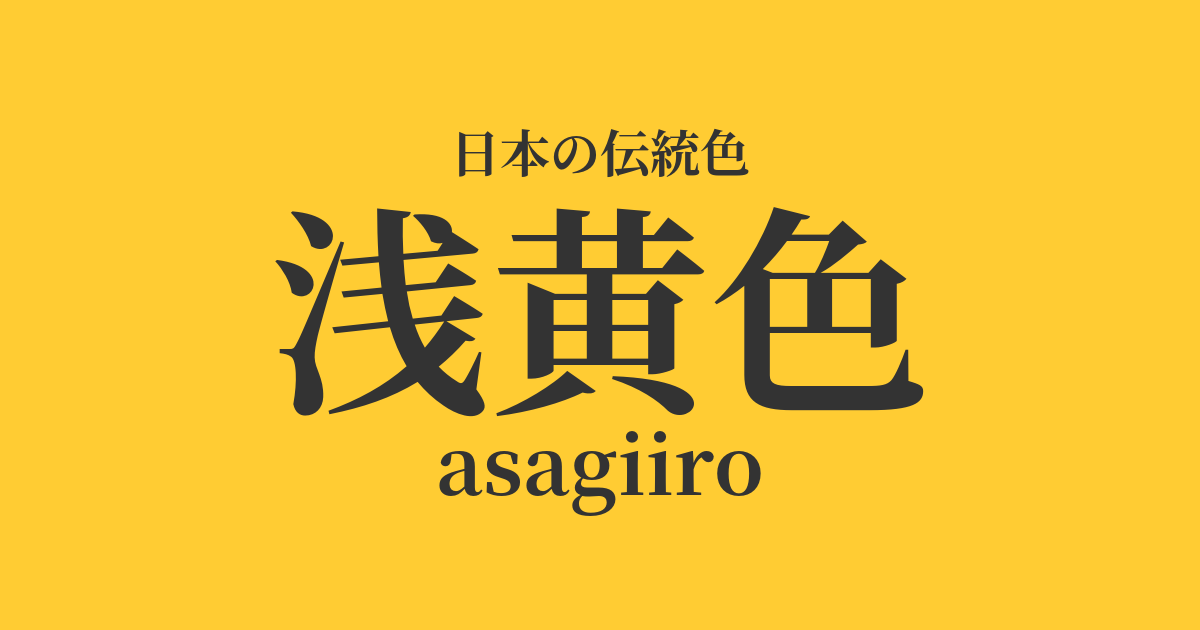
| Japanese color name | light yellow |
|---|---|
| reading | Asagiiro |
| HEX | #FFCC33 |
| RGB | 255, 204, 51 |
What is light yellow? Origin and etymology
The word "asagi-iro" (浅黄) literally derives from "light yellow." It refers to a pale, bright yellow color dyed with plant dyes such as gardenia or turmeric. However, historically, it could also refer to "asagi-iro" (浅葱色), meaning a light indigo or light blue, and has been confused with it due to similarity in sound and regional differences. In this article, we will explain the yellowish shade "asagi-iro" based on the specified HEX code #FFCC33.
This color is characterized by its vibrant hue, reminiscent of spring rapeseed flowers and young leaves, full of vitality.
It is believed that the main dye used was the fruit of the gardenia, which had been readily available since ancient times. Gardenia is a very popular yellow dye, and the resulting color is vibrant and beautiful. It is also said that the cheaper turmeric was used. The pale yellow produced by these natural dyes had a natural and deep hue that chemical dyes could not achieve. Its bright tone gave people an impression of hope and youthfulness.
The historical background of light yellow
The color name "asagiro" (light yellow) itself can be found in Heian period documents. However, this color gained particular prominence on the historical stage during the late Edo period, the turbulent end of the shogunate. The most famous example is its adoption as the color of the uniforms of the Shinsengumi, the rōshigumi and rōnin groups responsible for maintaining order in Kyoto. It is said that the striped pattern of their haori jackets was asagiro.
However, there are various theories about the color of the Shinsengumi's haori (jacket), and one strong theory suggests it was a light blue color called "asagi-iro." This is thought to be due to the ambiguity of records from that time and the possibility that interpretations differed depending on the region of origin of the Shinsengumi members. In any case, the "asagi-iro" haori became strongly etched in people's memories as a symbol of the Shinsengumi.
Furthermore, light yellow was also considered a color symbolizing youth and immaturity. Therefore, there is a popular belief that it was used as the color of the kamishimo (formal samurai attire) worn by those ordered to commit seppuku (ritual suicide) at a young age. It is said that this led to the color being sometimes referred to by the unfortunate nickname "seppuku color," but this remains merely a popular belief.
Related literature, waka poetry, and seasonal words
Due to its vibrant hue, light yellow is sometimes mentioned in literary works and the world of entertainment. In particular, in novels and historical dramas set in the late Edo period, it frequently appears as a color symbolizing the Shinsengumi, adding color to the stories. It is often depicted as a color that is youthful yet somehow tinged with tragedy.
In the world of waka and haiku poetry, the word "pale yellow" is rarely used directly. However, many words that evoke this color, such as "rapeseed blossoms," "Japanese kerria," and "yellow butterfly," exist as seasonal words for spring and have been used to express the arrival of the season and the breath of life. It can be said that the bright and hopeful imagery associated with pale yellow is indirectly expressed through these words.
Color scheme preview
This is to check the readability of the text when this color is used as the background.
Light yellow color scheme proposal
Indigo (#165E83)
The combination of the indigo blue, said to be the base color of the Shinsengumi's haori jackets, evokes the strength and youthfulness of the patriots of the late Edo period. The vibrant light yellow stands out against the deep indigo blue, and their complementary relationship, almost like two colors, makes for a highly visible color scheme.
Black (#595857)
Combining a bright light yellow with a calm ink black creates a refined and sophisticated overall impression. Suitable for Japanese modern designs, the ink black subtly balances the lightness of the light yellow, creating a sense of luxury.
Tokiwa color (#007B43)
Light yellow and evergreen green (the color of evergreen leaves) are harmonious color combinations found in nature. They evoke images of young leaves and rapeseed blossoms, conveying a sense of vitality and freshness, like the arrival of spring. They are well-suited for creating a bright and friendly atmosphere.
Practical Scenes
In the world of traditional Japanese clothing, light yellow is a color that conveys youthfulness and is often used in children's kimonos, obiage (sash ties), and decorative collars for young women. Wearing it, especially in spring, creates a vibrant and seasonal look. Its brightness also makes it a suitable color for celebratory occasions.
In interior design, light yellow is an effective accent color that brings brightness and vitality to a space. Incorporating light yellow into cushion covers, art panels, and small accessories creates a positive atmosphere throughout the room. It pairs particularly well with natural colors such as white, beige, and wood tones.
In web and graphic design, it's used for buttons, banners, and icons that you want to attract user attention. It's also suitable as a brand color for services that you want to convey friendliness and fun. However, because of its high saturation, it's important to note that using it extensively can strain the eyes.