
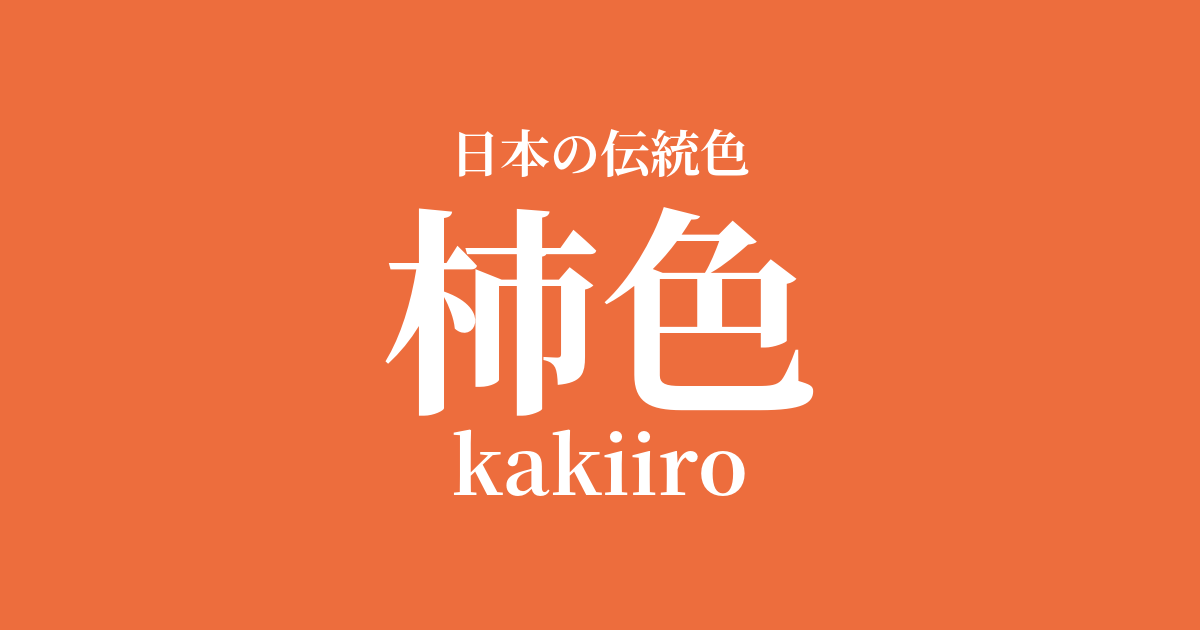
| Japanese color name | Persimmon color |
|---|---|
| reading | kakiiro |
| HEX | #ED6D3D |
| RGB | 237, 109, 61 |
What is persimmon color? Origin and etymology
The color "kaki-iro" (persimmon color), as the name suggests, originates from the color of the persimmon fruit, particularly the ripe fruit, of the Ebenaceae family. This fruit has been familiar to the Japanese people since ancient times, and its vibrant orange color has become established as a color that symbolizes the autumn landscape. It is said that the color was not used as a dye from the persimmon fruit itself, but rather dyed by combining it with safflower, Japanese knotweed, or turmeric. It is characterized by a color that is vibrant yet somehow warm and calming.
The historical background of the persimmon color
The name "persimmon color" is believed to first appear in literature during the Edo period. In the mid-Edo period, the kabuki actor Ichikawa Danjuro I favored wearing persimmon-colored costumes, and the color became very popular among the common people, also known as "Danjuro tea." This color was favored by Edoites as a stylish and fashionable color that was not flashy. The historical context of sumptuary laws that restricted bright colors is also thought to have contributed to the popularity of these brown shades.
Related literature, waka poetry, and seasonal words
Persimmons have long appeared in Japanese literature and poetry, and have been celebrated as a symbol of autumn. In the world of haiku in particular, "persimmon" is an important seasonal word for autumn, and many haiku poets have depicted its imagery in their poems. For example, Masaoka Shiki's famous haiku, "As I eat a persimmon, the bell rings at Horyuji Temple," beautifully portrays the scene of persimmons and the ancient capital. The color of persimmons is deeply connected to the rich image of autumn in Japan that is evoked by such literary works.
As I eat a persimmon, the bell rings at Horyuji Temple.
Color scheme preview
This is to check the readability of the text when this color is used as the background.
Persimmon color scheme proposal
Nightingale (#95945C)
The combination of persimmon green and olive green, reminiscent of the green of persimmon leaves, creates a natural and calming impression. The warmth of the persimmon green and the subtlety of the olive green complement each other, creating a harmonious blend like an autumn landscape. This color scheme is suitable for Japanese-style designs and interiors.
Indigo (#274052)
The vibrant persimmon orange and deep indigo are almost complementary colors, enhancing each other's beauty. This creates a contrast reminiscent of a clear autumn sky and a persimmon fruit, giving a modern and sophisticated impression. It's an effective color scheme for web design and other applications.
Generated color (#FBF9F4)
The soft, natural off-white gently complements the vibrant persimmon color, brightening the overall impression. This creates a warm, natural atmosphere and a friendly color scheme. It can be used in fashion and interior design.
Practical Scenes
Persimmon color, with its warmth and approachability, is used in a variety of situations. In kimonos and obi sashes, it is favored as a stylish color to adorn autumn attire. In particular, it is sometimes used symbolically as Danjuro-cha in costumes related to Kabuki plays.
In interior design, using it as an accent color for cushions or curtains brings a warm and lively atmosphere to the entire room. It also pairs very well with wooden furniture. In web design, using it for buttons or banners that you want to attract attention can draw the user's eye while creating a friendly impression.