
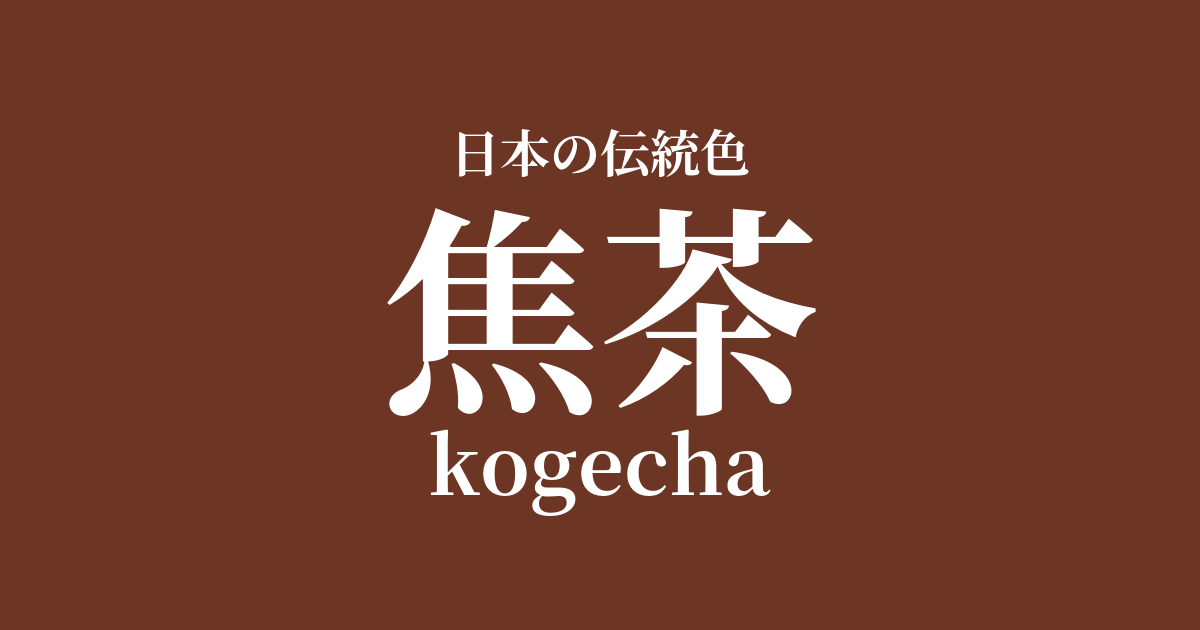
| Japanese color name | dark brown |
|---|---|
| reading | kogecha |
| HEX | #6C3524 |
| RGB | 108, 53, 36 |
What is dark brown tea? Origin and etymology
Kogecha, as the name suggests, refers to a dark, almost blackish brown color, reminiscent of tea leaves that have been strongly roasted or brewed until burnt. This color was one of the popular colors known as "Shijūhacchahyakunezumi" (forty-eight shades of brown and one hundred shades of gray) that emerged during the Edo period when sumptuary laws were in place and bright colors were restricted. People enjoyed the subtle differences in shades within the limited color palette, creating a wide variety of variations even within the brown family alone.
Dark brown is one such example, and its name is said to have been created as a result of pursuing a deep, rich color.
Historical background of dark brown
Dark brown became popular from the mid-Edo period onward. It is said that its popularity was particularly ignited when the Kabuki actor Nakamura Nakazō I used it for his stage costumes. He popularized his own unique shade of brown called "Nakazō-cha," but dark brown was also one of the colors favored by actors and sophisticated people. Amidst sumptuary laws that encouraged subdued colors, common people found subtle differences in shades like brown and gray, and cultivated a culture of enjoying these differences as "chic."
Among these colors, dark brown was particularly popular as a deep, calming shade, and was widely used by both men and women.
Related literature, waka poetry, and seasonal words
While there aren't many waka or haiku poems that directly mention the color "kogecha" (dark brown), Edo period literature and ukiyo-e prints frequently depict people wearing brown-toned clothing, which was fashionable during that era. Ihara Saikaku's ukiyo-zoshi (popular fiction of the Edo period) vividly portrays the townspeople's culture and customs of the time, with brown clothing appearing as a symbol of sophistication. It can be said that kogecha exists in the background of literary works as a color that embodies the refined aesthetic sense of Edo townspeople's culture.
Although it is not specifically designated as a seasonal word, the colors evoke a sense of deepening autumn or the stillness of winter.
Color scheme preview
This is to check the readability of the text when this color is used as the background.
Dark brown color scheme proposal
Soot bamboo color (#6E5847)
Soot bamboo green, like dark brown, is a brown color that was popular during the Edo period. Combining the two creates a deep, unified, and very calm and sophisticated impression. It is suitable for designs that want to emphasize a Japanese aesthetic and creates a refined, mature atmosphere.
Blue gold (#FABE29)
The vibrant turmeric yellow provides a bright accent to the deep dark brown. It adds a touch of elegance to the dark tones, creating a harmonious interplay between the two colors. This color scheme, while traditional, gives a modern and eye-catching impression, making it effective as an accent color for accessories and designs.
Generated color (#FBF9F4)
The off-white color is the natural color of undyed linen and cotton, a warm, inviting shade. When combined with a deep dark brown, it creates a strong contrast, yet the softness of the off-white softens the overall look. The result is a natural and elegant color scheme that balances cleanliness and tranquility.
Practical Scenes
Dark brown, with its subdued hue, is often used in kimonos and obi sashes. It is particularly favored for men's kimonos and haori jackets, as well as for stylish women's everyday wear, and is a color that conveys the aesthetic sensibilities of the Edo period to the present day. Combining it with other shades of brown or gray creates a sophisticated and refined look.
In interior design, dark brown evokes a sense of weight and stability. When used for flooring, fixtures, and furniture, it tightens the overall space and creates a sense of luxury. When combined with white, off-white, or wood tones, it is suitable for creating a warm, modern Japanese-style space.
In web and graphic design, using this color as a background or main color can convey a sense of reliability and tradition. It also offers high readability as a text color, and is particularly effective when combined with a light background. Combining it with an accent color creates a sophisticated design.