
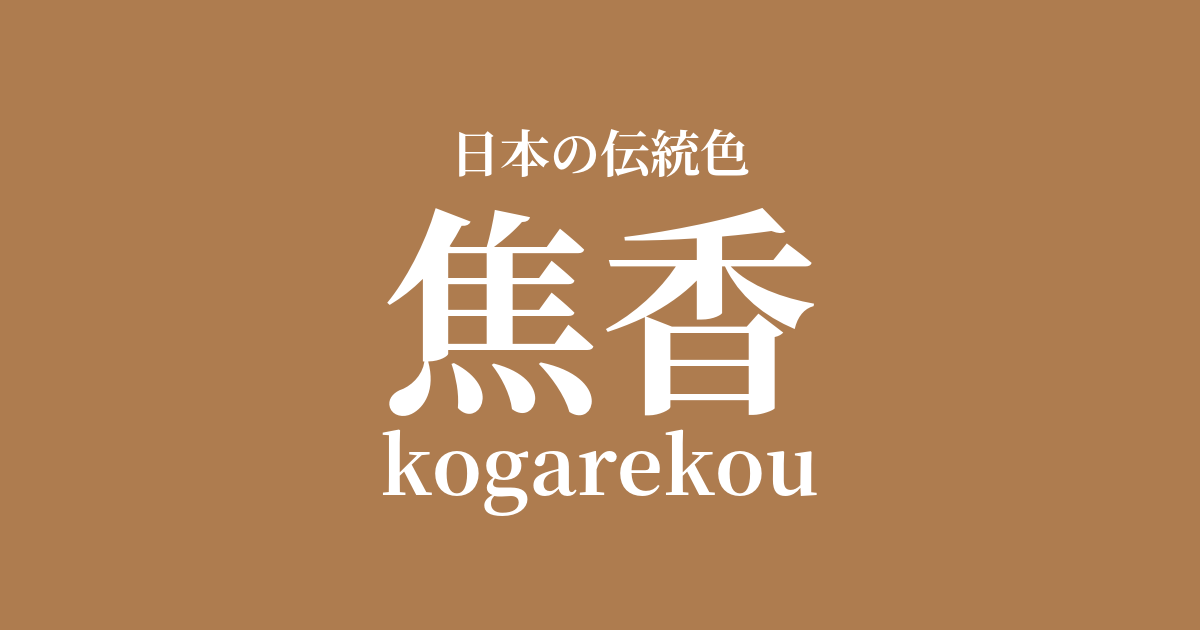
| Japanese color name | scorched incense |
|---|---|
| reading | kogarekou |
| HEX | #AE7C4F |
| RGB | 174, 124, 79 |
What is "Kogane"? Origin and etymology
The name "Kogake" (焦香) originates from the color of fragrant wood that has been burnt and smoky. "Kō" (香) refers to the color of fragrant wood, and in particular, colors obtained by using fragrant woods such as agarwood and cloves as dyes were called "kō-iro" (香色). Kogake describes a color that is even darker and deeper, resembling that of burnt wood.
In the aristocratic society of the Heian period, the culture of burning incense was highly refined, and it is believed that this sophisticated olfactory culture influenced the visual color culture, giving rise to such elegant color names.
Historical background of burnt incense
The color name "kokō" (burnt incense) appeared during the Heian period and was one of the colors favored by the aristocracy. In particular, it is said to have been used in "kasane no irome" (layered colors) of clothing to express the feeling of autumn. Literary works such as "The Tale of Genji" also depict incense-colored clothing for the characters, conveying to us the richness of the color culture of that time.
In the Edo period, brown tones became extremely popular among common people, known as "48 shades of brown and 100 shades of gray," and subdued, calm colors like burnt incense also became widely accepted.
Related literature, waka poetry, and seasonal words
In Heian period literature, particularly in works like "The Tale of Genji" and "The Pillow Book," the color of the characters' clothing is frequently depicted in shades of "incense brown." These works skillfully express the characters' social status, emotions, and the season through the combination and shades of color. A deep brown, like burnt incense, may have been depicted as the attire of a calm, mature woman or a thoughtful character.
While the color name "burnt incense" doesn't appear directly very often, the fact that the culture surrounding incense is reflected in the color name is important for understanding the aesthetic sensibilities of the aristocracy at that time.
Color scheme preview
This is to check the readability of the text when this color is used as the background.
Charcoal color scheme suggestion
Clove color (#B8886A)
The combination of burnt incense and clove yellow, both derived from fragrant wood, creates a unified, calm, and elegant impression. The colors, each associated with a fragrance, tell a story, creating a natural and tranquil atmosphere.
Blue gold (#FABE28)
Adding a vibrant turmeric color as an accent brings a touch of elegance and brightness to the subdued tortoiseshell hue. The resulting color scheme evokes the warmth and depth of an autumn ginkgo tree-lined street, enhancing its visual appeal.
Indigo iron color (#293047)
When combined with a deep blue-green color, the two colors complement each other, creating a sophisticated and modern impression. The resulting color scheme exudes a calm and intellectual atmosphere, making it suitable for Japanese modern designs.
Practical Scenes
Koko (burnt incense) has been used as a color for kimonos and obi sashes since ancient times. It is especially suitable for autumn attire, creating a calm and mature style. When combined with other brown or green colors, it creates a natural and sophisticated look.
In interior design, using it in wallpaper, furniture, and curtains brings warmth and tranquility to a space. It pairs well with wooden furniture and houseplants, making it suitable for creating Japanese modern or natural-style spaces.
In web design, using these colors as background or accent colors can convey a sense of luxury and trustworthiness. They are particularly effective on websites related to traditional crafts or history, or on brand websites with a sophisticated atmosphere.