
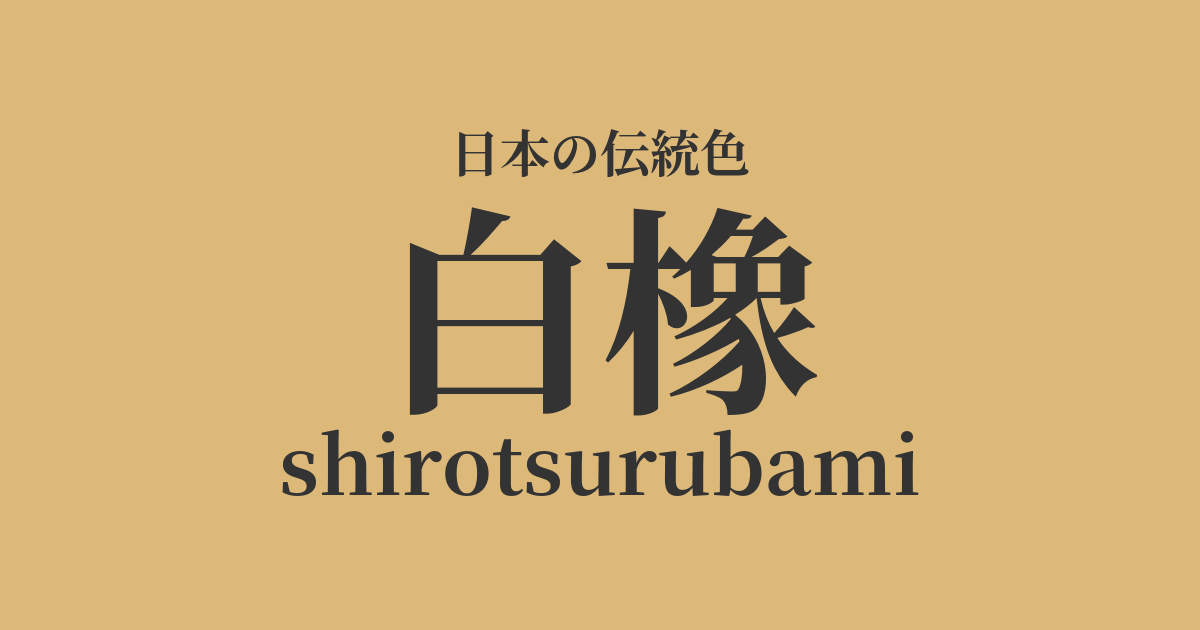
| Japanese color name | White hut |
|---|---|
| reading | shirotsurubami |
| HEX | #DCB879 |
| RGB | 220, 184, 121 |
What is Shiratsubaki? Origin and etymology
Shiratsubaki is a type of "tsurubami-zome" dyeing, which uses a decoction of the bark and fruit peel (acorns) of trees such as sawtooth oak and oak trees of the beech family. "Tsubaki" is an old name for sawtooth oak and has been used to refer to all colors dyed with its dye. Lye is used as a mordant, and by reducing the number of dyeing cycles, these pale and bright colors are produced. It is characterized by its warm and simple colors derived from natural materials.
The "white" in "shirotsubochi" (white oak) indicates that it is a particularly pale color among oak dyes. Even with the same oak dye, by changing the number of dyeing cycles and the mordant used, various shades can be produced, such as a darker "oak color," a reddish "red-white oak," and a greenish "blue-white oak." Among these oak-based colors, shirotsubochi is the brightest, exhibiting a yellowish-brown hue. Its soft tone has been cherished by people since ancient times.
Historical background of white oak
The history of oak dyeing is long, and it is believed to have been used as a color for common people's clothing during the Nara period. At that time, anyone could dye clothes with oak without special permission, so it is thought to have been widely used. However, in the Heian period, white oak came to occupy an important position as a color for the attire of court nobles.
The Engishiki, a legal code compiled in the mid-Heian period, stipulates that a white oak robe (ho) is the second most formal color after the yellow safflower dye (kōrozen) worn by the emperor during ceremonies. There also existed a blue-white oak robe worn by the emperor on private occasions, indicating that oak-based colors were treated as extremely noble colors. This regulation transformed oak from a color of commoners to a color almost equivalent to a forbidden color, permitted only to those of high rank.
From the Kamakura period onward, white oak was used in samurai clothing and textiles, and its use has been passed down through the ages. In the Edo period, it once again became popular among commoners, and its subdued color was also favored in the world of tea ceremony. This demonstrates how the gentle hues unique to naturally derived dyes have been deeply intertwined with Japanese aesthetics.
Related literature, waka poetry, and seasonal words
White oak frequently appears in Heian period literature as a color that adorns the elegant lifestyle of the aristocracy. In particular, in "The Tale of Genji," it is effectively used as the color of the characters' clothing, playing a role in symbolizing the seasonality of the scene, the characters' social status, and their feelings. For example, in the "Wakana, Part 1" chapter, there is a scene in which Hikaru Genji wears a white oak court robe, which harmonizes with the tranquil spring scenery.
Furthermore, in "The Pillow Book," under the section on "beautiful things," "shiratō" (white oak) is listed as the color of the "kazami" (a type of undergarment worn by young children). This suggests that the soft and gentle hue of shiratō was considered to suit the adorable appearance of children. Thus, shiratō was an indispensable color in expressing the refined aesthetic sense of the Heian aristocracy.
Color scheme preview
This is to check the readability of the text when this color is used as the background.
White Oak Color Scheme Proposal
Indigo (#165E83)
The soft yellowish-brown of the white oak and the deep blue of the indigo color complement each other beautifully. This combination has been used in Japanese dyeing and weaving since ancient times, and it gives a sense of calm and dignity. It gives a traditional yet refined impression.
Young bamboo green (#78B474)
Both colors evoke plants in nature, making them a highly compatible combination. The warmth of the earth and bark of the white oak harmonizes with the vibrant green of the young bamboo, creating a calm and comfortable space.
Plum blossom color (#F2A0A1)
The calm tones of white oak, combined with the bright and vibrant red of plum blossom, create an elegant and graceful impression. This warm yet sophisticated color scheme, reminiscent of the arrival of spring, is perfect for expressing feminine softness.
Practical Scenes
In the world of traditional Japanese clothing, shiratokaki (white oak) is widely used for formal kimonos, solid-colored kimonos, and obi sashes due to its elegant and subdued hue. Because it's a color not limited to a specific season, it's easy to wear throughout the year. It blends particularly well with autumn attire and pairs well with other colors, allowing for a variety of looks by adding accents with obi sashes and accessories.
Incorporating white oak into interior design can create a warm and tranquil space. Using it on large areas such as wallpaper, curtains, and sofas will give the entire room a natural and calming atmosphere. It also pairs exceptionally well with wooden furniture and houseplants, contributing to the creation of a relaxing space.
In web and graphic design, using this color as a background or accent color can convey a sense of reliability, tradition, and organic appeal. It is particularly suitable for websites dealing with traditional crafts, natural cosmetics, and Japanese-style content. It can help maintain readability while instilling a sense of security in users.