
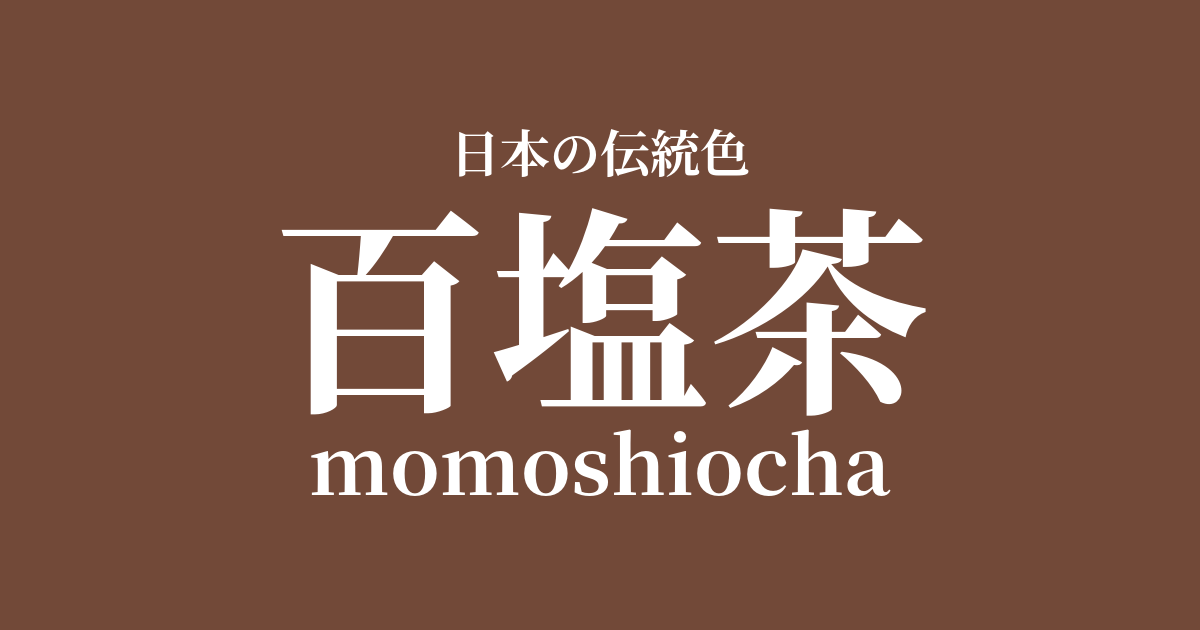
| Japanese color name | Hyakushio Tea |
|---|---|
| reading | momoshiocha |
| HEX | #724938 |
| RGB | 114, 73, 56 |
What is Hyakushio Tea? Origin and Etymology
Momoshio-cha is a deep, reddish-brown color, and its name is said to originate from the dyeing method. "Momoshio" comes from the term "momoshiozome," which means to soak the fabric in the dye many times, indicating that it is a deep color achieved by dyeing it a hundred times, a laborious process. The "shio" in this term is said to be a variation of "shio," a counter word used to count the number of times the fabric is dipped in the dye solution.
It was one of the "Forty-Eight Browns and One Hundred Grays," a range of brown shades popular during the Edo period, and was recognized as a particularly deep color among them.
While no single specific dye was used to color the fabric with Hyakushiocha, it is believed to have been created primarily using red dyes such as sappanwood and madder, combined with other dyes. Repeated dyeing allowed the dye to penetrate deeply, increasing its colorfastness and creating a complex and deep hue. The color name reflects the skill and aesthetic sense of Edo-period craftsmen who spared no effort in their work, suggesting the rich dyeing culture that existed behind it.
Historical background of Hyakushio tea
The popularity of Hyakuen-cha (a shade of brown) is believed to have begun in the mid-Edo period. During this time, the shogunate frequently issued sumptuary laws, which also restricted the colors of clothing worn by commoners. As a result, a culture flourished that found subtle differences in shades and sophistication in subdued colors such as brown and gray, rather than in bright primary colors. Hyakuen-cha is thought to have been one of these popular colors, known as "Forty-Eight Browns and One Hundred Grays," and was widely loved by people from the common people to the samurai class.
In particular, colors favored by Kabuki actors, who were fashion leaders of the time, became explosively popular among the common people. For example, "Danjuro-cha," a color favored by Ichikawa Danjuro, is famous. Hyakushio-cha is also considered one of the colors that spread throughout Edo's townspeople's culture as these actors incorporated it into their stage costumes and everyday clothes. Its deep hue symbolized the aesthetic sensibilities of the people of Edo, such as "chic" and "sophistication."
Related literature, waka poetry, and seasonal words
It is difficult to pinpoint any famous waka poems or literary works that directly feature the color name "Hyakushio-cha." However, the word "Hyakushio," from which it originates, is an expression that can be found as far back as the Manyoshu, an ancient collection of Japanese poetry. For example, wood that had been repeatedly doused in saltwater and burned to make salt was called "Momoshioki." It is speculated that the nuance of "repeatedly" in this phrase was deemed suitable to express the depth of a color achieved through meticulous dyeing, and thus it was adopted as a color name.
It is more likely that this was a practical term rooted in dyeing techniques rather than a literary expression.
Color scheme preview
This is to check the readability of the text when this color is used as the background.
Color scheme proposal for Hyakushio Tea
Generated color (#FCFBF4)
The combination of a deep, rich salt-green tea and an undyed, natural off-white color creates a strong contrast, with each color enhancing the other. It gives a warm, calm, elegant, and sophisticated impression, and is a classic color scheme in Japanese-style designs.
Indigo tea (#555647)
A combination with a bluish-green tea. Both are subdued colors that were popular during the Edo period, and they have a strong historical affinity. The deep earth tones harmonize, creating a stylish, calm, and sophisticated impression. Suitable for men's traditional Japanese clothing and interior design.
Blue gold (#FABE22)
This color scheme adds a vibrant yellow, turmeric, as an accent. The rich impression of the deep, mellow tea is given a touch of elegance and vitality by the bright turmeric. It is a traditional yet modern and eye-catching combination, and is effective as an accent color for accessories and designs.
Practical Scenes
In the world of traditional Japanese clothing, Hyakushiocha (a shade of brown) is used for obi sashes, haori jackets, and hakama trousers, playing a role in tightening the overall coordination. Its subdued color is easy to match regardless of age or gender, and it adds depth and warmth to autumn and winter outfits in particular. When paired with off-white or indigo-toned kimonos, it creates a look that expresses the "chic" style of Edo.
In interior design, using it on large areas such as wallpaper, curtains, and furniture brings a sense of depth and tranquility to a space. It pairs particularly well with natural materials such as wooden furniture and Japanese paper lighting. Incorporating it into spaces where you want to relax, such as a study or bedroom, can create a high-quality and peaceful atmosphere.
In web and graphic design, Hyakushiocha is suitable for expressing themes such as luxury, tradition, and history. It is effective when used as a background color for websites of long-established inns or for historical content. To ensure readability, it is recommended to combine it with light colors such as white or off-white for the text.