
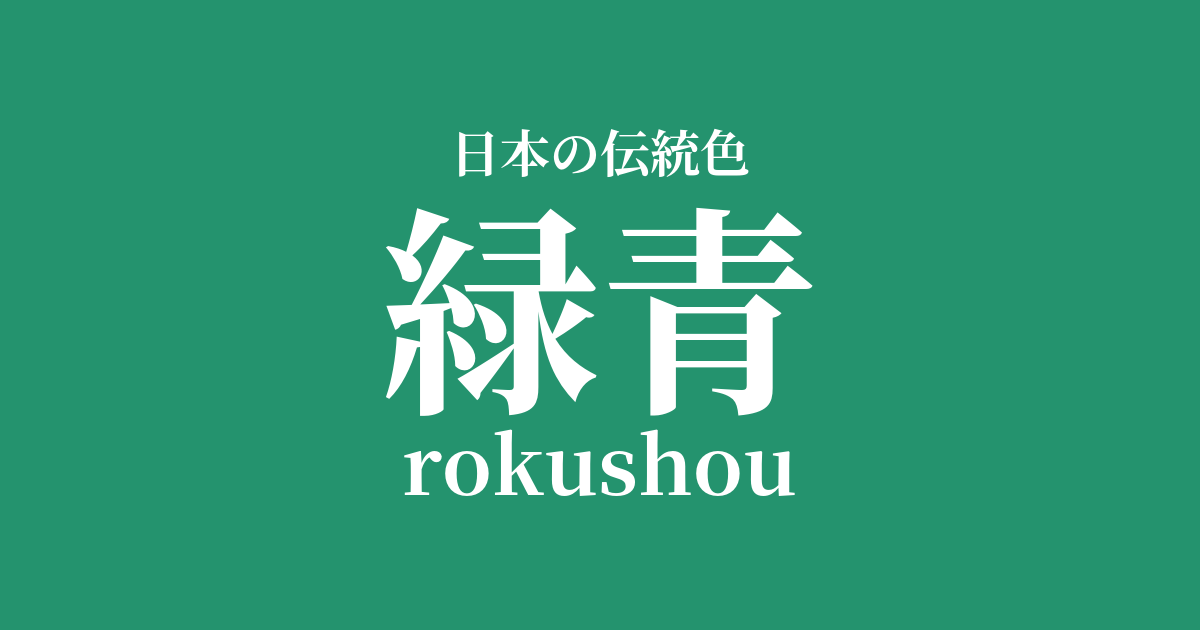
| Japanese color name | Verdigris |
|---|---|
| reading | rokushou |
| HEX | #24936E |
| RGB | 36, 147, 110 |
What is verdigris? Origin and etymology
Verdigris derives its name from the color of rust that forms on the surface of copper when it reacts with moisture and carbon dioxide in the air. This rust is mainly composed of basic copper carbonate and exhibits a deep, vivid blue-green hue. A pigment made by crushing a naturally occurring mineral called malachite is also called verdigris and has been used in paintings and crafts since ancient times. The name means "greenish blue," directly describing its appearance.
"Rokushō" is pronounced "rokushō," but in the past it was also called "aosabi." As a pigment, there are two types of verdigris: "natural verdigris," which is made from natural minerals, and "artificial verdigris," which is made by artificially corroding copper. Because natural verdigris is scarce and expensive, artificial manufacturing methods have been studied since ancient times. The color and texture differ depending on the manufacturing method and raw materials, and in the world of Japanese painting, it has historically been distinguished by various names such as "byakuroku" (white verdigris).
Historical background of verdigris
Verdigris is one of the oldest pigments used in Japan. Its use dates back to the Asuka period, and it has been confirmed that verdigris was used to express vibrant green in the murals of the Horyuji Temple's main hall and the Takamatsuzuka Tomb in Nara Prefecture. In these ancient murals, verdigris played an important role in the color scheme, conveying the aesthetic sensibilities of that time to the present day.
During the Heian period, verdigris came to be widely used in Buddhist paintings, illustrated scrolls, and architectural decorations of temples and shrines. In particular, as seen in the interior decoration of Byodo-in Phoenix Hall, it was used effectively along with gold and vermilion to represent the magnificent world of the Pure Land. In the Kamakura period, it was also used to decorate armor, and its beautiful color became a symbol of authority and wealth.
During the Edo period, verdigris played an important role as a pigment in ukiyo-e prints. Artists such as Katsushika Hokusai and Utagawa Hiroshige used verdigris to represent the blueness of trees and water in their landscape paintings. However, because it was an expensive pigment, it is said that it was sometimes mixed with other cheaper pigments. It has continued to be used as a traditional pigment in Japanese painting since the modern era.
Related literature, waka poetry, and seasonal words
While verdigris itself is rarely directly featured as a theme in waka poetry or stories, its color appears in classical literature through descriptions of ancient temples, shrines, and Buddhist statues. For example, in works such as "The Tale of Genji," the beauty of the painted pillars and doors is described when describing magnificent temples and aristocratic residences, and it is presumed that the verdigris hue was included in these descriptions. This color functioned as a background color symbolizing the grandeur and elegance of the era.
Although the color verdigris is not designated as a seasonal word, it evokes the vibrant life of summer nature. It can be associated with Japan's rich natural landscapes, such as the deep foliage of trees and the clear color of flowing rivers. When describing such scenes in haiku and tanka, it is likely that the authors had a deep, vivid green like verdigris in mind.
The verdigris on the copper torii gate and the spring rain
Color scheme preview
This is to check the readability of the text when this color is used as the background.
Verdigris color scheme proposal
Golden (#E6B422)
Gold is a color used in the decorations of temples and shrines, as well as in Buddhist implements. When combined with verdigris, it can recreate the solemn and dignified atmosphere of ancient times. The colors complement each other, creating a luxurious yet calming color scheme.
White training (#F3F3F3)
The pure, bright white of the shiro-neri color complements the deep green of the verdigris, creating a sense of cleanliness and freshness. This traditional color scheme, often seen in Japanese paintings and ceramics, is easily applicable to modern designs. It is well-suited for expressing a refined Japanese aesthetic.
Soot bamboo color (#6F514C)
Soot bamboo color is a deep brown, reminiscent of bamboo smoked by a hearth. When combined with the bluish-green of verdigris, it creates a chic and calm impression. This color scheme, reminiscent of natural materials, brings a sense of weight and a modern atmosphere.
Practical Scenes
In the world of kimono, verdigris is used in obi sashes, komon (small-patterned kimono), and houmongi (formal visiting kimono) patterns, giving an elegant and intellectual impression. Especially when combined with gold or silver threads, it creates a dignified and formal look. Because of its subdued yet striking presence, it is a valuable accent color in kimono coordination.
In interior design, incorporating it into fabrics such as wallpaper, cushions, and curtains can create a calm and modern Japanese atmosphere. It pairs exceptionally well with natural materials such as wood, bamboo, and Japanese paper, evoking a sense of depth and tranquility. Using it as an accent wall adds sophistication and a touch of luxury to the entire room.
In web and graphic design, verdigris is a suitable color for conveying trustworthiness, tradition, and a sense of luxury. It is particularly effective when used as a key color for websites dealing with historical themes or for established brands. Combining it with white or light gray creates a highly visible and sophisticated design.