
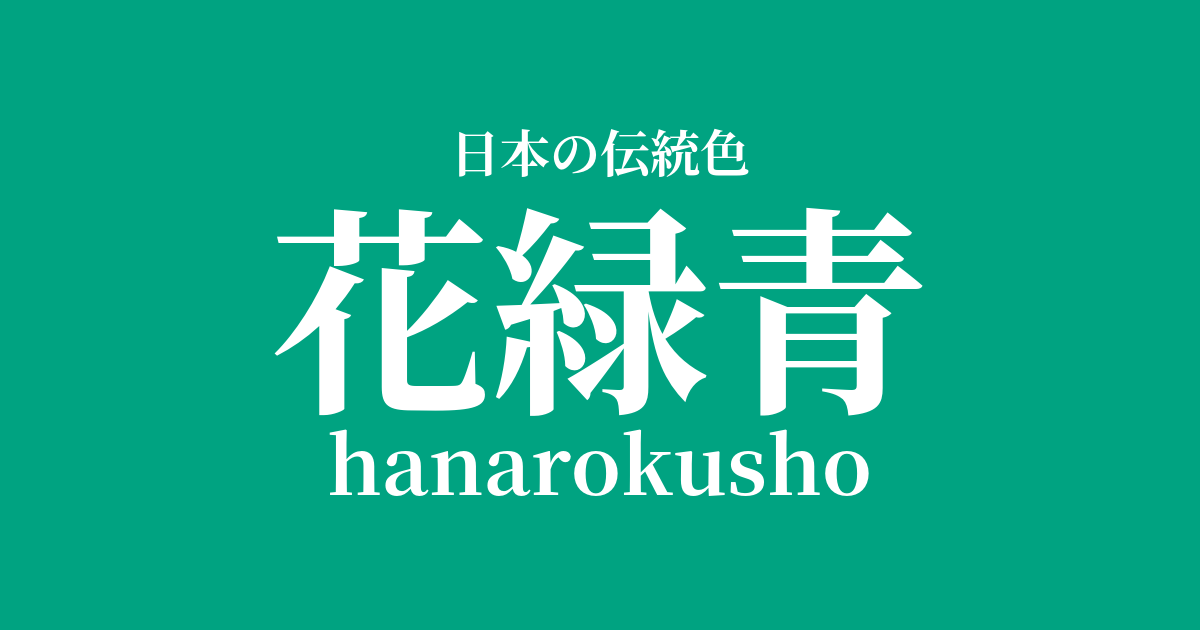
| Japanese color name | flower patina |
|---|---|
| reading | hanarokusho |
| HEX | #00A381 |
| RGB | 0, 163, 129 |
What is Hanaryokushō? Origin and etymology
Hanaryokushō is the Japanese name for "emerald green," an artificial pigment imported from Germany during the Meiji era. Its main component is copper acetosarsenite, and it is known to be highly toxic. The name is a combination of the prefix "hana," meaning something beautiful or excellent, and "rokushō," which refers to the bluish-green rust that forms on copper.
It is believed to have been named with the meaning of "particularly beautiful verdigris," and was given this name because its vivid color was unlike anything seen in traditional Japanese pigments up to that point.
Historical background of verdigris
In the early Meiji era, new chemical pigments were introduced to Japan from the West, one of which was verdigris. Its vibrant color was unlike anything found in traditional Japanese paints, and it attracted the attention of some artists. However, due to the strong toxicity of its main component, copper acetosate arsenite, its use as a paint gradually declined. On the other hand, its toxicity was utilized to its advantage in a history of being widely used as an insecticide, rodenticide, and paint to prevent barnacles and other organisms from attaching to the hulls of ships.
Nowadays, safe alternative pigments have been developed, so the inherently toxic verdigris is no longer used as a pigment.
Related literature, waka poetry, and seasonal words
Hanarokushō is a relatively new color name that appeared in the Meiji era, so it does not directly appear in classical literature or waka poetry from the Heian or Edo periods. However, its vivid blue-green color is reminiscent of the deep pools and streams of summer, or the leaves of evergreen trees. In modern literary works, as new color sensibilities influenced by Western culture were incorporated, vivid depictions of green reminiscent of Hanarokushō can sometimes be seen.
Although it is not an established seasonal word, its colors strongly evoke a vibrant summer scene.
Color scheme preview
This is to check the readability of the text when this color is used as the background.
Color scheme proposal for floral green.
Coral color (#F88379)
The bluish-green of the verdigris and the reddish-orange of the coral are close to complementary colors, vividly enhancing each other's beauty. This creates a vibrant and exotic color scheme that can make a strong impact on the design.
White green (#D6E9D6)
By combining it with white-green, a pale shade of green similar to verdigris, a beautiful gradation of colors is created. It gives a refreshing and harmonious impression, creating a fresh and elegant atmosphere.
Golden (#E6B422)
The vibrant verdigris combined with shimmering gold creates a luxurious and modern impression. This sophisticated color scheme, reminiscent of Art Deco, is ideal for conveying a sense of luxury.
Practical Scenes
Because of its vibrant colors, using it as an accent in accessories such as obi sashes, obi ties, and collars with kimonos and yukatas tightens the overall look and gives a stylish impression. In particular, incorporating it into summer Japanese clothing creates a cool and modern atmosphere.
In interior design, it's effective to incorporate these colors partially through cushion covers, art panels, and small accessories. Adding them to a space based on white, beige, or dark wood tones creates a vibrant accent color, resulting in a modern and sophisticated atmosphere.
In web and graphic design, its high saturation and brightness make it effective for use in buttons, headings, and icons that you want to attract attention. When combined with achromatic colors such as white and black, the beauty of verdigris stands out, resulting in a stylish design with high visibility.