
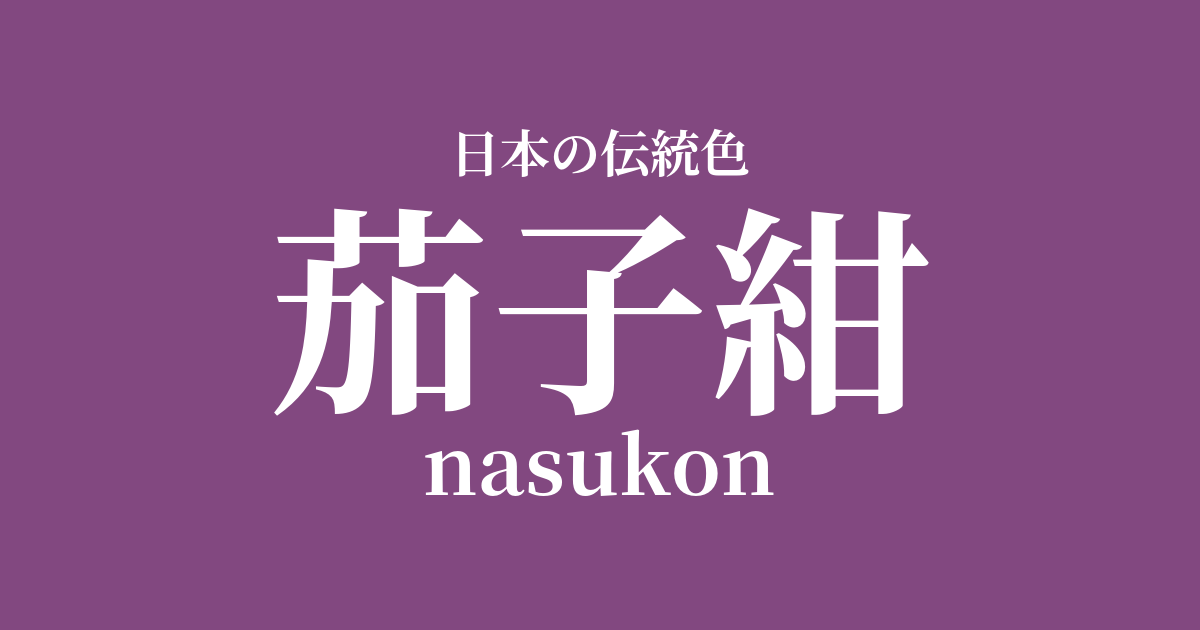
| Japanese color name | Eggplant purple |
|---|---|
| reading | nasukon |
| HEX | #824880 |
| RGB | 130, 72, 128 |
What is eggplant purple? Origin and etymology
Nasu-kon (eggplant navy blue) is a color name derived from the deep, lustrous purplish-blue color seen on the skin of eggplants, a summer vegetable. It is said that this deep and complex hue was created by layering red dyes such as sappanwood on top of a base indigo dye. It is not simply navy blue, but is characterized by a reddish-purple tone, and as the name suggests, it evokes the image of a fresh eggplant.
During the Edo period, its refined and subdued colors were popular and were widely used, especially in the world of dyeing and weaving.
Historical background of eggplant purple
The color eggplant purple became widely known during the Edo period. At that time, the shogunate's sumptuary laws restricted the use of bright colors, so people began to find subtle differences in subdued colors such as brown, gray, and navy blue, and a culture of enjoying these differences flourished. Eggplant purple was one such color, and its deep, purplish navy blue was loved especially by the townspeople of Edo as a symbol of "chic" or sophisticated style. It is said that the incorporation of this color into the stage costumes of Kabuki actors also contributed to its popularity.
Related literature, waka poetry, and seasonal words
The word "nasu-kon" (eggplant purple), from which the color is derived, is a familiar seasonal word for summer in the world of haiku poetry. Therefore, the color itself is sometimes perceived as a color that evokes a sense of summer and freshness. In Edo period ukiyo-zoshi (popular fiction) by Ihara Saikaku, the lives and customs of people at the time are depicted, and characters wearing kimonos of this color sometimes appear.
In modern literature, this color has also been effectively used to depict the refined culture and tranquil atmosphere of Edo.
Autumn eggplant, the purple of the stem is beautiful.
Color scheme preview
This is to check the readability of the text when this color is used as the background.
A color scheme proposal in eggplant purple.
White Rat (#DCDEE0)
This color scheme features a deep eggplant purple complemented by a bright, soft white-gray. It conveys a sense of cleanliness and sophistication, making it suitable for modern Japanese designs. The colors don't clash with each other, creating an elegant and harmonious combination.
Mustard color (#D1A554)
The eggplant purple and mustard yellow are close to complementary colors, vividly enhancing each other. This creates a modern and striking color scheme reminiscent of the "chic" aesthetic of Edo. The use of mustard yellow as an accent adds vitality and vibrancy to the overall design.
鶸Menghuang (#8D9949)
The combination of eggplant purple and fresh yellow-green evokes the colors of plants in nature. It brings to mind the relationship between an eggplant fruit and its leaves, creating a calm and reassuring impression. It is suitable for designs with a natural and tranquil atmosphere.
Practical Scenes
Eggplant purple is a classic base color for kimonos and yukatas, creating a stylish, calm, and mature atmosphere. By pairing it with brighter colors for the obi and accessories, you can enjoy a variety of looks. It is said to go particularly well with materials such as cotton and silk pongee.
In interior design, incorporating it into accent walls, cushions, or curtains adds depth and tranquility to a space. Combining it with white or wood-grain furniture creates a sophisticated, modern Japanese-style space. The way the color appears changes depending on the lighting is another appealing aspect.
In web design, using it as the main color conveys a sense of reliability and sophistication. Using it in backgrounds, footers, and buttons tightens the overall look of the site, giving users a calm and composed impression. It also offers high readability when paired with white or light gray text.