
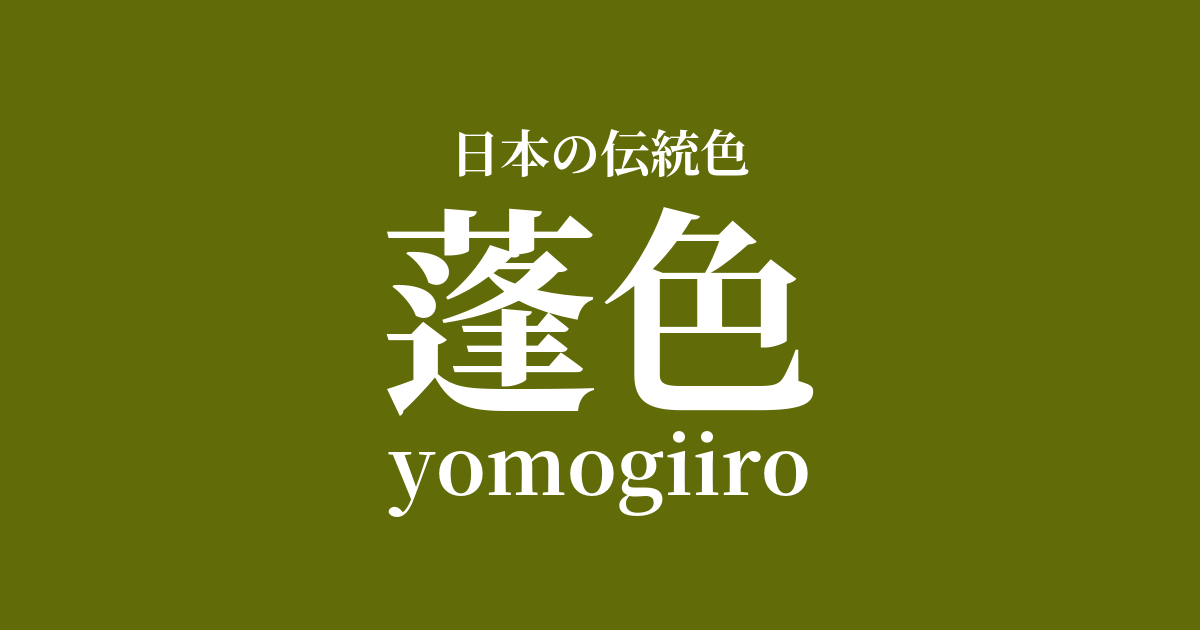
| Japanese color name | Mugwort |
|---|---|
| reading | yomogiiro |
| HEX | #616B07 |
| RGB | 97, 107, 7 |
What is mugwort color? Origin and etymology
Yomogi-iro refers to a deep, muted green color reminiscent of crushed mugwort leaves, a perennial plant belonging to the daisy family. Mugwort has long been deeply rooted in Japanese life as a food and medicinal herb, and its familiarity has led to its establishment as a color name. Furthermore, mugwort is a culturally important plant, believed to have the power to ward off evil spirits, and is displayed alongside irises on eaves during the Boys' Festival (Tango no Sekku) and eaten as kusa mochi (rice cakes with mugwort).
Its subdued color is considered one of the colors that symbolize Japan's view of nature and its sense of the seasons.
The historical background of the mugwort color
The color "yomogi-iro" (mugwort green) already existed during the Heian period, and descriptions of clothing dyed with mugwort can be found in the "Engishiki," a document detailing the regulations for court ceremonies and attire. However, it was difficult to dye cloth with mugwort alone, and it is believed that this deep green color was usually achieved by first under-dyeing with indigo and then layering it with yellow dyes such as Japanese knotweed. During the Edo period, it became more widely popular among common people and was a familiar color for everyday items such as kimonos, hand towels, and curtains.
The simple, calming colors derived from nature have been loved by many people across generations.
Related literature, waka poetry, and seasonal words
Mugwort has been a staple of spring poetry, appearing frequently in waka and haiku. In particular, its vigorous sprouting in the melting snow has captured the hearts of poets as a symbol of vitality. Furthermore, in classical literature such as "The Tale of Genji," it is often depicted as a plant growing luxuriantly in the gardens of dilapidated mansions, playing an important role in expressing a sense of loneliness and the poignant beauty of things. Thus, mugwort and the color mugwort have been important elements in Japanese literature for richly depicting the changing seasons and scenery.
Even if I were to write it down, I could not possibly describe it, like the sash grass of Ibuki, nor would I know of my burning feelings.
Color scheme preview
This is to check the readability of the text when this color is used as the background.
Mugwort-colored color scheme proposal
Kutsuha color (#915E33)
The green of mugwort and the brown of withered leaves are both earth tones found in nature. This creates a calm color scheme reminiscent of autumn fields and mountains, evoking a deep sense of Japanese aesthetics. The colors complement each other, resulting in a serene and profound combination.
Blue gold (#FABE2C)
The combination of vibrant turmeric yellow and deep mugwort green creates a strong contrast, making each color stand out. The brightness of the turmeric yellow enhances the mugwort green, giving a vibrant and youthful impression. It is also a color scheme that evokes the arrival of spring.
Blue and white (#EBF4F8)
Combining a deep mugwort green with a very pale bluish-white creates a sense of coolness and cleanliness. This refreshing color scheme, reminiscent of mugwort leaves wet with summer morning dew, is ideal for creating a modern and sophisticated Japanese space.
Practical Scenes
In the world of kimono, mugwort green is a subdued color often used for obi sashes, komon kimonos, and tsumugi silk kimonos. It pairs particularly well with other nature-derived colors, creating an elegant look regardless of the season. While not flashy, its deep hue is said to enhance the wearer's dignity.
In interior design, incorporating it as an accent color in wallpaper, curtains, and cushions brings a sense of calm and a Japanese atmosphere to the space. It also pairs exceptionally well with natural materials such as wood and bamboo, contributing to the creation of a relaxing space. It harmonizes not only with traditional Japanese rooms with tatami mats but also with modern living rooms.
In web and graphic design, mugwort green is suitable when you want to express trustworthiness, tradition, or nature. When used as a background color, it creates a calm impression and enhances the text and other elements. It is particularly effective for websites featuring organic products or a Japanese theme.