
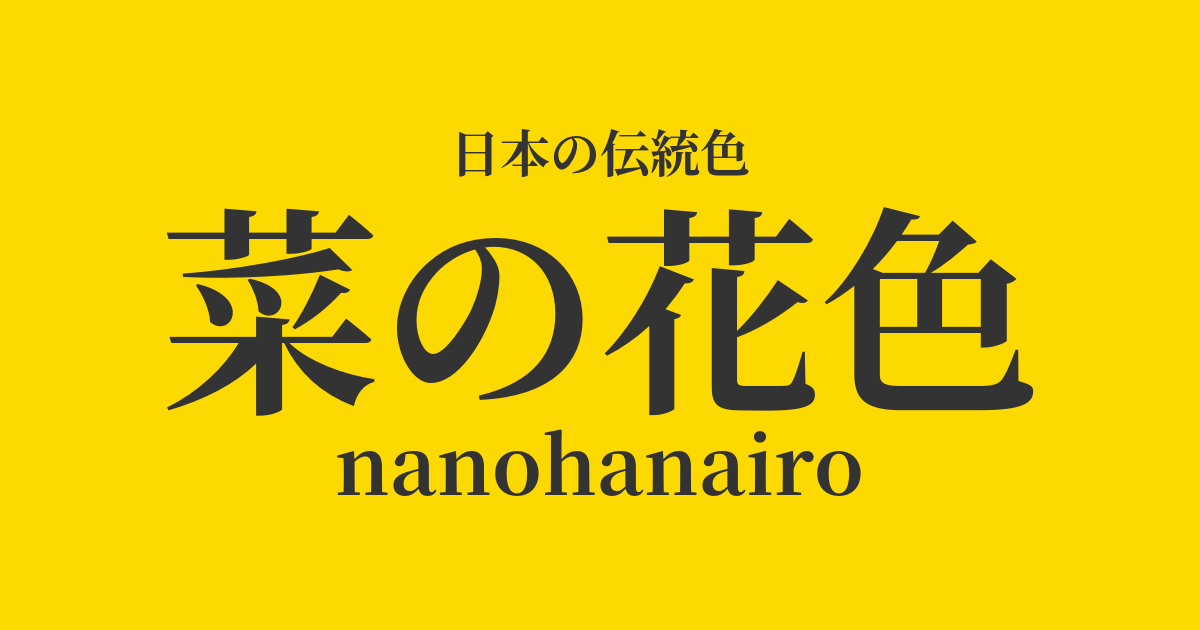
| Japanese color name | rapeseed yellow |
|---|---|
| reading | nanohanairo |
| HEX | #FCD900 |
| RGB | 252, 217, 0 |
What is "rapeseed flower color"? Origin and etymology.
The term "nanohana-iro" (rapeseed flower color) is derived from the vibrant yellow of the rapeseed flower, a plant belonging to the Brassicaceae family. It is the very color of the flower blooming in the spring sunshine, evoking feelings of warmth and vitality in those who see it. During the Edo period, the cultivation of rapeseed flowers spread throughout Japan for the purpose of extracting rapeseed oil for lamps, making it a very familiar flower to people. It is believed that this familiarity led to the name "nanohana-iro" becoming established as a representative color of spring scenery.
The historical background of the rapeseed flower color
The color name "nanohana-iro" (rapeseed flower color) became commonly used from the mid-Edo period onward. This was due to the expansion of rapeseed oil, which led to the spread of rapeseed fields throughout Japan, establishing it as a symbol of spring. In particular, it was favored as a color that expressed a sense of the season among the economically prosperous townspeople, and was frequently depicted in kimonos and ukiyo-e prints. Even after the Meiji era, it has continued to be deeply rooted in people's lives as a bright yellow that symbolizes spring.
Related literature, waka poetry, and seasonal words
The color of rape blossoms is deeply intertwined with literature, especially the world of haiku. "Rapeseed blossoms" have been featured in numerous haiku as a seasonal word for spring. Among them, the haiku "Rapeseed blossoms, the moon in the east, the sun in the west" by Yosa Buson is particularly famous for depicting the magnificent scene of the sun setting and the moon rising over a vast field of rape blossoms. Through this haiku, the color of rape blossoms has transcended being merely a color name and has been etched into people's hearts as a color that evokes the quintessential Japanese landscape and poetic sentiment.
The rapeseed blossoms and the moon are in the east, and the sun is in the west.
Color scheme preview
This is to check the readability of the text when this color is used as the background.
A proposed color scheme in rapeseed yellow.
Young leaf color (#B5D36A)
This natural combination evokes the fields and mountains of spring. The vibrant yellow of the rapeseed flowers and the green of the newly sprouted leaves complement each other, creating a fresh, bright color scheme that exudes vitality.
Lapis Lazuli (#1F4788)
The contrasting colors evoke images of a field of rapeseed flowers and a clear spring sky. The vibrant yellow and deep blue create a beautiful contrast that enhances each other's beauty, resulting in a powerful and striking combination.
Cherry blossom pink (#FEEAFA)
This combination features colors of flowers that are also representative of spring. The bright rapeseed yellow and the soft, gentle cherry blossom pink harmonize to create a vibrant and cheerful atmosphere reminiscent of the full bloom of spring. The resulting color scheme evokes a sense of calm and happiness.
Practical Scenes
In the world of traditional Japanese clothing, rapeseed yellow is considered the perfect color to express the feeling of spring, and is used in kimonos, obi sashes, and accessories such as obiage (sash ties). It is especially often incorporated into the clothing of young women, giving a bright and cheerful impression. It is also effective as an accent color in modern fashion and interior design. Simply incorporating it into cushions or accessories can fill the entire space with a bright and positive atmosphere.
In web and graphic design, rapeseed yellow is an effective color for areas you want to draw attention to, such as buttons. Its brightness and high visibility can encourage user action. It's also a suitable color for conveying concepts like fun, vitality, and energy, and is frequently used in branding for children's products and services.