
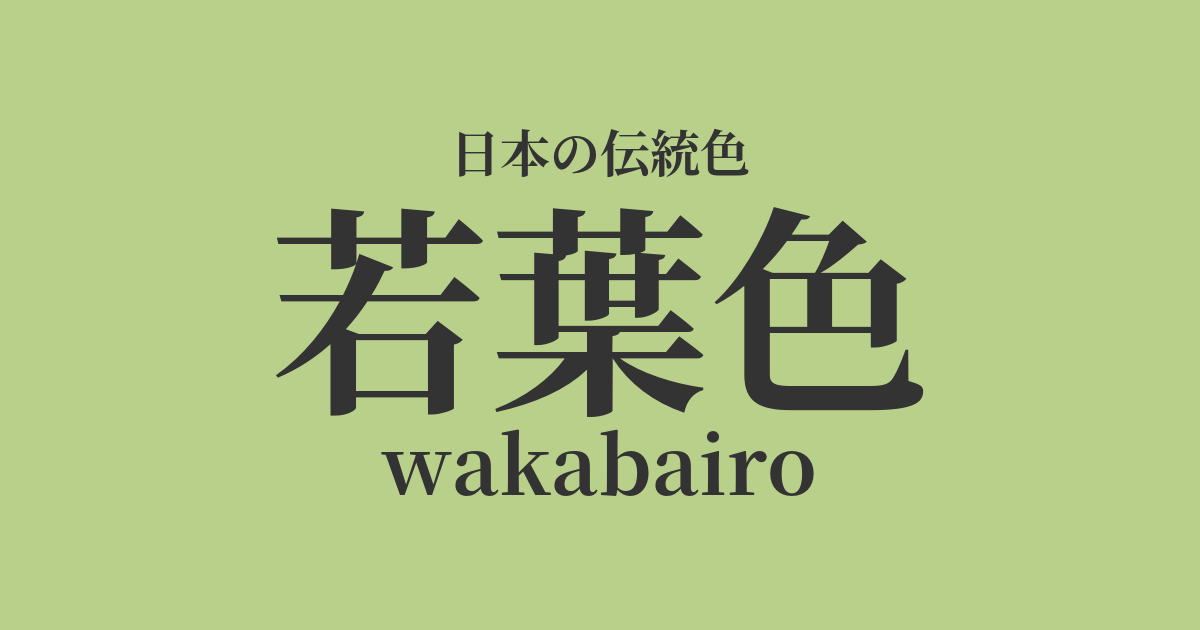
| Japanese color name | young leaf color |
|---|---|
| reading | wakabairo |
| HEX | #B9D08B |
| RGB | 185, 208, 139 |
What is "Wakaba-iro" (young leaf color)? Origin and etymology.
As the name suggests, "wakaba-iro" (young leaf green) is a color name derived from the fresh, young leaves of trees that sprout from spring to early summer. It refers to a bright, vibrant yellowish-green, and rather than being the color of a specific plant, it symbolizes the lively appearance of all sprouting plants and trees. As a color that evokes positive images such as the breath of nature, growth, and hope, it has been familiar to the Japanese people since ancient times and has become an integral part of their lives.
The historical background of the light green
The word "wakaba" (young leaves) itself has existed since ancient times, appearing even in the Manyoshu anthology, but the use of "wakaba-iro" (young leaf color) as a color name is considered to be relatively recent. In Heian period literature, colors such as "wakamidori" (young green) and "moegi" (sprout green) were used to express youthful green. In the Edo period, with the development of popular culture, a variety of color names emerged, and it is thought that "wakaba-iro" became widely known as one of them.
In particular, it gained popularity as a color for kimonos and was favored as a color to add color to spring attire.
Related literature, waka poetry, and seasonal words
"Young leaves" have been a popular seasonal word in many waka and haiku poems, representing the period from late spring to early summer. For example, in Matsuo Basho's haiku, "Green leaves in sight, a cuckoo in the mountains, the first bonito of the season," "green leaves" refers to the appearance of young leaves that have grown and deepened in green, symbolizing the vitality of early summer. Furthermore, in classical literature such as "The Tale of Genji," the depiction of young leaves is used as an important motif to allude to the youth of the characters or the arrival of a new season.
The color "young leaf green" has, through this literary background, enriched images of freshness and innocence.
A temple on a mountain the size of a palm, covered in young leaves.
Color scheme preview
This is to check the readability of the text when this color is used as the background.
A color scheme proposal in light green.
Cherry blossom pink (#FEEAFA)
The colors of cherry blossoms, which herald the arrival of spring, and the young leaves that sprout are a quintessential combination symbolizing spring in Japan. They evoke a bright and hopeful impression, suggesting the beginning of life. They are ideal for expressing a sense of the season in traditional Japanese clothing and designs.
Indigo (#274A78)
By combining a deep, calming indigo with a bright, vibrant young leaf green, a contrast is created where each color enhances the other. The lightness of the young leaf green is complemented by the stability and elegance of the indigo, resulting in a color scheme that gives a modern and sophisticated impression.
Egg color (#FDE8A8)
Eggshell yellow, like young leaf green, is a warm color with a yellowish tint. Combining these two colors creates an overall bright, friendly, and natural atmosphere. The resulting color scheme is full of warmth and gentleness, reminiscent of the sunlight of spring.
Practical Scenes
The light green color, with its bright and refreshing impression, is often used in patterns for kimonos and yukatas. Incorporating it into outfits from spring to early summer, in particular, expresses a sense of the season and creates a youthful and lively atmosphere. It is also effective when used as an accent color in obi sashes and accessories.
In interior design, incorporating it into fabrics such as wallpaper, curtains, and cushions brings a bright and open atmosphere to the entire room. It also pairs well with houseplants, contributing to the creation of a natural and relaxing space. When combined with wooden furniture, it blends seamlessly into a warm, Scandinavian style.
In web and graphic design, light green is suitable for expressing themes such as freshness, health, and ecology. When used on packaging for natural foods or websites of environmentally conscious companies, it can convey a clean and positive brand image. It is used as a color that provides a sense of security to users while maintaining readability.