
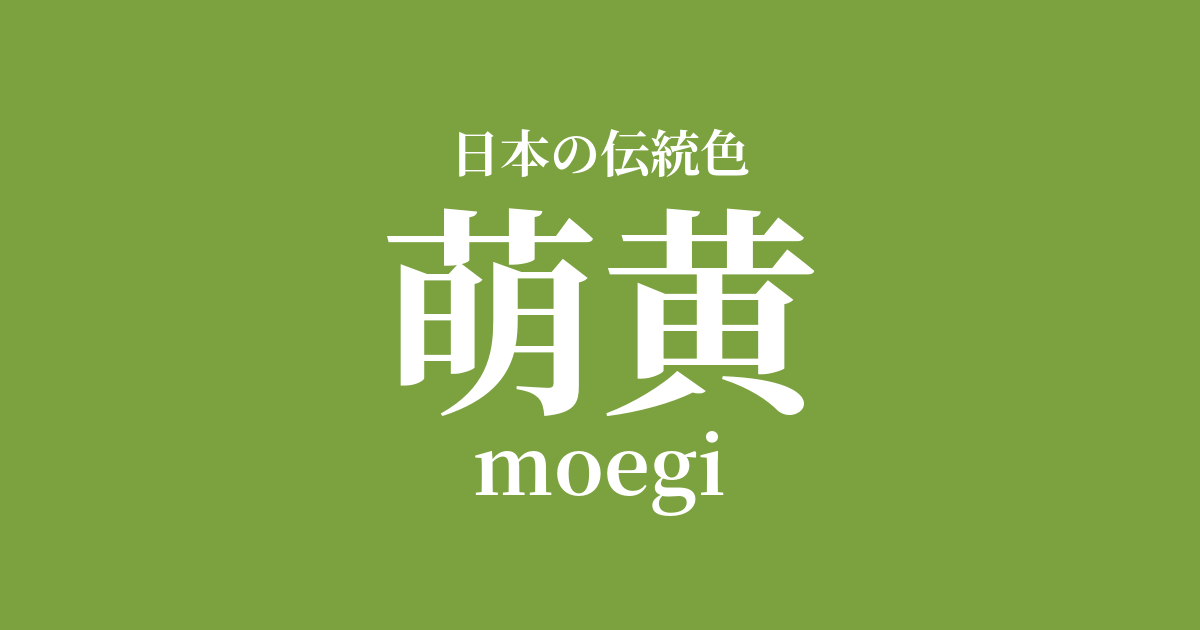
| Japanese color name | Light green |
|---|---|
| reading | moegi |
| HEX | #7BA23F |
| RGB | 123, 162, 63 |
What is Moegi? Origin and etymology
Moegi is a color name derived from "moederu," which describes the appearance of plants sprouting in early spring. Its etymology is said to come from "moegi," the color of onion sprouts, with the most likely theory being that "ki" (onion) changed to "ki" (yellow). This vibrant and powerful yellowish-green color, like young leaves, has long been deeply rooted in the sensibilities of the Japanese people as a symbol of vitality, youth, and hope. This color, which evokes the breath of nature, gives a positive impression that suggests new beginnings and growth.
Historical background of Moegi
Moegi is a traditional color name that has existed since the Heian period, and its name can be found in the Engishiki (a set of regulations compiled in the Heian era). Among the Heian aristocracy, it was a symbol of youthfulness and was especially favored for the clothing of young people, and it is described in classical literature such as The Tale of Genji. From the Kamakura period onward, it spread to the samurai class and was used as the color of the lacing threads on armor. It is said that young warriors, in particular, favored wearing it.
During the Edo period, its bright colors became popular among ordinary people and it began to be used in various items such as kimonos and accessories.
Related literature, waka poetry, and seasonal words
Light green (moegi) frequently appears in "The Tale of Genji," a representative work of Heian period literature. It is effectively depicted as the color of clothing symbolizing the youthfulness and social status of characters such as Hikaru Genji. Furthermore, in Sei Shonagon's "The Pillow Book," "light green karaginu" is mentioned in the section on "beautiful things," indicating that it was a color loved in the aristocratic society of the time.
In the world of haiku, "moegi" (light green) itself is rarely treated as a seasonal word, but other spring seasonal words such as "wakakusa" (young grass) and "shinryoku" (fresh green) strongly evoke this color.
Though the color of my robe remains unchanged, my heart has been dyed.
Color scheme preview
This is to check the readability of the text when this color is used as the background.
A proposed color scheme using light green.
Kutsuha color (#915E33)
By combining it with a withered leaf color reminiscent of autumn leaves, the youthfulness of the light green is highlighted, creating a calm and natural harmony overall. The result is a deep color scheme that evokes the changing seasons.
Cherry blossom pink (#FEEAFA)
The vibrant green of spring leaves and the pink of spring flowers are a quintessential combination symbolizing spring in Japan. These colors complement each other, creating a bright, cheerful, and hopeful impression. They are also suitable for festive occasions.
Indigo (#274A78)
Combining vibrant light green with deep, calming indigo creates a strong contrast, making each color stand out. This color scheme gives a traditional yet modern and sophisticated impression, enhancing the overall design.
Practical Scenes
In the world of kimono, light green (moegi) gives a youthful impression and is used as part of the base color or pattern of furisode and houmongi kimonos. It is especially favored for spring attire, and incorporating it into accessories such as obi, obiage, and obijime can add brightness and a sense of the season to the entire outfit.
In interior design, incorporating this color as an accent in cushions, curtains, or accessories brings a bright and refreshing atmosphere to the entire room. It also pairs well with wooden furniture, creating a natural and comfortable space. Combining it with houseplants further enhances the natural impression.
In the fields of web design and graphic design, it is suitable for expressing themes such as youthfulness, growth, and nature. When used as an accent color for buttons and headings on a website, it can attract the user's attention and create a lively and positive impression.