
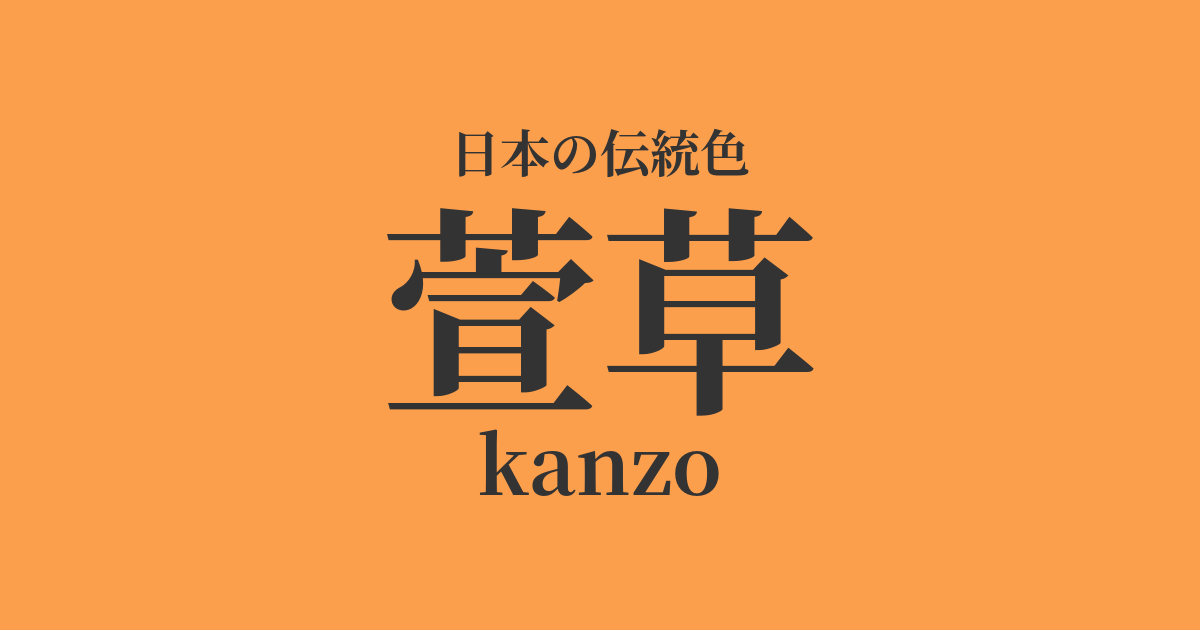
| Japanese color name | Kayakusa |
|---|---|
| reading | kanzo |
| HEX | #FC9F4D |
| RGB | 252, 159, 77 |
What is daylily? Origin and etymology
The name "daylily" (Kanzo) originates from the color of the flower of the daylily (Kanzo), a perennial plant belonging to the Hemerocallis family (formerly the Liliaceae family). In Japan, this plant has long been called "forget-me-not" (wasuregusa), and there was a legend that wearing its flowers would make one forget their worries. As a color name, "daylily color" refers to the vibrant orange color of this flower, or rather, a yellowish-red color.
Its bright colors reflect the vitality of the daylily flowers that adorn the summer fields and mountains, as well as the cultural background imbued with people's hopes and wishes.
Historical background of daylilies
Daylilies are believed to have been introduced from China and have been familiar in Japan since ancient times. They are mentioned in the Manyoshu, an ancient collection of Japanese poetry, as "wasuregusa" (forget-me-not), indicating that their existence was already known during the Nara period. In the Heian period, their vibrant flower colors may have attracted attention as a dye, but they mainly became ingrained in aristocratic society as a literary motif.
During the Edo period, the cultivation of daylilies spread among ordinary people as an ornamental plant, and the color of the daylily became a symbol of summer, adding color to people's lives.
Related literature, waka poetry, and seasonal words
Daylilies, also known as "forget-me-nots," appear in many literary works. In the Manyoshu anthology, Otomo no Tabito wrote, "I plant daylilies in my dwelling, and I do not yearn; for it is only natural that I should forget, for I bear the name of this grass," expressing his feelings of trying to forget the troubles of love by planting daylilies. It is also used as a seasonal word for summer, and in the world of haikai poetry, it is celebrated as a flower that symbolizes the season.
Its vibrant colors evoke the strong summer sun and vitality, and, based on tradition, have also functioned as a motif representing the subtleties of the human heart, symbolizing the forgetting of worries.
I plant daylilies in my dwelling, and yet I do not yearn for you, for I will not forget, for I bear the name of this grass.
Color scheme preview
This is to check the readability of the text when this color is used as the background.
Color scheme proposal for daylilies
Tokiwa color (#007B43)
The vibrant yellow-red of the daylily and the deep, calming green of the evergreen evoke the contrast of wildflowers in nature. The colors complement each other, creating a lively and energetic impression. Although they are close to complementary colors, their use of traditional Japanese colors ensures harmony.
Bird's Egg Color (#FFF1CF)
The bright daylily is gently complemented by the soft, pale yellow of the bird's egg color. The overall warm color scheme creates a sense of warmth and approachability. It creates an elegant and tranquil atmosphere and blends well with both Japanese and Western designs.
Lapis Lazuli (#1F4788)
The combination of vibrant daylilies and deep, clear lapis lazuli creates a strong contrast, highlighting each color. It evokes a scene reminiscent of a summer evening sky and flowers, creating a dramatic and impressive space. This color scheme gives a modern and sophisticated impression.
Practical Scenes
In the world of kimono, daylily green is often used for summer obi sashes and accessories. Pairing a yukata or summer kimono with an obi-jime (sash cord) or obi-age (sash scarf) of this color creates a vibrant and seasonal look. It is said to pair particularly well with indigo and white fabrics.
In interior design, incorporating daylily green into cushion covers, curtains, or accent walls can add warmth and vibrancy to a space. Adding daylily green to a space based on natural wood or white creates a bright and inviting atmosphere.
In web and graphic design, daylily green is an effective accent color for buttons and banners that you want to attract attention. It is also used as a brand color for services that you want to convey friendliness and fun. However, because of its high saturation, care should be taken not to overuse it.