
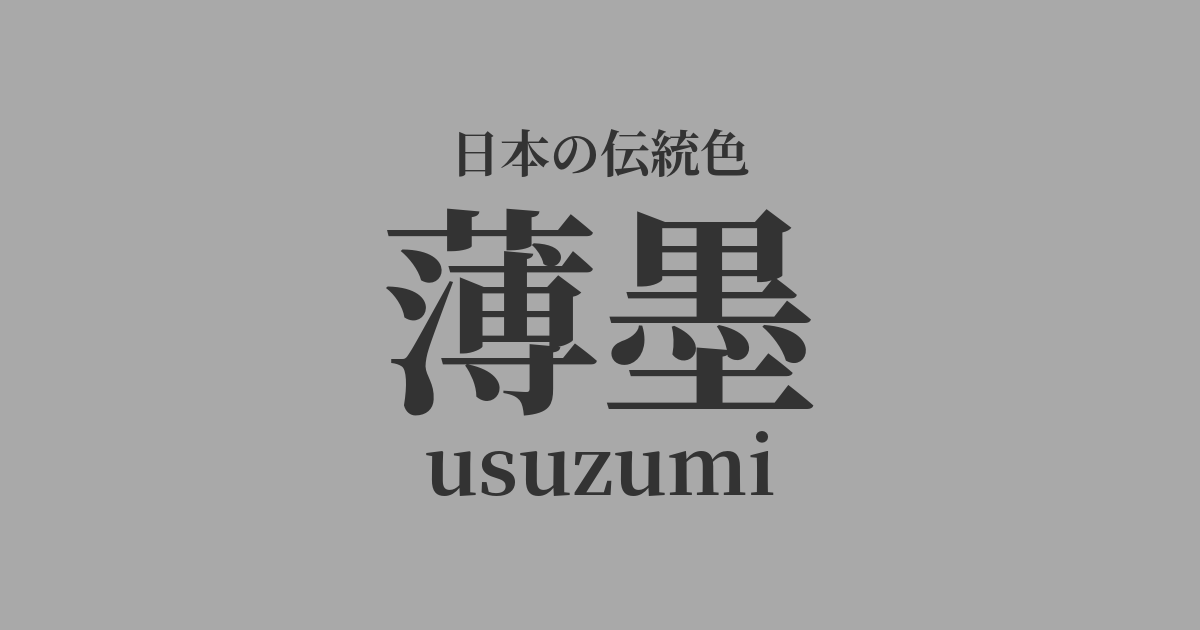
| Japanese color name | Light ink |
|---|---|
| reading | huzumi |
| HEX | #A9A9A9 |
| RGB | 169, 169, 169 |
What is light ink? Origin and etymology
Ususumi is a color name that literally derives from the pale gray color of ink diluted with water. It refers to the lightest shade of ink used in calligraphy and ink painting. It is characterized by its strong cultural significance, being more than just a color name, and has long been recognized as the color of ink used when mourning the death of a person or in letters conveying grief. From this custom, it is said that the word "ususumi" itself came to symbolize feelings of mourning and sorrow.
Historical background of light ink
During the Heian period, light ink was established as the color used during mourning. It was customary to write letters sent after the death of a close relative in light ink, based on the belief that the ink had been diluted by tears of grief. For this reason, light ink-colored clothing and letters are effectively used in scenes of sorrow in literary works such as "The Tale of Genji."
This custom continued in samurai society from the Kamakura period onward, and became widespread among commoners during the Edo period. Meanwhile, in the world of ink painting, techniques for skillfully manipulating the shades of ink developed, and light ink became an important color that formed the foundation of its expression, increasing its artistic value. In this way, light ink is a color that has left its mark on history both as a cultural symbol and as an artistic color.
Related literature, waka poetry, and seasonal words
In Heian period literature, light ink frequently appears as a color symbolizing sadness and a sense of impermanence. In "The Tale of Genji," there are numerous scenes in which characters write letters expressing deep sorrow in light ink, leaving a strong impression of the characters' feelings on the reader. Similarly, in "The Pillow Book," a letter written in light ink is listed as one of the "things that make one anxious and impatient," and is described as something that stirs up feelings of unease in the recipient.
In the world of Japanese poetry, the color "usuzumi" (pale ink) is not often used directly, but it was used to express the sorrowful scene behind it. Since the modern era, it has also been used to describe the pale and ephemeral color of flowers, as in "usuzumi-zakura" (pale ink cherry blossoms), and as a color that evokes a sense of impermanence and the pathos of things hidden within beauty, it has become deeply rooted in the Japanese aesthetic sense.
Autumn leaves, a mix of pale blue and light yellow.
Color scheme preview
This is to check the readability of the text when this color is used as the background.
Light ink color scheme proposal
White training (#FCFAF2)
The quiet and calming atmosphere of light ink, combined with the purity of white, creates a sophisticated and minimalist impression. This harmonious balance of tranquility and cleanliness results in a dignified color scheme suitable for modern Japanese spaces and designs.
Mauve (#BB9FCD)
The quiet tones of light ink, combined with the delicate and elegant purple of wisteria, create a refined and serene impression. This elegant and subdued color scheme evokes the aristocratic culture of the Heian period and is well-suited for expressing elegance and delicacy.
Indigo (#274A78)
Combining a neutral, light gray ink with a deep indigo creates an intelligent and modern impression. While contrasting, both colors maintain a calm tone, making this a highly effective combination for conveying trustworthiness and stability.
Practical Scenes
In the world of traditional Japanese clothing, light gray is traditionally known as a color used for mourning attire and memorial services. However, in modern times, this is no longer the case; its understated and elegant hue has led to its use in stylish komon (small-patterned) kimonos, tsumugi silk kimonos, and obi sashes, where it is utilized in sophisticated coordination that complements other colors.
In interior design, incorporating light gray tones into wallpaper, curtains, and furniture brings a sense of tranquility and calmness to a space. It pairs exceptionally well with modern and minimalist styles, harmonizing with diverse materials such as wood and metal, creating a sophisticated and urban atmosphere.
In web and graphic design, using it as a background or text color can create a subtle and sophisticated impression. Because it's not overly assertive, it complements the main content and is suitable for websites where trustworthiness and expertise are required.