
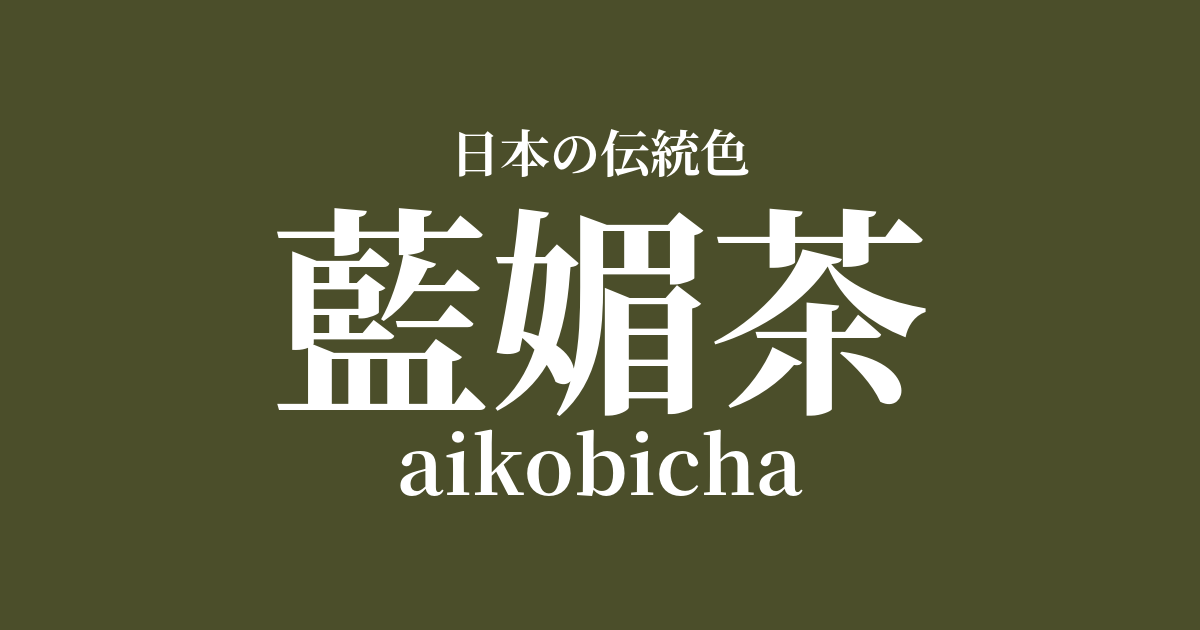
| Japanese color name | Indigo Tea |
|---|---|
| reading | aikobicha |
| HEX | #4B4E2A |
| RGB | 75, 78, 42 |
What is Lan Mei Tea? Origin and Etymology
Aikobicha is a traditional Japanese color whose name combines two color names: "ai" (indigo) and "kobicha" (flirty tea). As the name suggests, it refers to a muted, dark reddish-brown color with a greenish tint, created by blending brown with indigo. The base color, "kobicha," was a type of brown that was popular in the mid-Edo period and was originally called "kobucha" because it resembled the color of kelp.
A leading theory suggests that this color came to be known as "kobuchi" (meaning "flirtatious tea") among the women of the pleasure quarters, as a playful term for a color that "flirts."
By adding elements of indigo dyeing, which was widely used at the time, to this brownish-yellow color, a more complex and profound hue was created. It is believed to have been made through processes such as dyeing the fabric with brown dye first and then dyeing it again with indigo. This color, which at first glance seems plain but possesses subtle nuances, can be said to be one of the colors that symbolizes the refined sense of color of the people of Edo.
Historical background of Lan Mei Tea
The popularity of indigo-colored tea rose during the mid-to-late Edo period. During this time, the shogunate frequently issued sumptuary laws, severely restricting commoners from wearing extravagant clothing. As a result, people could no longer openly wear bright colors.
However, within these constraints, the townspeople of Edo cultivated a new aesthetic sense. A trend called "Shijūhacchahyakunezumi" (48 shades of brown, 100 shades of gray) emerged, where people enjoyed subtle differences in shades within the permitted range of colors such as brown, gray, and indigo. Indigo-colored brown was one such example, and its depth and subtlety hidden within its understated tones resonated with the spirit of "iki" (sophistication and elegance) in Edo aesthetics, and it is said to have been particularly favored by connoisseurs and Kabuki actors.
Related literature, waka poetry, and seasonal words
Indigo-colored tea (藍美茶) is a color that originated in the townspeople's culture of the Edo period and is not found in classical Japanese poetry. However, its presence can be glimpsed in humorous books, ukiyo-e prints, and the world of Kabuki, which depict the customs of the time. In particular, it is recorded as a color favored by Kabuki actors, who were at the forefront of fashion. Colors used by popular actors on stage quickly became fashionable among the common people as well.
Although it's not a commonly recognized seasonal word, its deep, subdued hues are sometimes associated with the quiet scenery of autumn and the wabi-sabi aesthetic. In literary works, it can also be used as a color to describe the refined character or tranquil atmosphere of a character.
Color scheme preview
This is to check the readability of the text when this color is used as the background.
Indigo-colored tea color scheme proposal
Gray tea (#918472)
The greenish astringency of the indigo tea and the gentle brown of the ash tea harmonize to create a very calm and elegant impression. The combination of earth tones, reminiscent of natural materials, brings depth to Japanese-style spaces and fashion.
Blue gold (#FABE22)
By combining a deep, dark indigo tea with a vibrant, bright turmeric yellow, a contrast is created where each color enhances the other. This color scheme adds a touch of elegance to a sense of gravitas, making it suitable for modern and sophisticated designs.
Persimmon color (#9A493F)
The green elements of the indigo tea and the red elements of the persimmon tannin color are close to complementary colors, resulting in a powerful and striking color scheme. It is traditional yet does not feel old-fashioned, and it can express a warmth reminiscent of autumn foliage.
Practical Scenes
In the world of traditional Japanese clothing, indigo-green is considered a sophisticated color favored by connoisseurs and is used in komon (small-patterned) kimonos, tsumugi silk kimonos, and haori jackets. Its understated elegance is particularly popular in men's kimonos and obi sashes. Its calm hue harmonizes well with other colors, creating a refined and polished look.
In interior design, using it in wallpaper, curtains, and furniture upholstery can give a space a sense of depth and tranquility. It pairs particularly well with natural materials such as wood, Japanese paper, and earthen walls, adding depth to the coordination of modern Japanese-style rooms and studies.
In web and graphic design, using this color as a background or key color can create a sense of luxury and trustworthiness. It is an effective color for websites dealing with traditional themes, organic products, and representing the image of established brands.